
K R
Days AI
HiringDay
An AI-powered hiring intelligence platform that finds, evaluates, and engages the right candidates automatically . so recruiters focus on decisions, not sourcing.
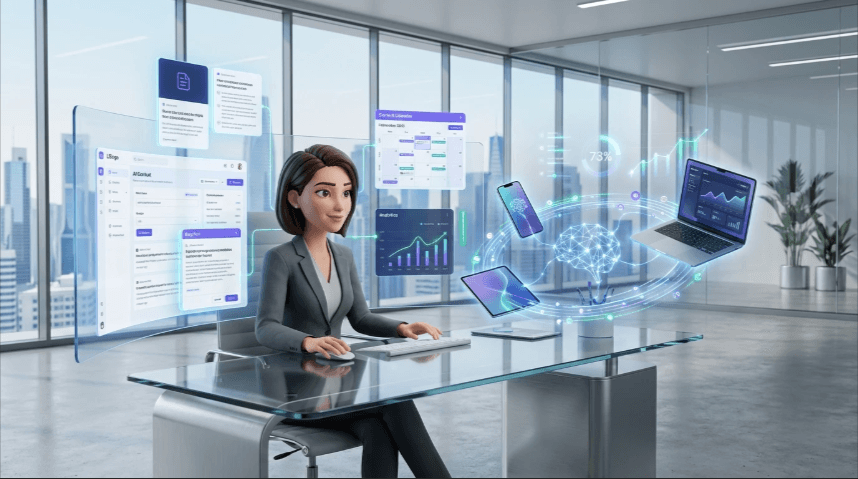
73% Multi-Channel Buyers: AI's Role in Modern CX Journeys
Imagine a customer researches your product on your blog. They love what they see. An hour later, they get a completely generic ad on social media. That jarring disconnect is the default experience for most brands navigating the complex multi-channel buyer journey.
A recent study confirms 73% of buyers now interact with multiple channels, but for most businesses, each interaction is a dead end. How can you connect these moments into one coherent conversation? The key is to understand these actions as a single story. Artificial intelligence provides the intelligence to unify this data, letting you deliver a consistent and personal message everywhere a customer engages, ultimately enhancing the AI customer experience.
This guide outlines a powerful omnichannel AI strategy. You'll find practical ways to leverage marketing automation AI for advanced personalization with AI and turn the complex multi-channel buyer journey from a challenge into a growth opportunity.
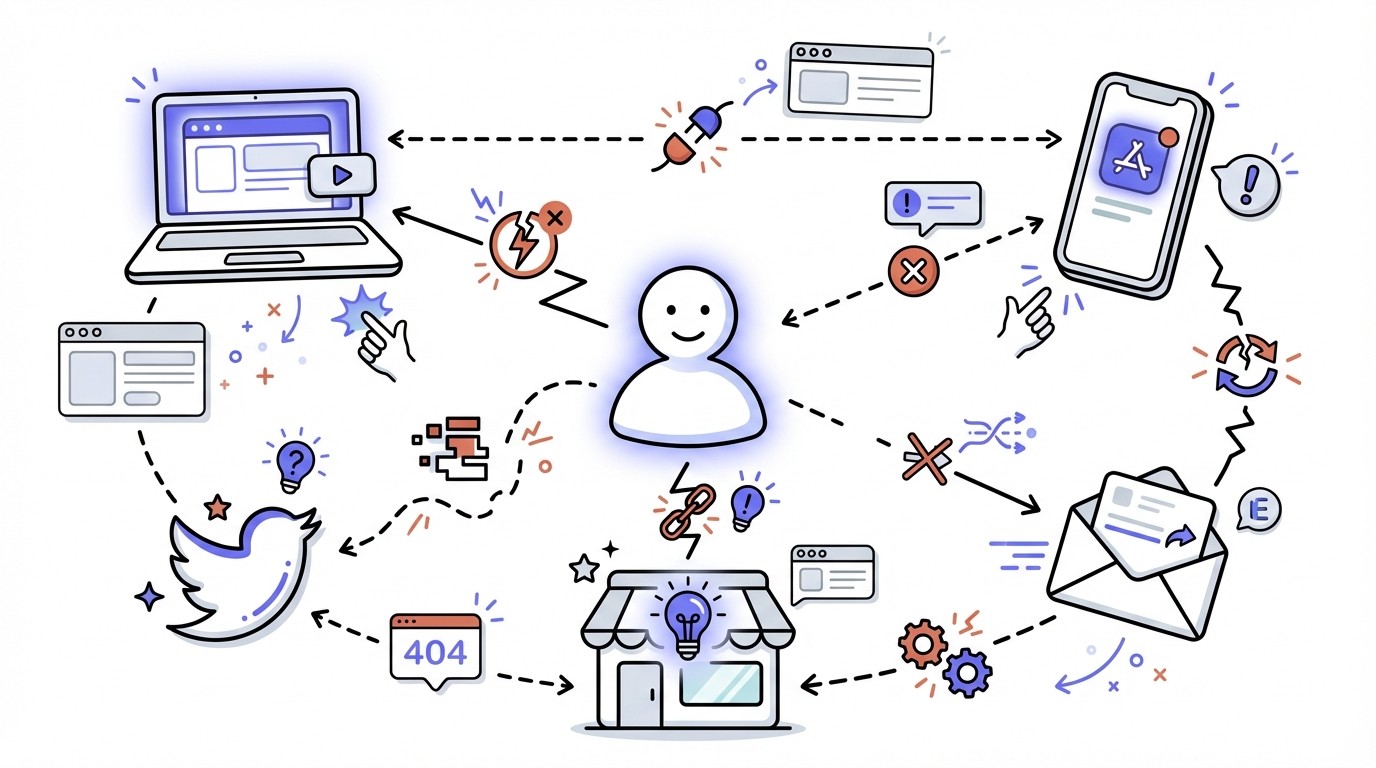
Visualizing the Chaos: The Fragmented Multi-Channel Customer Journey with Disconnected Touchpoints.
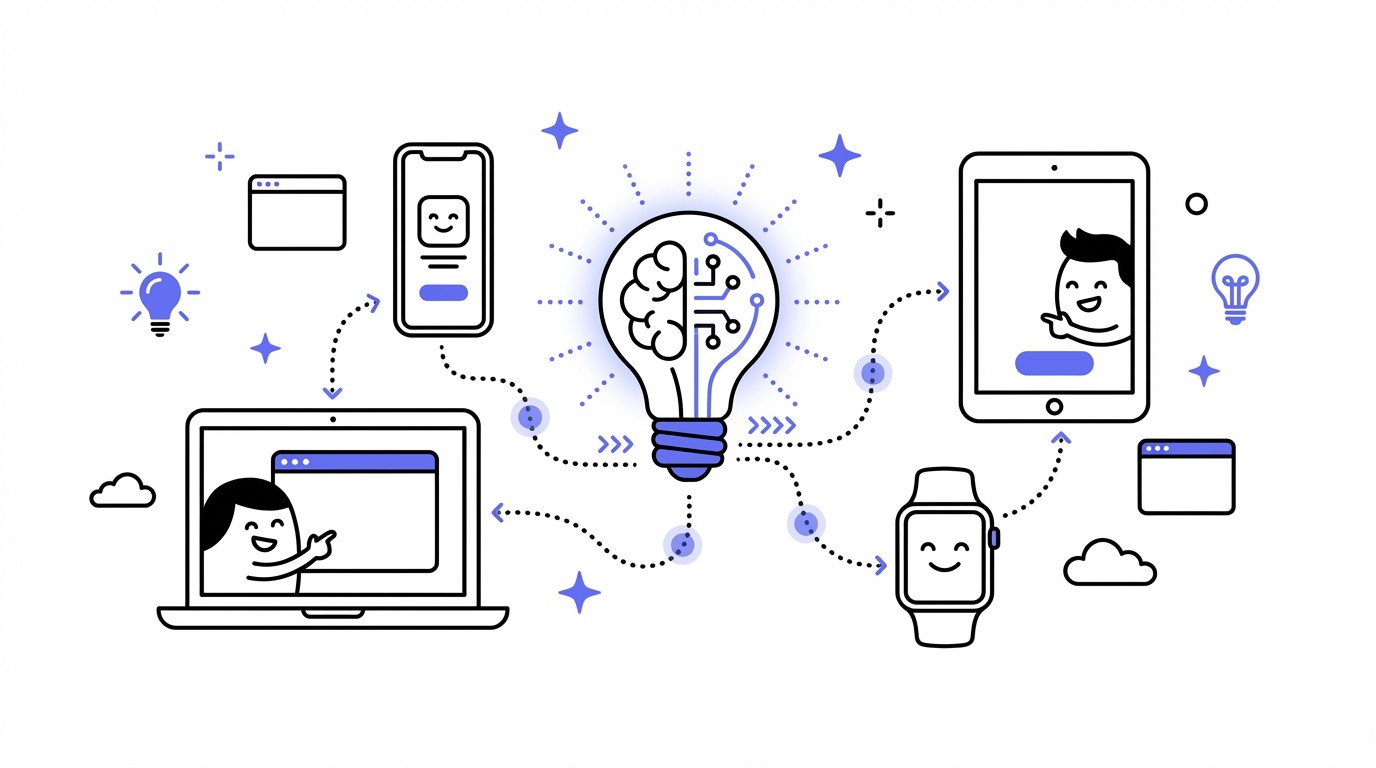
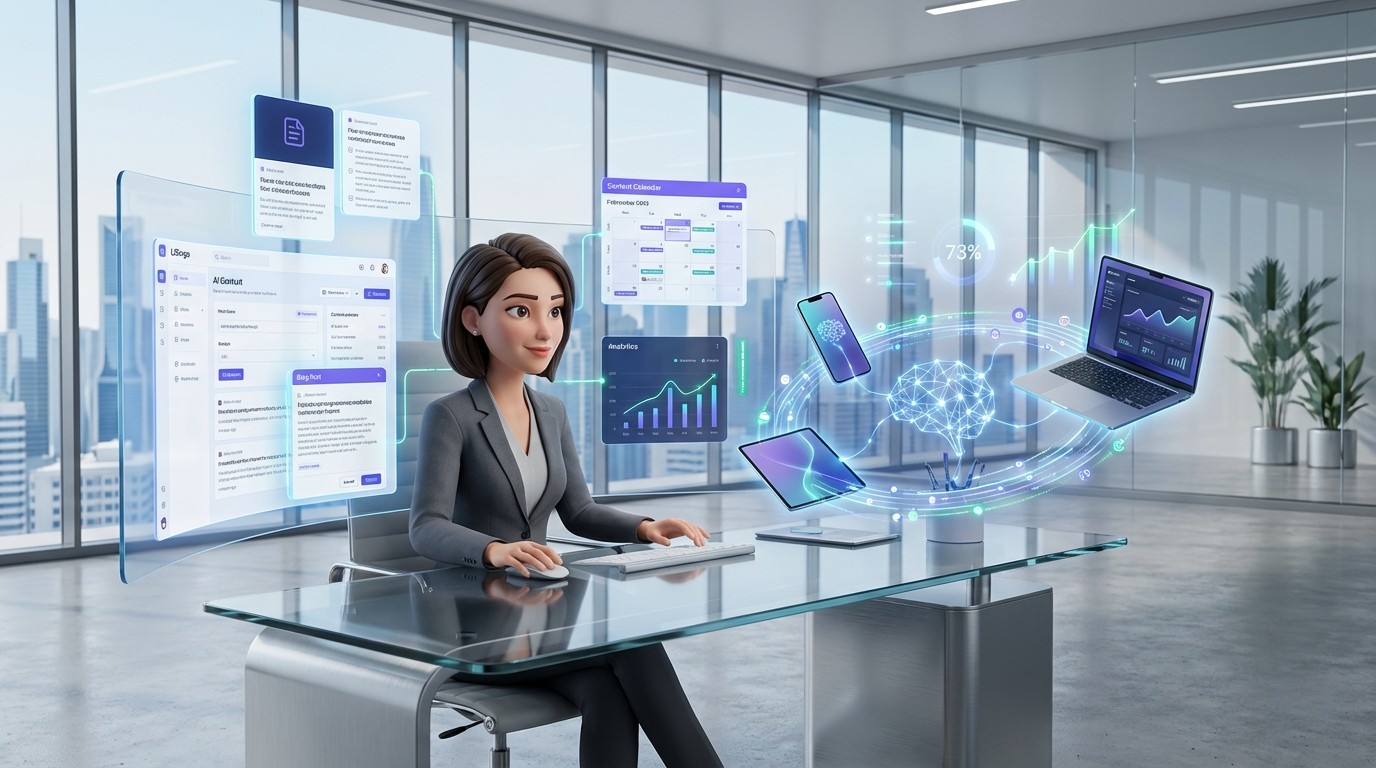
AI as the intelligent core, seamlessly connecting and optimizing every customer touchpoint for a unified experience.
Multi-Channel vs. Omnichannel: Unifying the Buyer Journey
Most businesses operate on a multi-channel model. You have a website, social media, and an email list. Each channel works independently. While this increases visibility, it often creates a fragmented multi-channel buyer journey.
An omnichannel approach puts the customer at the center. It integrates every channel to create one continuous conversation. The customer's experience is consistent on your mobile app, in a store, or on their desktop. This shift from siloed channels to a unified experience closes the gap, paving the way for a superior AI customer experience.
Key Differences in Multi-Channel vs. Omnichannel Approaches
This comparison highlights the fundamental shift. The goal moves from maximizing channel performance to optimizing the total customer experience.
AspectMulti-Channel ApproachOmnichannel ApproachFocusCompany-centric (Product on platforms)Customer-centric (Experience across platforms)DataSiloed by channelCentralized and sharedCustomer ViewFragmented interactionsSingle, unified profileExperienceDisconnected and inconsistentCohesive and personalized
How AI Creates a True Omnichannel AI Strategy
Transitioning to an omnichannel model is nearly impossible without the right technology. An omnichannel AI strategy is essential. AI platforms connect the dots between separate data sources. They build a complete profile for each customer based on behavior across all touchpoints, enabling true personalization with AI.
For example, marketing automation AI can track a user who read a blog post about a specific feature. It then serves them a relevant case study on social media. This level of personalization with AI makes the customer feel understood. Companies with strong omnichannel strategies retain 89% of their customers on average. That proves the value of a superior AI customer experience.
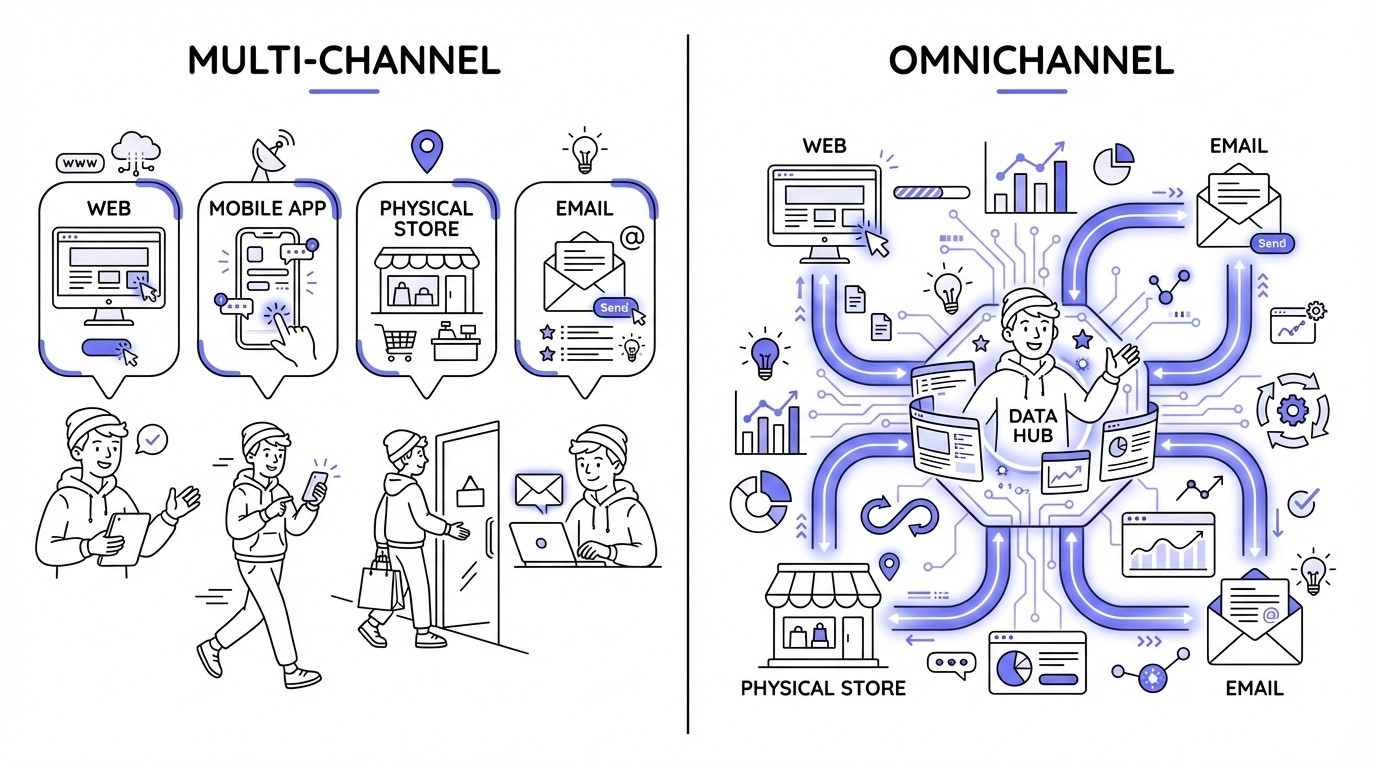
Explore the fundamental differences between multi-channel and omnichannel strategies, illustrating how multi-channel operates in silos versus omnichannel's unified, seamless customer experience.
Challenges in Navigating the Multi-Channel Buyer Journey Without AI
Trying to create a unified experience without the right tools creates significant friction. Your teams work hard, but their efforts are disconnected. Marketing doesn’t see support ticket data, and sales lacks insight into content engagement. This manual approach to the multi-channel buyer journey leads to predictable problems.
The core issue is the lack of a single source of truth. Without it, you can't achieve meaningful personalization with AI because the system lacks context. Instead, you're left guessing. This results in a poor AI customer experience—or, more accurately, a poor customer experience in general, hindering your omnichannel AI strategy.
Common Pitfalls of a Manual Multi-Channel Approach
When teams operate from separate playbooks, the customer pays the price. Internal disconnects become external frustration, directly impacting brand perception. A recent Boston Consulting Group report shows brands that create personalized experiences see revenue lift by 6% to 10%. That gain is nearly impossible to capture with siloed data.
ChallengeDirect Consequence for CustomersImpact on the BusinessData SilosReceives generic, irrelevant offers.Wasted marketing spend on poor targeting.Inconsistent MessagingHears conflicting information across channels.Brand erosion and diminished customer trust.Reactive EngagementMust repeat their history with each new contact.High customer churn and missed opportunities.
These challenges are fundamental barriers to growth. Each fragmented interaction pushes a potential customer away. Building an effective omnichannel AI strategy is the only scalable way to turn customer data into a valuable asset and optimize the multi-channel buyer journey.
How AI Transforms the Multi-Channel Experience for Better CX
Data silos and inconsistent messaging create frustrating customer journeys. Artificial intelligence dismantles these barriers. It builds a central nervous system for your customer data, turning fragmented interactions into a single conversation. This is the core of an effective omnichannel AI strategy, driving a better AI customer experience.
LiBingo's platforms connect every touchpoint. We integrate your CRM, web analytics, support logs, and content engagement into one place. This creates a unified profile for every customer. For example, if a customer submits a support ticket about an integration challenge, our marketing automation AI can automatically pause promotional campaigns for that feature. It can instead share a helpful knowledge base article, preventing frustration and building trust through intelligent personalization with AI.
From Reactive to Predictive Personalization with AI
A unified profile allows for true personalization with AI. The system moves beyond simple triggers. It starts to predict customer intent based on behavior across the entire multi-channel buyer journey.
Our AI doesn't just see a click; it analyzes scroll depth and time-on-page to qualify interest. If intent is high after a customer reads a MarketDay blog post, it can alert SalesDay to trigger a personalized outreach sequence for a sales rep. The alert even includes conversation starters based on topics in the article. This marketing automation AI improves the AI customer experience because it anticipates needs.
Manual ApproachLiBingo's AI-Powered ApproachData ViewFragmented and siloed by department.Customer ActionReactive, based on the last isolated click.PersonalizationGeneric segments with limited context.Operational ScaleLimited, inconsistent, and resource-intensive.
This transformation is fundamental. You stop managing separate channels and start orchestrating complete customer experiences. This is how you convert the 73% multi-channel reality and its complex multi-channel buyer journey from a challenge into a competitive advantage, powered by an effective omnichannel AI strategy.
Implementing an AI-Powered Omnichannel Strategy for Success
Transitioning to an AI-driven model is a structured process. It begins with a clear foundation and expands with each success. An effective omnichannel AI strategy focuses on connecting data first, then automating intelligent actions based on that unified view, often leveraging marketing automation AI.
The process starts by building a central data hub. This is the most critical step. Your AI can only be as smart as the data it accesses. From there, you can identify high-impact customer journeys to automate, enhancing personalization with AI across every touchpoint.
A Phased Approach to AI Customer Experience Implementation
A successful rollout follows a clear, three-phase path. This approach ensures you build momentum and demonstrate value quickly. Each phase builds on the last, turning disconnected channels into a cohesive system for improving the AI customer experience. McKinsey reports that effective personalization with AI can lift revenues by 5% to 15%, a return achieved by following a disciplined plan.
PhaseKey ActionPrimary Outcome1. Data UnificationConnect core systems (CRM, web analytics, support) into a single platform like LiBingo.A 360-degree view of every customer, eliminating data silos.2. Journey ActivationUse SalesDay to automate a lead nurturing sequence based on content engagement signals from MarketDay.Automated, context-aware interactions that replace generic messaging.3. Optimization & ScaleUse analytics to measure performance and refine AI models. Expand to additional journeys.Continuous improvement in customer engagement and measurable business growth.
For example, in Phase 2, you might target leads who read two or more blog posts on a specific topic. Instead of a generic follow-up, your marketing automation AI automatically sends them a relevant case study through SalesDay, showcasing the power of personalization with AI.
The 73% statistic isn't a challenge; it's a map of modern buyer behavior and the evolving multi-channel buyer journey. Your customers already operate across multiple channels. Managing these touchpoints manually leads to a disconnected experience and missed revenue.
The path forward isn't about managing channels. It's about unifying the entire customer journey. AI-powered platforms connect disparate data points to create a single view of each customer, enabling the consistent, personalized interactions that build trust and deliver a superior AI customer experience. By starting with data unification, as outlined in Phase 1, you build the foundation to not just compete, but to define the future of customer experience with a robust omnichannel AI strategy.
Your buyers are everywhere. Are you ready to optimize their multi-channel buyer journey? See how MarketDay's AI writes the SEO-optimized content you need to connect with customers at every step of their journey, driving a better AI customer experience through advanced marketing automation AI and personalization with AI.
Visuals
Frequently Asked Questions
What is the multi-channel buyer journey?
The multi-channel buyer journey describes how customers interact with a brand across various independent touchpoints like websites, social media, and email. While it offers multiple engagement points, it often results in a fragmented and disconnected experience for the customer, as each channel operates in isolation without shared context.
How does AI enhance the customer experience in a multi-channel environment?
AI significantly enhances the AI customer experience by unifying data from disparate channels. It connects customer interactions across all touchpoints, building a comprehensive profile. This allows brands to deliver consistent, personalized messages and experiences, transforming a fragmented multi-channel buyer journey into a cohesive conversation.
What is the difference between multi-channel and an omnichannel AI strategy?
A multi-channel approach offers several independent channels, leading to a fragmented customer view. In contrast, an omnichannel AI strategy integrates all channels around the customer, creating a seamless and continuous conversation. AI is crucial for this integration, centralizing data to enable true personalization with AI across every touchpoint.
Why is an omnichannel AI strategy crucial for modern businesses?
An omnichannel AI strategy is crucial because 73% of buyers now use multiple channels, expecting a unified experience. Without AI, connecting these interactions is nearly impossible, leading to disconnected customer experiences and missed revenue opportunities. AI enables the necessary data integration and personalization with AI to meet these modern customer expectations.
How does personalization with AI benefit customers and businesses?
Personalization with AI benefits customers by making them feel understood, receiving relevant content and offers based on their past interactions. For businesses, this leads to increased customer satisfaction, higher retention rates (up to 89% for strong omnichannel strategies), and significant revenue lifts (6-10%), improving the overall AI customer experience.
What role does marketing automation AI play in unifying the multi-channel buyer journey?
Marketing automation AI plays a pivotal role by tracking customer behavior across all channels and using this data to trigger relevant, timely communications. It ensures that a customer's journey, from blog post engagement to social media ads, is connected and personalized. This capability is essential for unifying the complex multi-channel buyer journey.
Can an effective omnichannel AI strategy be implemented without AI?
Implementing a truly effective omnichannel AI strategy is nearly impossible without artificial intelligence. AI platforms are essential for connecting disparate data sources, building unified customer profiles, and enabling the real-time personalization with AI needed to create a seamless, consistent experience across all touchpoints. Manual approaches inevitably lead to fragmentation.

Hop on a call with us to see how our services can accelerate your growth.