
K R
Days AI
HiringDay
An AI-powered hiring intelligence platform that finds, evaluates, and engages the right candidates automatically . so recruiters focus on decisions, not sourcing.

AI in Recruitment 2026: The Future of Hiring and HR Tech Trends
By early 2026, 87% of organizations have integrated AI in recruitment to navigate the complexities of modern talent acquisition. This shift represents a broader evolution in HR tech trends, moving beyond basic automation toward the rise of agentic AI HR systems capable of managing end-to-end workflows autonomously. As the future of hiring becomes increasingly data-driven, talent acquisition leaders are tasked with a delicate balancing act: leveraging these advanced tools to accelerate candidate sourcing while preserving the human-centric judgment essential for long-term retention and cultural alignment.
Ignoring these advancements means falling behind competitors. HR teams need a new strategic approach. This article explores how AI in recruitment 2026 fundamentally changes the game.
We'll move beyond simple automation tools. Discover the rise of Agentic AI, a new class of intelligent, autonomous partners. Learn its profound impact on your talent strategy.
As we look toward the future of hiring, HR teams must prepare for a significant strategic shift in how they attract, evaluate, and secure top-tier talent. By integrating agentic AI HR solutions into existing workflows, organizations can move beyond simple automation to autonomous systems that redefine talent acquisition AI. Navigating these emerging HR tech trends requires a balanced approach, ensuring that the adoption of AI in recruitment 2026 remains grounded in ethical governance and human-centric judgment. Days.AI provides the essential insights needed to master this evolving landscape and build a more efficient, data-driven recruitment strategy.
The Current Landscape of AI in Recruitment 2026
The integration of agentic AI in recruitment 2026 is fundamentally transforming how organizations identify and secure top talent. Moving beyond simple automation, these sophisticated systems represent the next evolution in HR tech trends, shifting the future of hiring toward autonomous, goal-oriented workflows. By embracing talent acquisition AI, forward-thinking teams are not only streamlining their processes but also redefining the balance between technical efficiency and the human-centric judgment essential for long-term success.
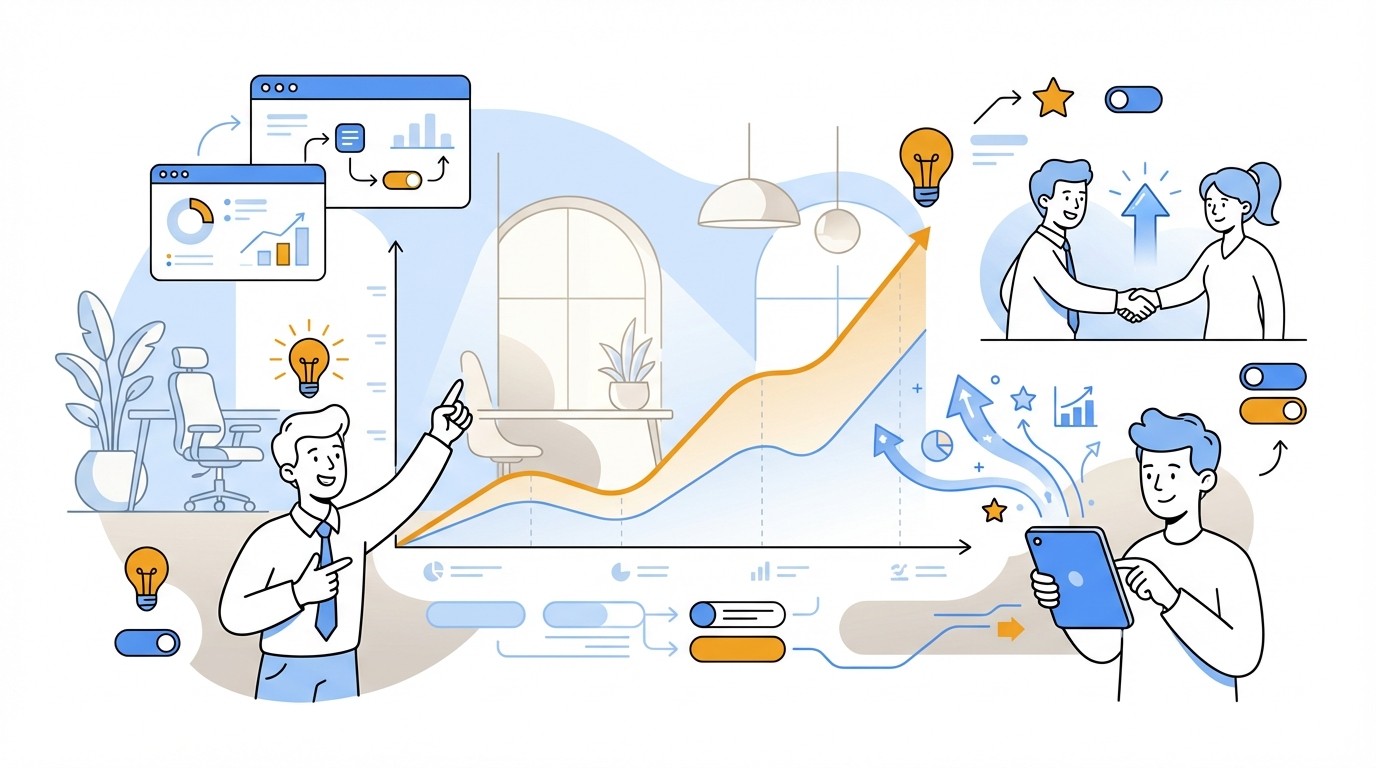
The AI in HR market is projected to reach a valuation of $6.25 billion, reflecting a significant shift in talent acquisition and management strategies.
The global market for AI in recruitment 2026 is poised for significant expansion, with valuations expected to reach $6.25 billion as organizations increasingly prioritize advanced HR tech trends. This growth trajectory, projected at a 24.8% CAGR through 2030, highlights a fundamental shift in the future of hiring. Beyond simple automation, the industry is transitioning toward agentic AI HR systems capable of managing complex workflows autonomously. As businesses integrate this talent acquisition AI to streamline operations, the focus is moving toward balancing technological efficiency with the strategic necessity of human-centric oversight.
As the landscape of talent acquisition AI continues to evolve, the integration of intelligent systems has become a baseline requirement for competitive firms. Industry projections indicate that 70% of large organizations will leverage AI in recruitment 2026 to manage complex workflows, while recent data from SHRM suggests that 84% of leaders are prioritizing these HR tech trends to stay ahead. Beyond simple automation, the future of hiring is rapidly shifting toward agentic AI HR, where autonomous systems handle end-to-end processes. With 69% of talent acquisition teams already utilizing these tools, the focus is now moving from basic implementation toward optimizing human-centric judgment alongside advanced machine efficiency.
Quantifiable Benefits: Efficiency in Talent Acquisition
As we look toward the future of hiring, AI in recruitment 2026 is moving beyond simple automation to embrace agentic AI HR workflows that act with greater autonomy. Organizations integrating these advanced talent acquisition AI tools are already seeing measurable gains, with 85% of early adopters reporting significant efficiency improvements. By streamlining candidate screening and ranking processes ten times faster than traditional methods, these HR tech trends are accelerating hiring timelines for 86.1% of teams. Ultimately, the most successful firms are those that balance this newfound speed with human-centric judgment to build more resilient, long-term talent pipelines.
Many teams achieve 30-50% faster time-to-hire.
High-volume programs see reductions up to 75%.
AI recruitment can reduce cost-per-hire by as much as 30%.
Consider a Fortune 500 technology firm that saved $3.2 million annually by reducing agency spend by 40% through strategic AI integration. These measurable gains highlight why AI in recruitment 2026 is shifting from simple automation to autonomous agentic AI HR workflows. As these HR tech trends redefine the future of hiring, companies are finding that successful talent acquisition AI requires a careful balance between operational efficiency and human-centric judgment to build sustainable, long-term pipelines.
The Rise of Agentic AI in HR: Beyond Simple Automation
Traditional AI tools have fundamentally reshaped HR operations, and as we look at the landscape of AI in recruitment 2026, it is clear that 87% of companies now integrate these technologies into their hiring workflows. However, the next major shift in HR tech trends is already underway: the rise of agentic AI HR. Moving beyond simple automation, these systems function as autonomous teammates in talent acquisition. By evolving from passive tools into active participants, this future of hiring allows organizations to streamline complex processes while maintaining the strategic human-centric judgment essential for building long-term talent pipelines.
As we look toward the future of hiring, the landscape of HR tech trends is shifting from simple task automation to the rise of agentic AI in recruitment 2026. While traditional tools have long assisted with basic functions like resume screening and interview scheduling, talent acquisition AI is evolving into more sophisticated systems. Unlike standard automation, these agentic platforms operate with a high degree of autonomy, capable of initiating complex workflows, making nuanced decisions, and managing end-to-end processes with minimal human intervention.
As we look toward the future of hiring, agentic AI HR systems are shifting from simple automation to managing entire segments of the recruitment lifecycle. Unlike traditional tools, these autonomous agents can independently source candidates, execute personalized outreach, and conduct initial assessments, representing a major milestone in HR tech trends. By integrating these workflows, organizations are already seeing 40% reductions in time-to-hire while preserving candidate quality. As we approach 2026, the strategic adoption of AI in recruitment is becoming essential for companies aiming to scale their talent acquisition AI capabilities without sacrificing the human-centric judgment required for long-term success.
As we look toward the future of hiring, the integration of agentic AI in recruitment 2026 is fundamentally redefining the recruiter's role. By transitioning from manual administrative tasks to high-level strategic oversight, HR professionals are increasingly empowered to focus on complex negotiations and authentic relationship building. While these evolving HR tech trends delegate repetitive workflows to autonomous systems, the true value lies in the synergy between machine efficiency and human-centric judgment. Ultimately, successful talent acquisition AI adoption relies on this strategic partnership, allowing teams to prioritize the human connection that defines long-term organizational success.
Agentic AI represents a significant advancement for HR tech trends. HR leaders must understand this distinction. Adopting these advanced systems prepares teams for competitive advantage in 2026 and beyond.
Unlocking Strategic Value with Agentic AI HR Solutions
The evolution of AI in recruitment 2026 is fundamentally reshaping how organizations approach talent acquisition. By transitioning from basic automation to sophisticated agentic AI HR systems, teams are moving beyond repetitive administrative burdens to focus on high-impact strategic initiatives. This shift represents a defining moment in current HR tech trends, where the future of hiring balances unprecedented operational efficiency with the nuanced, human-centric judgment required to build long-term talent pipelines.
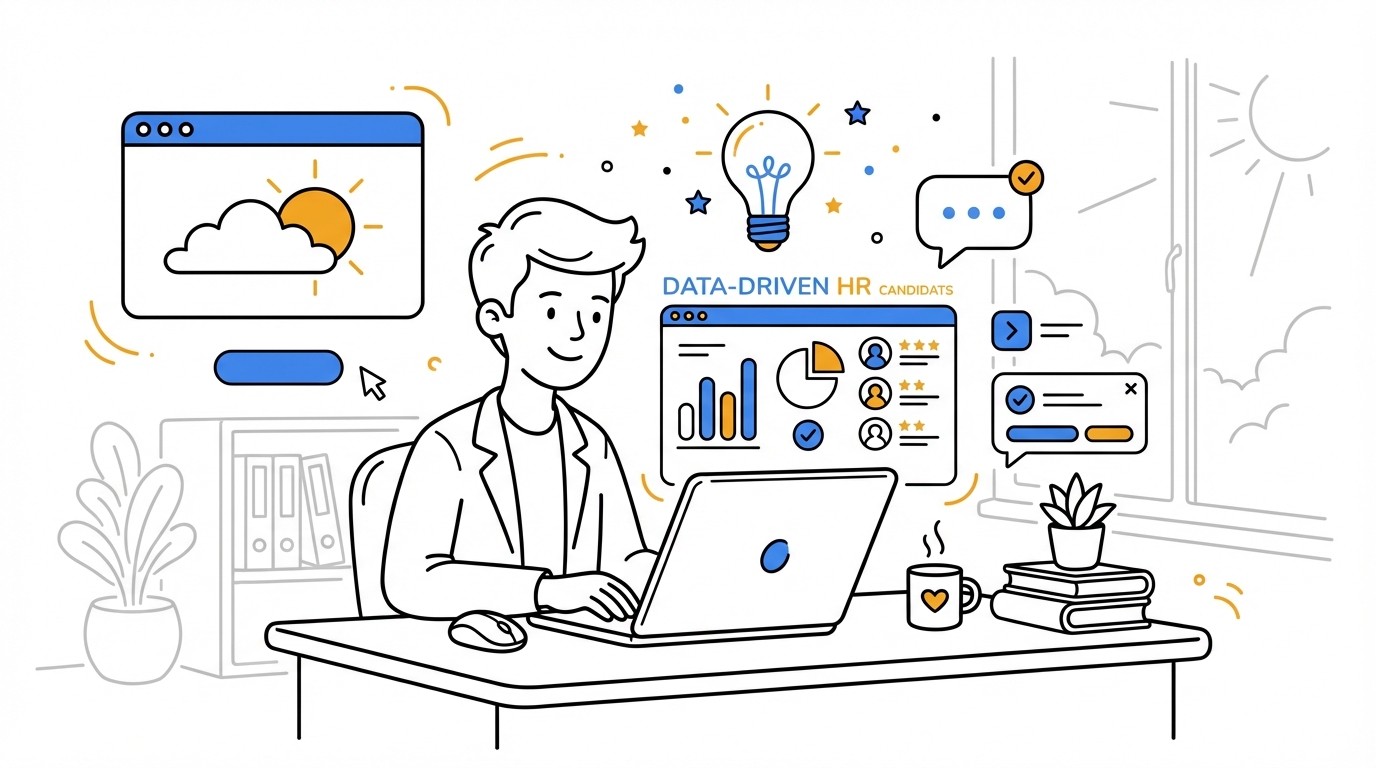
Human-AI synergy: Empowering HR professionals through data-driven insights.
Boosting Candidate Quality and Offer Rates
As we look toward the future of hiring, AI in recruitment 2026 is moving beyond simple automation to embrace agentic AI HR workflows that actively manage end-to-end candidate selection. By leveraging these sophisticated talent acquisition AI tools, organizations can identify best-fit individuals with unprecedented precision, significantly enhancing long-term candidate quality. Companies integrating these latest HR tech trends are already seeing measurable results, with AI-vetted candidates proving 14% more likely to receive a job offer. This shift not only streamlines operations but also empowers teams to focus on the human-centric judgment essential for building high-performing, sustainable talent pipelines.
Driving Diversity and Inclusion
Beyond mere efficiency, AI in recruitment 2026 is fundamentally reshaping the landscape to foster greater equity. A 2022 study by The Inclusion Initiative highlighted that algorithmic hiring often yields more diverse outcomes than traditional human-led processes. As HR tech trends shift toward skills-first hiring models, organizations are leveraging talent acquisition AI to expand their candidate pools by three to five times. This transition toward the future of hiring is yielding measurable results, with PwC reporting a 15% increase in candidates from underrepresented groups following the implementation of automated screening. By integrating agentic AI HR systems that prioritize objective data over subjective intuition, companies are effectively mitigating unconscious bias and building more inclusive, high-performing workforces.
Empowering Recruiters for Strategic Growth
Automating routine tasks is no longer just about efficiency; it is the cornerstone of the future of hiring. As we look toward AI in recruitment 2026, the shift from basic automation to agentic AI HR workflows is transforming how teams operate. By delegating repetitive activities like initial screening and scheduling to autonomous systems, recruiters reclaim 30% of their time, allowing them to prioritize high-value interactions and complex candidate negotiations. Early implementations of tools like Workday’s Recruiting Agent demonstrate that this evolution in talent acquisition AI can increase recruiter capacity by an average of 54%. As these HR tech trends continue to mature, the ability to balance such powerful technical capabilities with human-centric judgment will define the most successful talent acquisition strategies.
As the landscape of HR tech trends evolves, Days.AI empowers organizations to transcend basic automation. By integrating sophisticated talent acquisition AI and autonomous agentic AI HR solutions, we help teams navigate the future of hiring with precision. This strategic approach ensures your recruitment workflows remain agile and human-centric, allowing you to secure top-tier candidates and maintain a competitive edge in the AI in recruitment 2026 era.
Navigating the Future of Hiring: Ethics and Human-AI Collaboration
The landscape of talent acquisition is undergoing a fundamental transformation as HR tech trends shift toward more autonomous workflows. By early 2026, the widespread integration of agentic AI HR tools will redefine the future of hiring, moving beyond simple automation to intelligent, self-directed processes. While this evolution promises unprecedented efficiency, it necessitates a rigorous focus on AI governance and ethical oversight. To successfully navigate the rise of AI in recruitment 2026, leaders must balance these advanced technological capabilities with human-centric judgment, ensuring that talent acquisition AI remains transparent, equitable, and aligned with long-term organizational values.
Mitigating Bias in AI Hiring
Algorithmic bias remains a critical hurdle as organizations navigate the future of hiring. Because modern talent acquisition AI learns from historical datasets, it often mirrors the unconscious prejudices embedded in past recruitment decisions. If left unchecked, these systems can inadvertently perpetuate inequality, systematically excluding qualified candidates and undermining the strategic goals of HR tech trends. As we look toward the landscape of AI in recruitment 2026, the shift toward agentic AI HR necessitates a proactive approach to governance. To maintain fairness, HR teams must implement rigorous auditing frameworks, ensuring that autonomous tools are balanced with human-centric oversight to protect both the integrity of the hiring process and the diversity of the talent pipeline.
To ensure fairness, organizations must implement robust mitigation strategies as part of their broader approach to HR tech trends. This involves diversifying training datasets rigorously and conducting regular, independent audits of algorithms to align with the future of hiring. By validating automated outcomes against human decision-making and continuously monitoring for disparate impact, companies can successfully integrate agentic AI in recruitment 2026. These proactive steps ensure equity for all candidates while strengthening the strategic impact of talent acquisition AI within the modern workforce.
The Indispensable Role of Human Oversight
While human judgment remains irreplaceable, the future of hiring lies in the synergy between technology and intuition. AI augments rather than replaces the recruiter, making human oversight a non-negotiable component of modern talent acquisition AI. According to the SHRM 2026 HR Tech Report, 69% of talent leaders have already integrated these systems, signaling a major shift in HR tech trends. By delegating repetitive workflows to emerging agentic AI HR tools, teams are liberated to focus on strategic decision-making, complex candidate relationships, and the empathy that defines high-touch recruitment. As we look toward the landscape of AI in recruitment 2026, the most successful organizations will be those that leverage autonomous agents to handle logistics while empowering their people to ensure the fairness, nuance, and ethical standards that define a truly human-centric hiring process.
As we look toward the future of hiring, success in 2026 will be defined by how effectively organizations navigate the shift from basic automation to agentic AI in HR. Rather than viewing these HR tech trends as mere tools, forward-thinking teams must prioritize strategic integration that balances efficiency with human-centric judgment. By embedding talent acquisition AI into their workflows with a focus on ethical governance and long-term pipeline health, companies can move beyond simple efficiency gains. Days.AI empowers organizations to master this evolving landscape, ensuring that your recruitment strategy remains both competitive and compliant as AI in recruitment 2026 continues to reshape the industry.
Conclusion: Preparing for the Future of Recruitment
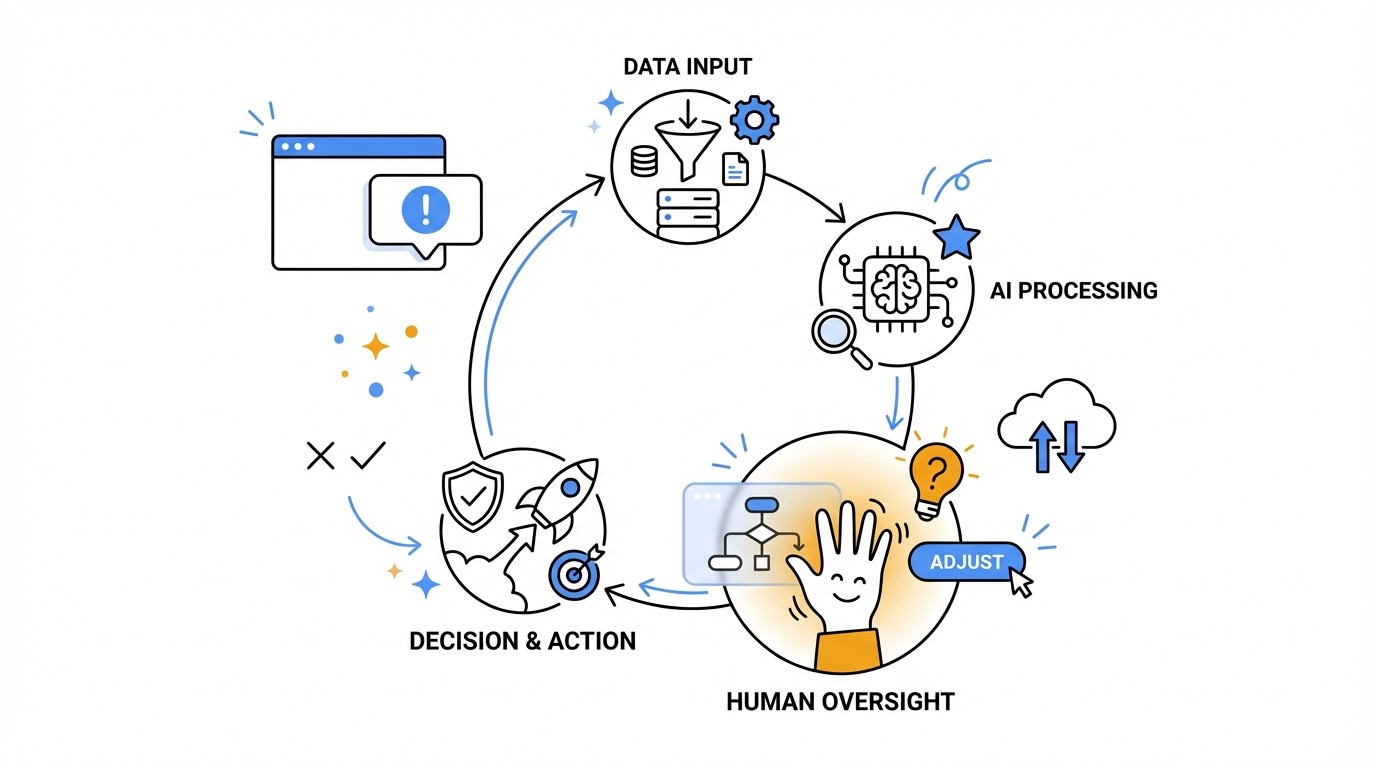
The Human-in-the-Loop framework: A model for integrating ethical human oversight into automated decision-making processes.
The emergence of agentic AI in recruitment marks a fundamental shift in HR tech trends, moving beyond simple automation toward autonomous systems that function as intelligent partners. By integrating these advanced tools, organizations can navigate the future of hiring with greater precision, ensuring they remain competitive in the evolving talent acquisition AI landscape. Proactively adopting these workflows is no longer optional; it is a strategic necessity for any team aiming to master the complexities of talent acquisition in 2026.
Ignoring this technological evolution risks falling behind. Forward-thinking HR departments will secure a distinct competitive advantage. They'll attract top talent with precision. They'll also make smarter, data-driven hiring decisions.
Days.AI provides the infrastructure to navigate the rapidly evolving landscape of HR tech trends. By integrating agentic AI HR solutions into your existing workflows, we move beyond simple automation to transform talent acquisition AI into a strategic advantage. Our platform empowers your team to master the future of hiring, ensuring you remain competitive as AI in recruitment 2026 shifts toward more autonomous, intelligent decision-making. We help you bridge the gap between technological efficiency and human-centric talent management, preparing your organization for a more effective and data-driven tomorrow.
The future of hiring is no longer a distant concept; it is an active transformation. As we look toward 2026, the shift from simple automation to agentic AI in HR is redefining how organizations build talent pipelines. By integrating advanced talent acquisition AI, your team can move beyond basic efficiency to create a truly human-centric recruitment strategy. Discover how Days.AI helps you navigate these evolving HR tech trends to build a smarter, more ethical hiring process. Explore our solutions today.
Frequently Asked Questions
What is the role of AI in recruitment 2026?
By 2026, AI in recruitment has evolved beyond simple automation into autonomous, goal-oriented systems. These tools manage end-to-end workflows, allowing talent acquisition teams to streamline candidate sourcing and screening processes. This shift represents a fundamental change in the future of hiring, where data-driven efficiency is balanced with human-centric judgment to ensure better cultural alignment and long-term retention.
How does agentic AI HR differ from standard automation?
Agentic AI HR represents the next generation of HR tech trends, moving from basic task automation to intelligent, autonomous agents. Unlike traditional tools that require constant manual input, agentic AI can independently manage complex workflows and make goal-oriented decisions. This allows organizations to handle high-volume hiring tasks with significantly less manual oversight while maintaining high standards of candidate evaluation.
Why are HR tech trends shifting toward talent acquisition AI?
The shift toward talent acquisition AI is driven by the need for greater operational efficiency and competitive advantage in a complex job market. With the market projected to reach $6.25 billion, organizations are adopting these technologies to accelerate hiring timelines and reduce costs. By integrating these advanced systems, companies can process candidates ten times faster while maintaining the strategic oversight necessary for successful talent management.
What are the primary benefits of using AI in recruitment 2026?
Adopting AI in recruitment 2026 offers measurable improvements, including 30-50% faster time-to-hire and up to 30% lower cost-per-hire. These tools enable teams to handle high-volume programs with greater precision, reducing agency spend and administrative burdens. By leveraging these HR tech trends, firms can focus their human resources on high-level strategy and relationship-building rather than repetitive manual screening tasks.
How can companies balance AI efficiency with human-centric judgment?
The future of hiring relies on a delicate balance between machine efficiency and human-centric judgment. While agentic AI HR systems excel at data-driven ranking and sourcing, human recruiters remain essential for assessing cultural fit and long-term potential. Successful organizations use AI to handle the heavy lifting of data processing, freeing up human professionals to focus on the nuanced, interpersonal aspects of talent acquisition.
When should organizations prioritize the adoption of agentic AI HR?
Organizations should prioritize agentic AI HR integration now to remain competitive, as 87% of companies have already adopted AI in recruitment 2026. As these HR tech trends become a baseline requirement for large-scale firms, delaying implementation risks falling behind in the war for top-tier talent. Early adoption allows teams to optimize their workflows and build the data-driven infrastructure necessary for future growth.
Is AI in recruitment 2026 suitable for all hiring processes?
While AI in recruitment 2026 is highly effective for streamlining candidate screening and high-volume hiring, it is most powerful when used as part of a hybrid strategy. By automating repetitive tasks through talent acquisition AI, teams can dedicate more time to complex, human-centric decision-making. This combination ensures that the future of hiring remains both technologically advanced and grounded in the ethical, personal touch required for quality recruitment.


Hop on a call with us to see how our services can accelerate your growth.