
K R
Days AI
HiringDay
An AI-powered hiring intelligence platform that finds, evaluates, and engages the right candidates automatically . so recruiters focus on decisions, not sourcing.

How to Reduce Time to Hire in Tech: Proven Recruitment Strategies
Losing a top-tier software engineer to a protracted hiring process is more than an HR statistic; it is a tangible drag on your innovation pipeline. When critical roles remain unfilled, the opportunity cost compounds, delaying product launches and eroding your competitive advantage. To reduce time to hire in tech, organizations must move beyond minor process tweaks and address the fundamental flaws causing talent to leak away. Modern tech recruitment strategies prioritize efficiency, leveraging AI in talent acquisition to automate screening and scheduling while removing bottlenecks that frustrate top prospects. Because elite candidates view a sluggish process as a red flag, optimizing your workflow is essential to speed up the hiring process. Technology should serve to enhance, not replace, the human element; by balancing automation with a personalized candidate experience in tech jobs, you ensure that speed never comes at the expense of quality. Ultimately, refining your hiring funnel is not just about filling seats faster—it is about securing the future growth of your business.
To address this critical strategic challenge, organizations must radically rethink how they attract and secure exceptional talent. Optimizing your tech recruitment strategies is no longer optional; it is a competitive necessity. Speed is not merely an HR metric or a trade-off for quality, but a clear signal of your company’s agility and a powerful magnet for top-tier developers. By leveraging AI in talent acquisition and refining your workflows, you can effectively reduce time to hire tech roles from weeks to days. This guide explores how to speed up the hiring process technology, ensuring you maintain an exceptional candidate experience for tech jobs while accelerating innovation to outpace your competition.
The Hidden Costs of a Slow Tech Hiring Process
Your organization’s ability to secure top-tier talent operates on a complex recruitment algorithm. When this process bogs down, it is not a minor glitch; it is a critical bug that requires immediate debugging. Inefficient hiring workflows do more than impact HR metrics—they undermine strategic objectives, eroding both innovation velocity and market share. To reduce time to hire in tech, organizations must move beyond legacy practices and adopt modern tech recruitment strategies. The cost of a protracted hiring cycle is substantial; losing a single candidate to a slow process can cost upwards of $80,000 in lost productivity and delayed milestones. By leveraging AI in talent acquisition to automate screening and sourcing, companies can speed up the hiring process while simultaneously elevating the candidate experience for tech jobs, ensuring that speed never comes at the expense of quality.
Slow hiring is more than an operational hurdle; it is a direct tax on your competitive edge. While your teams grapple with understaffing and extended deadlines, competitors are leveraging advanced tech recruitment strategies to secure the engineers who could drive your next breakthrough. A sluggish hiring cycle signals a lack of agility to prospective talent, often repelling high performers who prioritize momentum. When you fail to speed up the hiring process, technology roadmaps suffer, innovation stalls, and you risk being outmaneuvered in a talent-scarce market. To remain competitive, organizations must prioritize a recalibration of their talent acquisition model. By integrating AI in talent acquisition, you can automate repetitive screening and scheduling, effectively reducing time to hire in tech. Furthermore, optimizing the candidate experience for tech jobs ensures that top-tier talent remains engaged throughout the funnel. Transforming your recruitment from a reactive process into a data-driven business driver is the only way to eliminate bottlenecks and secure the specialized expertise your company needs to thrive.
The Impact of Hiring Delays on Innovation
The silent erosion of delay extends far beyond the immediate vacancy. Within the intricate recruitment lifecycle of a tech company, slow processing cycles create systemic vulnerabilities that hinder your ability to reduce time to hire in tech. Each protracted decision acts as a bottleneck, directly impeding product velocity. Industry analyses consistently show that engineering teams operating below capacity fail to iterate at the pace demanded by dynamic markets. By adopting modern tech recruitment strategies—such as integrating AI in talent acquisition to automate screening—organizations can speed up the hiring process while simultaneously improving the candidate experience for tech jobs. Addressing these inefficiencies is not merely an operational fix; it is a strategic necessity to ensure your team remains competitive and agile.
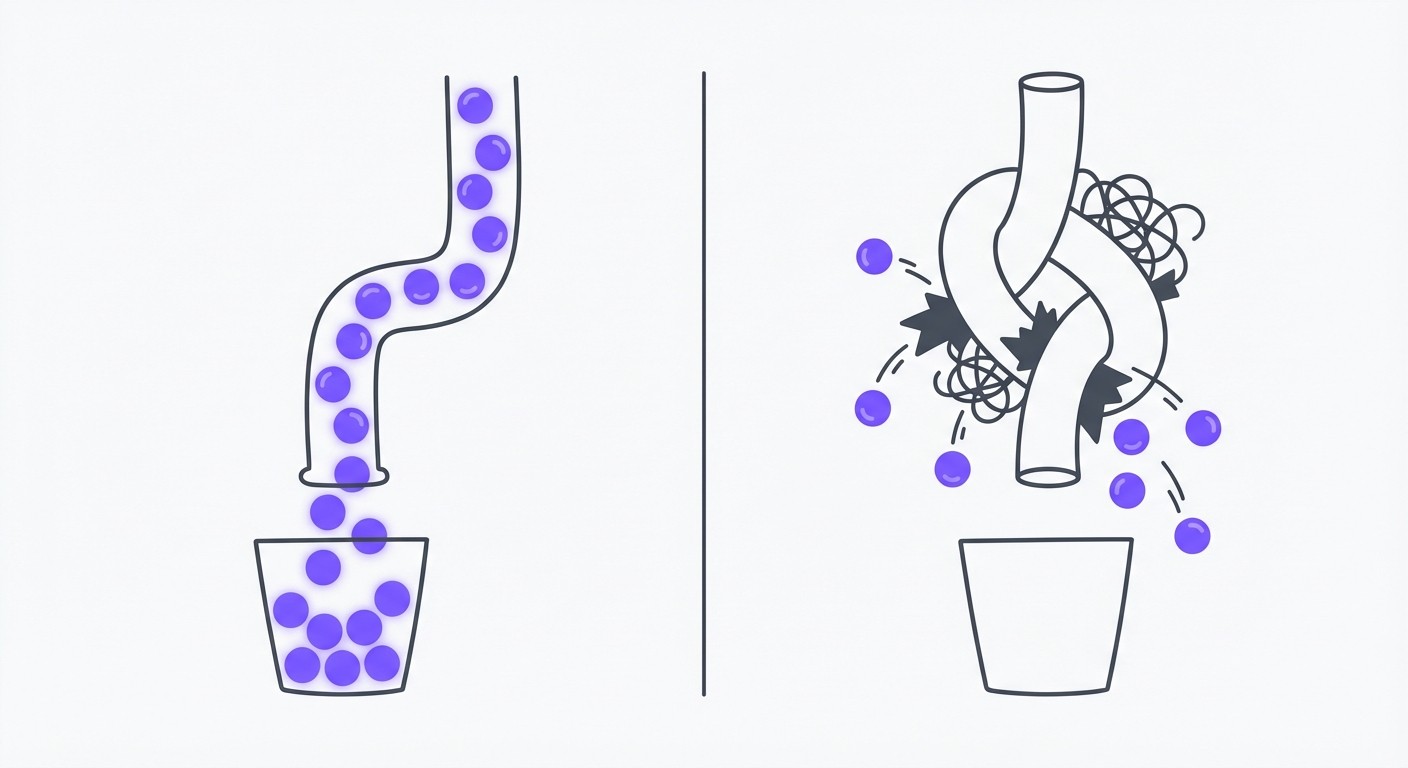
The difference between a system that empowers talent and one that just keeps it waiting in line.
Slow product velocity inevitably cascades into broader system failures, where missed market windows become irreversible. A competitor who masters effective tech recruitment strategies to staff a critical role two months faster can launch an innovative feature, capture early adopters, and establish dominance before your understaffed team even begins development. Strategic insights confirm that extended time to hire in tech leads to a quantifiable erosion of market share and a significant competitive disadvantage. To mitigate these risks, organizations must prioritize speed up hiring process technology, integrating AI in talent acquisition to streamline workflows. Ultimately, the cost of a slow pipeline exceeds lost salary; it represents the loss of innovation and revenue. By refining your approach—focusing on both automation and an elevated candidate experience for tech jobs—you can secure the talent necessary to maintain your market position.
Moreover, internal system health suffers as existing high-performers become burdened, leading to burnout and further attrition. This pressure often diminishes output quality, creating technical debt that hampers future development. By recognizing these complex interdependencies, organizations can proactively adopt modern tech recruitment strategies to streamline workflows. Integrating AI in talent acquisition helps automate repetitive tasks, allowing teams to speed up the hiring process technology while simultaneously enhancing the candidate experience for tech jobs. Ultimately, these improvements reduce time to hire tech talent, ensuring that efficiency gains do not come at the expense of long-term quality.
Identifying Bottlenecks to Speed Up Hiring Process Technology
To effectively reduce time to hire in tech, your recruitment pipeline should be approached not as a series of disparate tasks, but as a complex algorithm in need of rigorous debugging. Just as a software engineer meticulously examines code for inefficient execution paths, talent acquisition teams must systematically diagnose their hiring process. By leveraging AI in talent acquisition to automate repetitive screening and scheduling, you can eliminate the bottlenecks that degrade performance. Implementing these modern tech recruitment strategies requires a data-driven diagnostic of every stage, ensuring that you speed up the hiring process through technology while simultaneously enhancing the candidate experience for tech jobs to prevent top-tier talent from dropping out of the funnel.
Industry analysis frequently highlights common bottlenecks that hinder tech recruitment, acting as critical failures in your talent acquisition algorithm. These delays often stem from protracted resume screening, where manual filters are either too broad—overwhelming recruiters with unqualified applicants—or too restrictive, causing you to miss top-tier talent. Another significant hurdle involves inefficient interview scheduling, particularly when coordinating multiple stakeholders across time zones. Furthermore, sluggish feedback loops, both internally to hiring managers and externally to applicants, can cause promising talent to disengage or accept competing offers. By refining these workflows and adopting modern tech recruitment strategies, you can effectively reduce time to hire in tech. Integrating AI in talent acquisition helps automate these repetitive tasks, while a focus on candidate experience in tech jobs ensures you maintain high engagement throughout the funnel. Addressing these inefficiencies is essential to speed up the hiring process technology stack, allowing your team to secure specialized talent before your competitors do.
To pinpoint these hidden issues, audit your funnel with data-driven metrics: How long does a candidate realistically spend in each stage, and where do they most frequently drop off? By analyzing conversion rates, you can identify if specific hiring managers are delaying feedback or if interview panels are creating unnecessary scheduling friction. Every delay represents a defect in your operational code, hindering your ability to reduce time to hire in tech. Understanding these systemic flaws is the first iteration; the next demands precise tech recruitment strategies to recode your workflow for efficiency. By leveraging AI in talent acquisition, you can automate repetitive screening tasks, while a focus on candidate experience in tech jobs ensures top talent stays engaged. Ultimately, these speed up the hiring process technology integrations, allowing you to balance rapid recruitment with the high-quality standards required for specialized technical roles.
Leveraging AI in Talent Acquisition for Tech Roles
Optimizing your hiring workflow begins with integrating advanced AI and automation to fundamentally upgrade processing speed and output accuracy. By leveraging AI in talent acquisition, teams can move beyond basic keyword matching to utilize sourcing engines that identify candidates whose skills and experience align perfectly with complex job requirements. This shift not only streamlines the initial screening phase—a common bottleneck in many tech recruitment strategies—but also enhances the overall candidate experience for tech jobs. When you automate these repetitive tasks, you significantly reduce time to hire in tech, allowing your team to focus on high-touch engagement rather than manual administration. Implementing these tools as core components of your infrastructure is the most effective way to speed up the hiring process in technology while ensuring you maintain the quality of your technical talent pipeline.

Recruitment: From 'How is this still a thing?' to 'Oh, that was actually easy.'
Automated interview scheduling platforms streamline logistical complexities, ensuring candidates and hiring managers connect seamlessly while eliminating the traditional email ping-pong. By removing administrative friction, these tools maintain high candidate momentum and significantly improve the overall candidate experience for tech jobs. Leveraging the latest speed up hiring process technology allows organizations to achieve a measurable reduction in time to hire for tech roles, providing a distinct competitive advantage in a crowded market. Beyond mere efficiency, incorporating AI in talent acquisition tech adds a layer of predictive intelligence. By analyzing historical data and candidate profiles, these systems refine recruitment strategies, helping teams identify top talent more accurately. This data-driven approach not only accelerates the pipeline but also ensures higher quality hires and reduced churn, ultimately fostering long-term team stability.
By integrating AI in talent acquisition, your team can offload repetitive administrative burdens, allowing human experts to focus on the nuanced evaluations and relationship building that define top-tier tech recruitment strategies. This shift is essential to reduce time to hire in tech, as streamlining these workflows directly impacts your ability to secure specialized talent before competitors do. The strategic ROI is clear: by leveraging technology to speed up the hiring process, you facilitate faster project ramp-ups and build stronger, more resilient teams. Ultimately, the focus moves beyond simple automation to creating a seamless candidate experience for tech jobs, ensuring that your organization maintains a measurable market advantage through both speed and precision.
Optimizing Candidate Experience for Tech Jobs
Having established the strategic imperative of deploying recruitment technologies, our focus now shifts to the experience of the individual interacting with this augmented system: the candidate. Think of your recruitment process as a sophisticated algorithm, and the candidate's journey through it as their user interface. For top tech talent, this experience is a critical signal of your organizational maturity and respect for their time. Because modern tech recruitment strategies prioritize efficiency, a clunky, opaque process is not merely inconvenient; it actively repels the very individuals you aim to attract. By leveraging AI in talent acquisition to speed up the hiring process, you can remove friction points that cause top-tier applicants to drop off. Ultimately, optimizing the candidate experience for tech jobs is the most effective way to reduce time to hire in tech without compromising the quality of your engineering team.
Effective tech recruitment strategies must account for the fact that top-tier candidates possess unique expectations regarding process efficiency and transparency. Because these professionals are natural problem-solvers and UX advocates, a friction-filled hiring journey immediately signals operational inefficiency. To reduce time to hire in tech, organizations must treat the recruitment funnel as a product; an optimized candidate experience for tech jobs projects an image of a forward-thinking culture, which is essential for securing faster offer acceptances. By leveraging AI in talent acquisition to automate repetitive tasks and streamlining interview workflows, companies can speed up the hiring process technology stack without sacrificing the quality of their talent pipeline.
To achieve this, every touchpoint—from initial application to offer—must be designed with the candidate experience in tech jobs as a top priority. By implementing systems that provide real-time status updates and consistent feedback loops, you can effectively speed up the hiring process technology stack. Reducing unnecessary stages while leveraging AI in talent acquisition tech helps to expedite scheduling and initial screenings, removing common bottlenecks. This streamlined, transparent approach not only respects the applicant's time but also demonstrates that your organization operates with precision. Ultimately, these tech recruitment strategies lead to a tangible reduction in time to hire tech talent, fostering higher offer acceptance rates and ensuring you secure the best candidates in a competitive market.
Data-Driven Strategies to Sustain Recruitment Velocity
To effectively reduce time to hire in tech, the strategic imperative must shift from static process definition to the continuous optimization of your recruitment lifecycle. Just as we commit to the relentless refinement of our software, our hiring pipeline demands constant iteration and data-driven adjustment. This isn't merely about incremental tweaks; it’s about architecting a system designed for sustained improvement by leveraging AI in talent acquisition to automate repetitive tasks and source top-tier talent faster. Understanding key metrics—such as time-to-fill and interview-to-offer ratios—provides the essential telemetry for this refinement. By integrating these tech recruitment strategies, you can identify where bottlenecks introduce latency or risk losing candidates, ultimately allowing you to speed up the hiring process while simultaneously enhancing the candidate experience for tech jobs.
This analytical rigor empowers teams to A/B test every stage of the recruitment funnel. By experimenting with alternative screening methodologies or revised interview panel structures, you can meticulously measure the impact on candidate experience in tech jobs and overall hiring velocity. The objective is to deploy faster iterations of your tech recruitment strategies—mirroring the principles of continuous deployment in software development—and rigorously analyze performance metrics post-change. This agile, data-driven approach ensures sustained improvement, directly translating into a significantly reduced time to hire in tech while attracting a higher caliber of specialized talent. By leveraging AI in talent acquisition, organizations can automate bottlenecks and streamline workflows, creating a competitive advantage that compounds over time. Embracing these methods allows you to proactively engineer your capacity to innovate rather than simply reacting to market demands. When you harness the full potential of technology to speed up the hiring process, you transform recruitment from a reactive task into a strategic engine for growth.
Conclusion
Slow tech hiring directly impacts your bottom line, sapping innovation and causing you to lose valuable talent to competitors. As the article highlighted, even one lost top-tier candidate creates significant ripple effects across your business. To remain competitive, organizations must refine their tech recruitment strategies by identifying hidden bottlenecks that stall progress. By leveraging AI in talent acquisition and optimizing your workflow, you can effectively speed up the hiring process technology, ensuring a seamless candidate experience for tech jobs while significantly reducing time to hire tech talent.
To effectively reduce time to hire in tech, organizations must move beyond manual workflows and embrace data-driven recruitment strategies. At Manoj’s Organization, we develop advanced AI in talent acquisition to help teams automate screening, streamline interview scheduling, and eliminate bottlenecks. By integrating these solutions into your existing stack, you can speed up the hiring process technology while simultaneously enhancing the candidate experience for tech jobs. Our tools act as a diagnostic layer to debug your hiring pipeline, ensuring you maintain high-quality talent standards while significantly accelerating your overall time to hire.
Secure top talent faster, maintaining your competitive edge. Embrace data-driven strategies for a stronger future. Your next innovation depends on it.
Tired of lengthy hiring cycles? Drastically reduce your time-to-hire and streamline your entire recruitment process with Manoj's Organization. Discover how Manoj's Organization can transform your hiring today
Frequently Asked Questions
How can organizations reduce time to hire in tech effectively?
To reduce time to hire in tech, organizations must treat their recruitment pipeline like a software algorithm that requires constant debugging. By identifying and removing bottlenecks in the interview process, streamlining communication between hiring managers, and utilizing data-driven diagnostics, companies can move from weeks to days in their hiring cycles, ensuring they secure top-tier talent before competitors do.
Why is it critical to speed up the hiring process for technology roles?
Speeding up the hiring process for technology roles is essential because a sluggish process acts as a major red flag to high-performing candidates who value agility. Beyond candidate perception, a slow process creates a direct drag on innovation, causes missed product launch windows, and leads to significant financial losses, often exceeding $80,000 per lost hire due to lost productivity and market share.
What are the most effective tech recruitment strategies to improve efficiency?
Effective tech recruitment strategies involve treating the hiring funnel as a core business driver rather than an HR task. This includes auditing every stage for friction, implementing AI in talent acquisition to automate repetitive tasks, and empowering teams to make faster, more decisive hiring decisions. These strategies help maintain product velocity and prevent the internal burnout caused by understaffed engineering teams.
How does AI in talent acquisition help tech companies hire faster?
AI in talent acquisition helps tech companies hire faster by automating manual screening, scheduling, and candidate sourcing tasks that typically create bottlenecks. By leveraging AI-driven tools, recruiters can focus on high-value human interactions and assessment, significantly reducing the time spent on administrative overhead and allowing for a more responsive and data-backed approach to securing top engineering talent.
What is the impact of a poor candidate experience on tech jobs?
A poor candidate experience in tech jobs often results in losing top-tier talent to more agile competitors. When the hiring process is slow or disorganized, it signals a lack of operational maturity and innovation to prospective employees. This not only causes immediate talent loss but also damages the employer brand, making it harder to attract high-quality candidates in the future.
When should a company audit its recruitment algorithm to improve hiring speed?
A company should audit its recruitment algorithm whenever they notice a decline in offer acceptance rates, extended time-to-fill metrics, or a decrease in product development velocity. Regular audits are necessary to identify hidden bottlenecks and ensure that the hiring process remains competitive. Proactive debugging of the hiring pipeline is essential to maintain market responsiveness and prevent the accumulation of technical debt.
Are there hidden costs associated with a slow tech hiring process?
Yes, the hidden costs of a slow tech hiring process are exponential and include lost revenue from delayed product launches, increased technical debt, and the burnout of existing staff. When key roles remain unfilled, the organization loses its competitive edge, allowing rivals to capture market share. These costs far exceed the salary of the vacant position, representing a significant strategic failure.


Hop on a call with us to see how our services can accelerate your growth.