
K R
Days AI
HiringDay
An AI-powered hiring intelligence platform that finds, evaluates, and engages the right candidates automatically . so recruiters focus on decisions, not sourcing.

Small Teams, Big Impact: AI Automation for 2-10 Person Teams
The idea of a small team using just one software tool is obsolete. Teams of 2-10 people now leverage five or more AI tools for small business. This isn’t about collecting subscriptions. It’s a strategy to build capabilities once reserved for large enterprises. They create custom tech stacks for small team automation, accelerating marketing, sales, and hiring with surprising speed.
This growth in tools creates a new challenge. How does a small team manage so many platforms without creating more complexity? The goal is efficiency, not a tangled web of logins. The key is building a smart, connected ecosystem. We'll explore the rise of small team automation and show you how to turn your productivity tools for teams into a single growth engine.
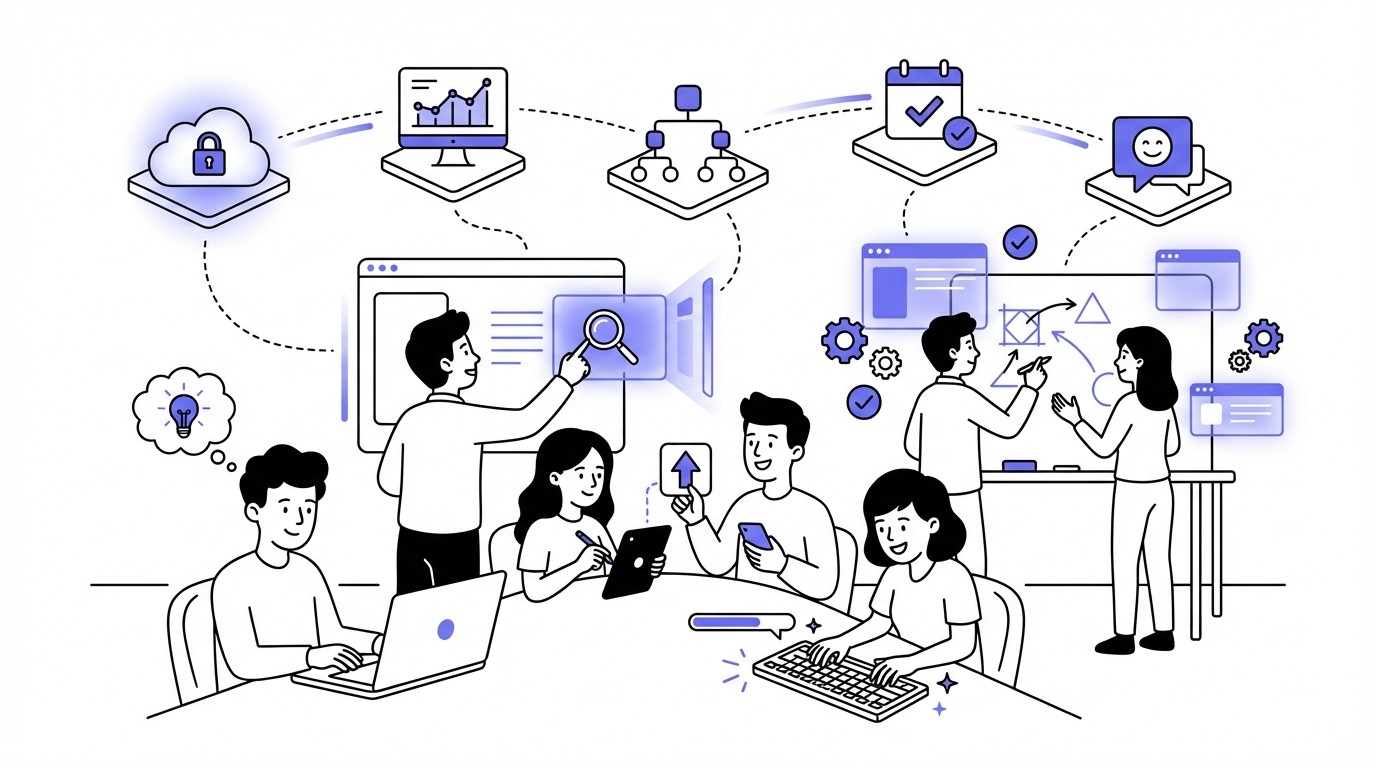
Empowered and agile: Our team seamlessly navigates complex digital integrations to drive innovation and achieve collective success.
The Impact of AI & Automation on Small Team Productivity
The trend of adopting multiple tools is driven by measurable results. Data shows a clear link between strategic workflow automation AI and business growth, especially for agile teams. Companies are not just buying software; they are investing in a new way to operate.
A recent HubSpot survey found that 90% of business leaders feel automation has improved their team's productivity. This isn't a minor tweak. It's a fundamental shift in how work gets done. By offloading repetitive tasks, small teams free up their most valuable resource: human creativity. This focus on high-value work is the core of the small team automation movement, powered by effective AI tools for small business.
Reclaiming Time with Workflow Automation AI
Consider the daily grind of administrative work. Research from McKinsey shows that current workflow automation AI technologies can automate tasks that take up 69% of an employee's time. For a small team, that means hundreds of hours per month are reclaimed for sales, product development, or customer support.
Effective workflow automation AI gives teams a critical advantage. It turns complex processes into simple actions that run in the background. The right AI tools for small business don't just speed up old processes. They create entirely new efficiencies.
Leveraging Augmented Analytics AI for Connected Insights
The real performance leap happens when these productivity tools for teams work together. Isolated data is a common problem. A connected system provides a single source of truth. Here, augmented analytics AI offers a competitive edge. It turns raw data from different platforms into clear business intelligence.
The impact of an integrated versus a siloed approach is stark.
MetricManual Process (Siloed Tools)AI-Augmented WorkflowLead Response Time24-48 HoursUnder 5 MinutesContent Production8-10 Hours / Post1-2 Hours / PostReporting AccuracyProne to human error99.5% with AI
These numbers confirm the strategy. The challenge isn't whether to adopt small team automation. It's how to build an interconnected system that delivers these results without overwhelming your team.
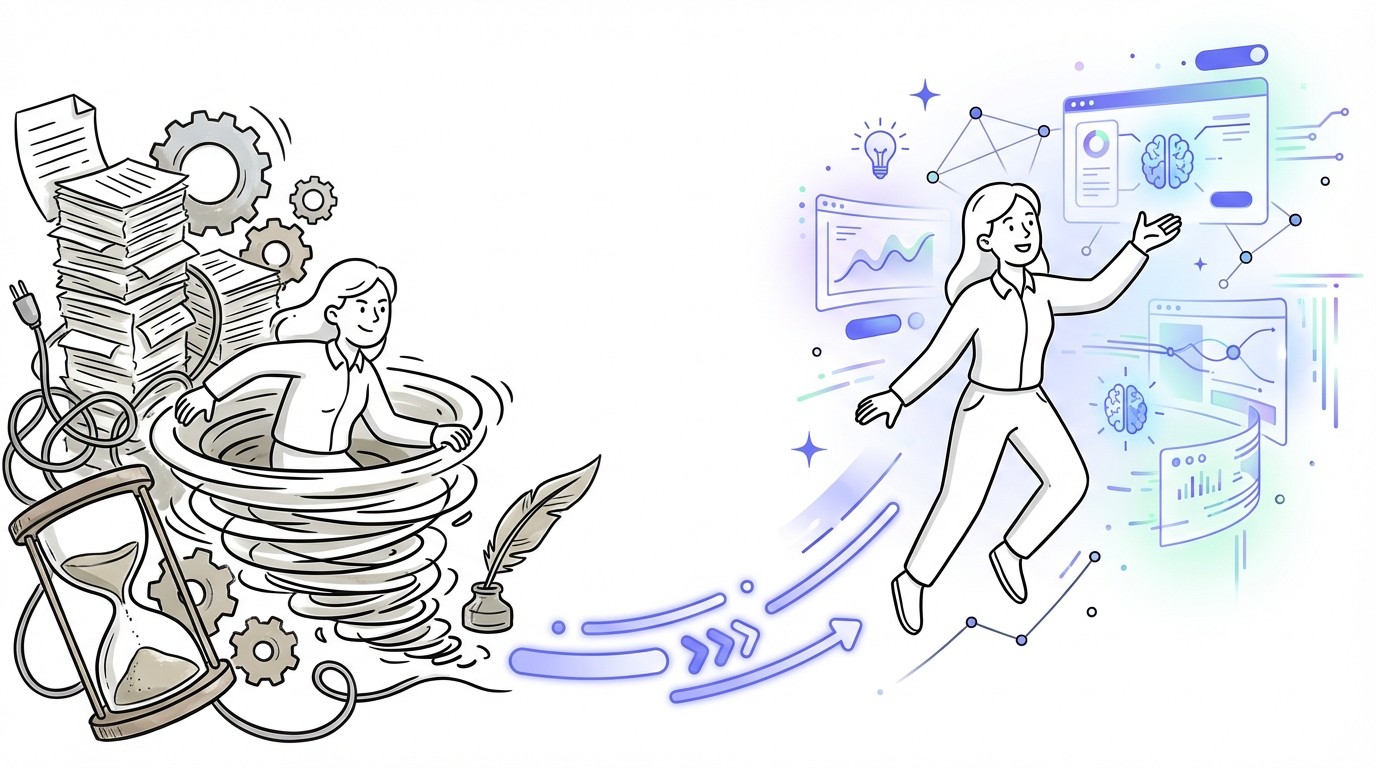
Transforming the grind into seamless flow: Embrace the power of automation.
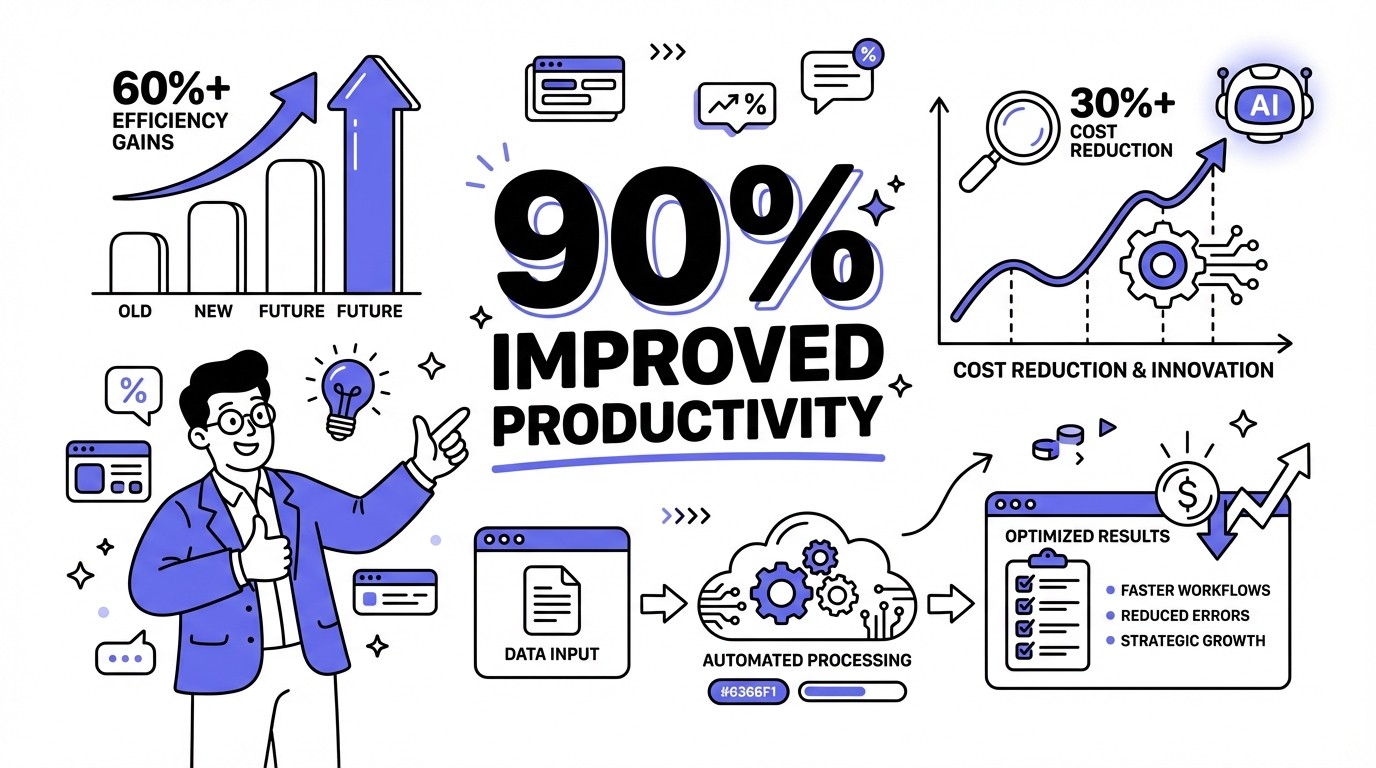
Key Statistics: Automation's Transformative Impact on Productivity and Efficiency.
Key Trends Driving AI Tools Adoption for Small Business
The shift toward multi-tool stacks is powered by specific technology trends. These trends give small teams new capabilities for small team automation. Basic automation, like scheduling emails, is now table stakes. Real growth comes from creating an intelligent, interconnected system of productivity tools for teams. Three core trends are making this possible.
Generative AI Becomes Accessible
Not long ago, creating original content or designs required specialized human expertise. Now, generative AI puts that power into a dashboard. Small teams can produce high-quality blog posts or marketing assets in a fraction of the time. This is why many teams use multiple specialized AI tools for small business—one for writing, another for images, and a third for video.
The Rise of No-Code Integration
You no longer need a developer to connect your software. No-code platforms empower anyone to design and implement sophisticated workflow automation AI. A marketing manager can link a CRM to an email platform without writing a single line of code. This "citizen automator" trend is a primary driver behind multi-tool adoption.
Making Data-Driven Decisions with Augmented Analytics AI
Using five different tools creates a lot of data. Without a way to connect it, you get five confusing reports. Modern augmented analytics AI solves this. It pulls data from all your sources and uncovers insights a human might miss. For example, it can link website traffic from your content platform with lead quality in your CRM, providing a clear picture of ROI.
This new approach fundamentally changes what a small team can achieve, shifting from:
Content Strategy: Manual topic research and guesswork.
Sales Outreach: Generic, one-size-fits-all email templates.
Performance Analysis: Siloed, manually compiled reports.
To a smarter model built on a multi-tool AI stack of productivity tools for teams:
AI-driven topic discovery and accelerated content creation.
Hyper-personalized, data-informed sales sequences.
A unified dashboard with predictive, actionable insights.
These trends show the goal isn't just to automate old tasks. It's to build a smarter operational model for small team automation that was previously out of reach.
Real-World Small Team Automation: AI Tools in Action
The trends are compelling, but what does a multi-tool system look like in practice? It’s about building an engine where specialized AI tools for small business work together. Each tool handles a specific job. This creates a workflow that is both powerful and efficient, transforming how a small team operates.
The real benefit isn't just speed. It's the ability to execute sophisticated strategies once only possible for large enterprises. This is the core of successful small team automation.
A Modern Marketing Workflow with AI Tools for Small Business
Imagine a 3-person marketing team at a growing SaaS company. Their goal is to increase qualified leads by 50% this quarter. They use a stack of five specialized AI tools for small business to do it.
The process is a connected chain of events:
MarketDay identifies a high-intent keyword and generates an SEO-optimized blog post.
An integrated social media scheduler automatically promotes the new post.
A CRM captures leads from a form embedded in the post.
An email marketing tool enrolls the new lead into a personalized nurture sequence.
An analytics dashboard tracks the entire journey, from first click to conversion.
This entire workflow automation AI runs with minimal human intervention. It frees the team to focus on strategy instead of manual tasks. The difference is significant: topic research drops from 6 hours to 15 minutes, content creation shrinks from 10+ hours to just two, and lead follow-up is instant instead of delayed by 24 hours—all tracked on a real-time dashboard.
This system allows the team to act on data, not guesses. By using augmented analytics AI to monitor performance, they found that leads from their AI-generated content, according to their own internal analytics, converted 40% faster. These are the results that redefine what a small team can accomplish.
Building Your AI-Powered Ecosystem for Small Team Automation
The marketing workflow example shows what’s possible. But achieving those results doesn’t happen by accident. Simply buying five separate tools often leads to five separate problems. The key is to build a connected ecosystem, not just a collection of apps. A strategic approach ensures your productivity tools for teams work together.
Effective small team automation starts with a central "hub." This is the platform where your most critical work begins. For many growth teams, that hub is content creation. Every other activity—social promotion, lead nurturing, sales outreach—stems from the content you produce. When you build your stack around a powerful content engine like MarketDay, you create a logical flow of data.
The Hub-and-Spoke Model for Workflow Automation AI
Think of your tool stack like a wheel.
The Hub: Your core platform (e.g., MarketDay) for a primary function like content generation.
The Spokes: Specialized tools for distribution, capture, and analysis that connect to the hub.
This model ensures information moves smoothly. When MarketDay produces a new blog post, it can automatically trigger your social scheduler and update your analytics dashboard. This connected workflow automation AI is far more effective than manual data entry. Research from industry sources like Zapier shows that poorly integrated software can cost a team over 20% of its productive time annually due to manual data handling.
This strategic approach transforms how you use AI tools for small business. You move from simply completing tasks faster to building an intelligent growth engine.
AspectSiloed "Tool-Stacking"Strategic "Ecosystem-Building"Data FlowManual exports & imports; data gets lostAutomated, real-time data sharingTeam FocusManaging tools and fixing broken linksAnalyzing results and planning strategyROI TrackingDifficult to connect spending to outcomesClear line of sight from creation to conversionScalabilityBecomes more complex with each new toolSystem strengthens with each integrated tool
Choosing the right hub and connecting your tools purposefully is the difference between owning a box of parts and owning a high-performance engine. It allows your augmented analytics AI to deliver insights based on a complete picture, not just isolated snapshots.
Small teams are building powerful tech stacks with five or more specialized AI tools for small business. This isn't about adding complexity. It's a deliberate strategy to gain a competitive edge through small team automation.
This multi-tool approach only works with a smart center. Without an intelligent core like the hub-and-spoke model, your stack becomes a set of disconnected apps. The future of small business growth isn't about using more tools. It's about making those productivity tools for teams work together intelligently.
Juggling 5+ AI tools for small business to manage your content? Consolidate your stack and let MarketDay's AI handle the entire workflow, from topic research to SEO optimization. See how you can replace multiple tools and automate your blog with workflow automation AI using a single, powerful platform.
Visuals

Frequently Asked Questions
What is small team automation and why is it important for small businesses?
Small team automation involves leveraging multiple AI tools to streamline operations for teams of 2-10 people. It's crucial for small businesses as it enables them to build capabilities typically reserved for larger enterprises, accelerating processes like marketing, sales, and hiring. This strategy boosts productivity and allows teams to focus on high-value, creative work.
How do AI tools for small business improve productivity for small teams?
AI tools for small business significantly boost productivity by automating repetitive administrative tasks, freeing up valuable human time. This allows small teams to focus on strategic activities like sales, product development, or customer support. Studies show automation can reclaim hundreds of hours per month, fundamentally shifting how work gets done.
What is workflow automation AI and how does it benefit small teams?
Workflow automation AI refers to technologies that streamline and automate complex business processes, turning them into simple, background actions. For small teams, it provides a critical advantage by automating tasks that can consume a large percentage of an employee's time, leading to significant efficiencies and faster operational execution.
How does augmented analytics AI enhance decision-making for small teams?
Augmented analytics AI transforms raw data from various platforms into clear, actionable business intelligence. It provides small teams with connected insights and a single source of truth, improving reporting accuracy and decision-making. This leads to faster lead response times and more efficient content production compared to manual, siloed approaches.
What key trends are driving the adoption of AI tools for small business?
Two major trends are making AI tools for small business more accessible and powerful. Generative AI allows small teams to create high-quality content and designs efficiently. Additionally, the rise of no-code integration platforms empowers non-developers to connect software, enabling sophisticated workflow automation without specialized coding skills.
Can productivity tools for teams help small businesses achieve enterprise-level capabilities?
Yes, by strategically leveraging productivity tools for teams, small businesses can achieve capabilities once exclusive to large enterprises. These tools, especially when integrated, create custom tech stacks that accelerate marketing, sales, and hiring. This allows small teams to operate with surprising speed and efficiency, making a big impact with limited resources.
Why is an integrated system of productivity tools for teams more effective than siloed tools?
An integrated system of productivity tools for teams is superior because it provides a single source of truth, eliminating isolated data problems. This connected ecosystem, often enhanced by augmented analytics, ensures higher reporting accuracy and significantly faster response times for tasks like lead management and content creation, leading to a substantial performance leap.



Hop on a call with us to see how our services can accelerate your growth.