AI Search & Content: Brands Must Evolve Strategy Now

K R
Days AI
MarketDay
An AI-powered content and visibility platform that helps teams create authoritative content and get discovered across Google and modern AI platforms like ChatGPT, Claude, Perplexity, and more.

AI Search & Content: Brands Must Evolve Strategy Now
Google’s search results look fundamentally different. The new AI Overviews sit at the very top, answering user questions before they ever click a link. This isn't a small update; it's a complete paradigm shift. Brands that spent years climbing to the #1 spot now find themselves below the fold, fighting for a fraction of their previous traffic.
Some early analyses show potential organic traffic drops of over 25% for certain queries. This new landscape demands a new playbook. Simply creating content and optimizing for keywords is no longer enough. Your approach must evolve to win in an era of AI-driven discovery, necessitating a robust AI search content strategy.
We’ll outline a practical AI search content strategy that prepares you for AI Overviews, emphasizing zero-click search optimization and conversational search. You'll learn how to build authority and create content that AI models prefer to source, ensuring your brand remains visible and continues to attract valuable customers. This is crucial for the future of content marketing AI.
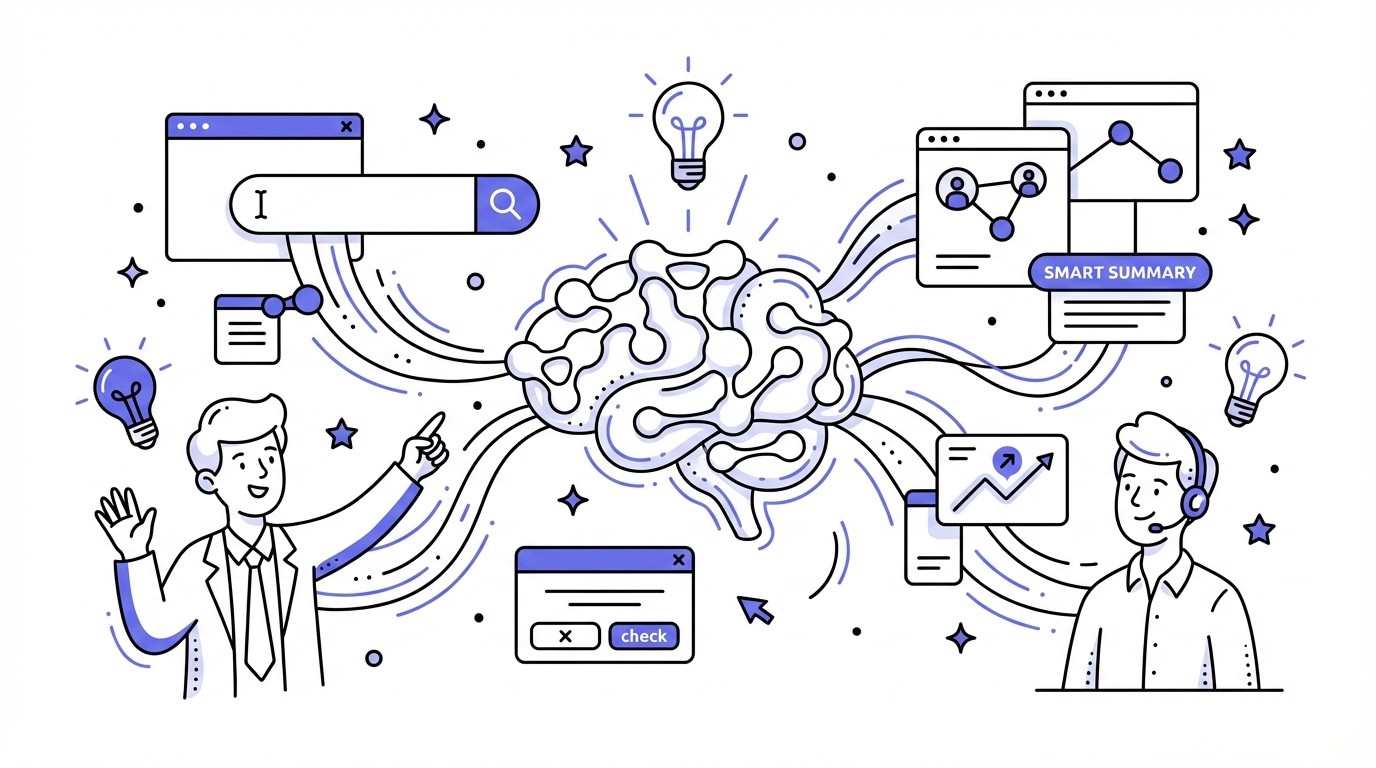
Unlocking the future of information: This illustration visualizes how advanced AI is reshaping search, offering deeper insights and more intuitive results for a smarter digital experience.
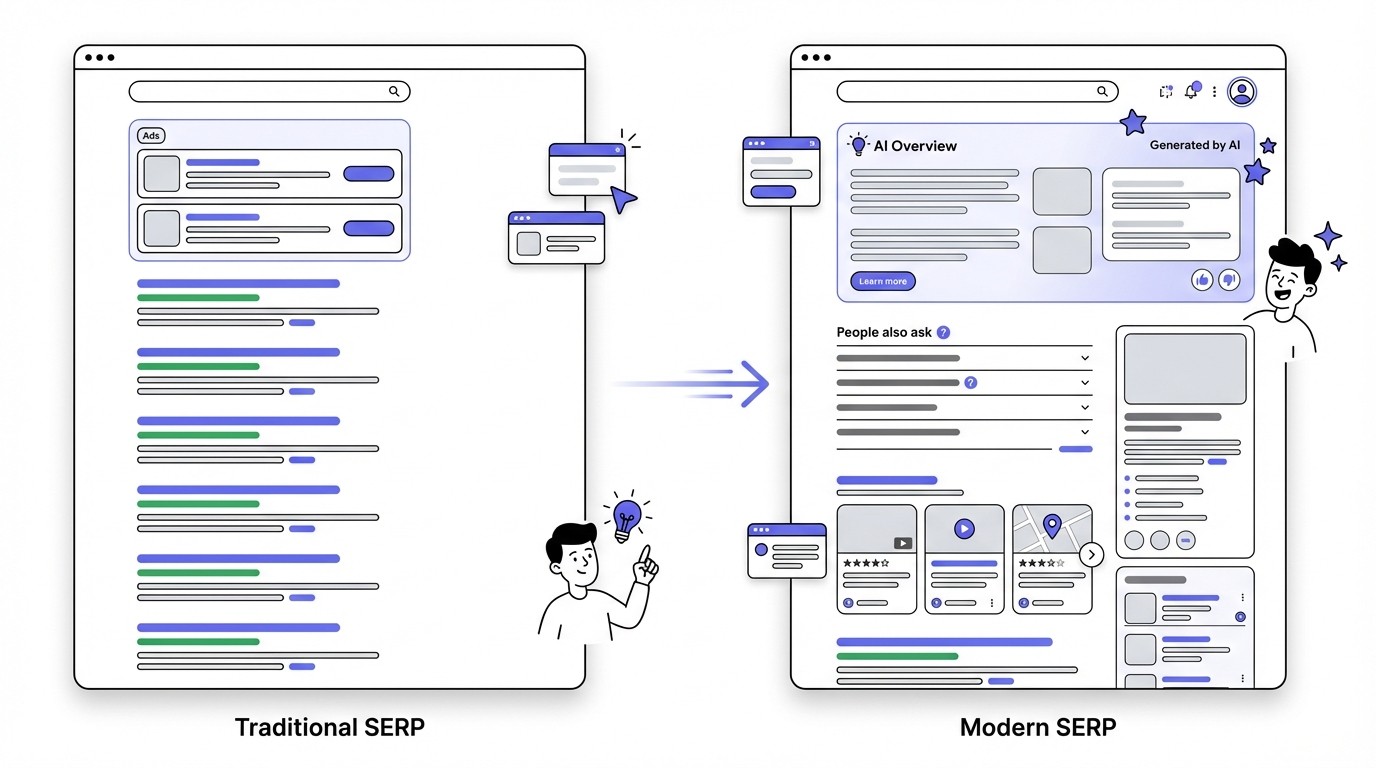
A visual comparison highlighting the evolution of Google's Search Results Page, from the traditional organic-focused layout to the modern SERP integrating AI Overviews and enhanced rich snippets.
Decoding the AI Search Landscape: Zero-Click & AI Overviews Impact
The new search engine results page (SERP) has a different purpose. It no longer just points to answers. It provides them directly. This shift dramatically increases the prevalence of zero-click searches, where users get what they need from the AI summary and never visit a website. Effective zero-click search optimization is now paramount.
This trend was growing even before generative AI. A 2022 Semrush study found that over 25% of all desktop searches ended without a click. The AI Overviews impact will accelerate this significantly. Your content must now be designed to influence the AI summary, not just earn a click, making generative AI SEO a core focus.
Evolving Your AI Search Content Strategy: From Content Library to AI Knowledge Layer
Your goal is to become one of those trusted sources. This requires a fundamental change in your AI search content strategy. You must move from simply publishing articles to building a verifiable AI Knowledge Layer—a structured, authoritative repository of information that AI models use to build their answers. This shift is key for successful generative AI SEO.
This table breaks down the strategic shift required for generative AI SEO.
MetricTraditional SEO FocusAI Search Content StrategyPrimary GoalRanking #1 for a clickBecoming a cited source in the AI summaryContent FocusLong-form, keyword-optimized articlesClear, factual, data-supported answersSuccess MetricOrganic traffic and CTRBrand mentions and source attributionTechnical SignalBacklinks and domain authorityStructured data and topical authority
The new playbook for zero-click search optimization is clear. You must create content built for machine readability and verifiable trust. Think of your primary audience as the AI model itself, which is constantly evaluating your content's accuracy and authority. This is the new foundation for the future of content marketing AI.
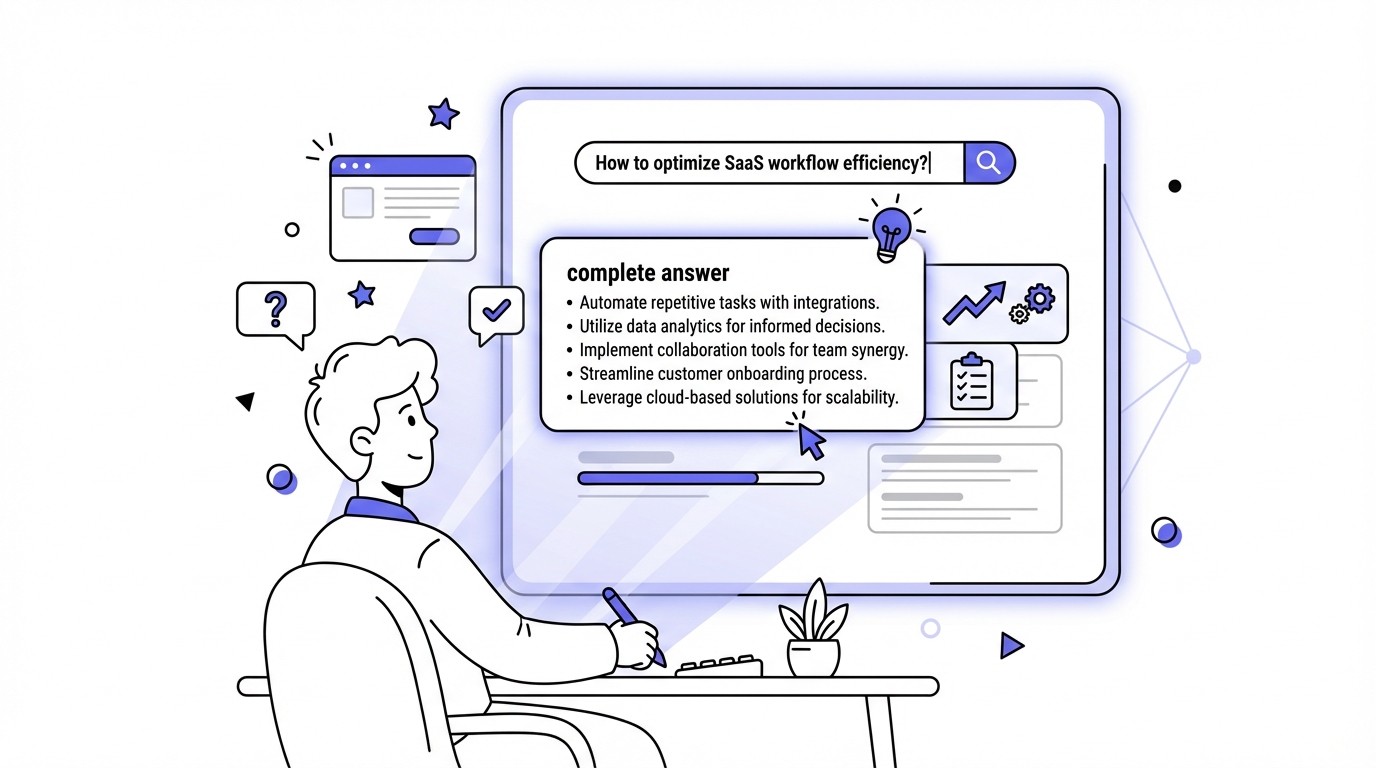
Experience the future of search: get direct, complete answers instantly, streamlining your workflow and enhancing productivity.
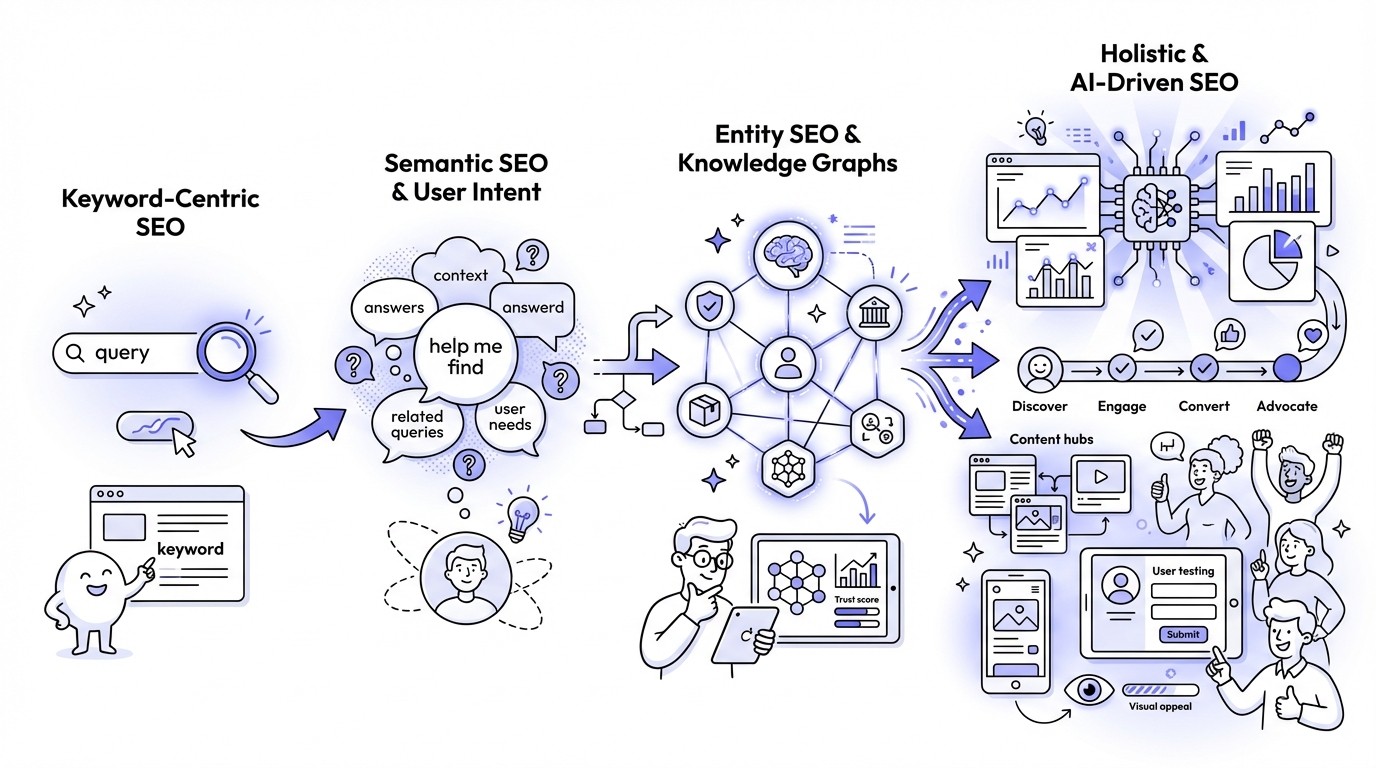
Unpacking the evolution of SEO: From simple keyword targeting to a sophisticated, AI-powered understanding of user intent and holistic digital experiences.
Beyond Keywords: Crafting Content for AI Comprehension & Trust
AI models don't just scan for keywords. They seek to understand concepts and verify facts. Your content must be structured for machine readability. This means shifting from creative prose to clear, data-driven statements. Think of it as building a reference library for an AI, not just writing an article. This approach is fundamental to any effective AI search content strategy.
This change is central to any effective AI search content strategy. The goal is to make your content the most reliable and easily digestible source on a given topic, a critical component of generative AI SEO.
Prioritize Factual Density and Clarity for AI Overviews
AI models prioritize verifiable information. They cross-reference claims against other trusted sources on the web. Content that is vague or unsupported gets ignored. Each statement you make should be supportable.
For example, instead of writing "our software improves efficiency," state that it "reduces manual data entry by 12 hours per week." The second statement is factual, specific, and valuable to both a human reader and an AI model compiling an answer. This level of precision directly influences your ability to be cited in AI Overviews, highlighting the significant AI Overviews impact on content creation.
Build Verifiable Authority Signals for AI Overviews
Building trust with an algorithm requires specific tactics. You need to make your expertise obvious and easy to parse. Google’s own quality guidelines now hinge on E-E-A-T (Experience, Expertise, Authoritativeness, and Trust). Here are practical steps to demonstrate it, especially given the AI Overviews impact:
Cite Primary Sources: Always link to original reports, studies, or data. This provides a clear verification path for the AI.
Use Structured Data: Implement Schema markup for articles, authors, and your organization. This explicitly tells search engines who you are and what your content is about.
Feature Author Expertise: Include detailed author bios with credentials, experience, and links to other published works.
Publish Original Research: Conduct your own surveys or data analysis. This positions you as a primary source, making your content highly valuable for AI synthesis.
Establish a Content-to-Data Pipeline: Treat your original research and proprietary data as a structured asset, not just content. Make key statistics available in machine-readable formats (like JSON-LD or a simple API endpoint). This makes it easy for AI to ingest and cite your data as a definitive source, a crucial aspect of generative AI SEO.
These elements transform your website from a collection of pages into an authoritative knowledge base. That's how you become a go-to source for the future of content marketing AI.
Optimizing for Conversational AI & Google's AI Overviews
Building an authoritative knowledge base is the first step. The next is structuring that information to answer direct questions. Google's AI Overviews don't cite essays; they synthesize concise answers. Your content must provide those answers clearly. This is a critical part of a modern AI search content strategy.
You're not just writing for a reader. You're formatting information for an AI to easily parse, validate, and present to a user. The goal is to become the definitive source for a specific query, which is essential for mitigating the AI Overviews impact.
Answering Direct Questions for AI Overviews & Conversational Search
AI models look for the most direct response to a user's prompt. Content that hides the answer in long paragraphs will be overlooked. Structure your articles to address questions head-on, often by using the question itself as a subheading.
Think in terms of FAQs. Nearly 70% of Google searches contain four or more words, indicating users are asking specific, conversational questions. Your content must mirror this structure to succeed in generative AI SEO. This simple reframing significantly increases your chances of being featured in an AI-generated summary, a key aspect of zero-click search optimization.
The table below shows how to adapt your content structure for an effective AI search content strategy.
Content ElementTraditional ApproachAI-Optimized ApproachArticle Title10 Reasons to Use Content MarketingHow Does Content Marketing Drive Sales?OpeningA long, narrative introduction about marketing.A direct, one-sentence answer to the title's question.Data PointEmbedded within a dense paragraph."Companies with blogs produce 67% more leads."StructureLong-form prose and complex sentences.Short paragraphs, bullet points, and clear subheadings.
Focus on Entity-Based SEO for Generative AI
AI search understands entities—people, places, and concepts—and the relationships between them. Instead of just targeting the keyword "MarketDay," you should build content around related entities. These could include "AI content generation," "automated blog writing," and "Gemini AI for marketing." This entity-based approach is vital for generative AI SEO.
This approach builds topical authority. It shows the AI that you have deep expertise across a whole subject area, not just a shallow focus on one keyword. This comprehensive knowledge is what AI Overviews rely on, making it a cornerstone for the future of content marketing AI.
The High Value of AI-Driven Traffic: Zero-Click Optimization & Quality Over Quantity
Optimizing for AI is more than a defensive move. It’s an offensive strategy to attract better leads. AI Overviews will answer many top-of-funnel questions directly on the results page. This means fewer clicks overall. But the traffic that does reach your site will be far more valuable. This is the new reality of zero-click search optimization.
The Future of Content Marketing AI: High-Intent Traffic from Zero-Click Search
Users get their basic answers from an AI summary. They click through to your site when they need a specific solution, a product, or deeper expertise. Their initial research is complete. They are now ready to act. This is the promise of the future of content marketing AI.
This trend was already happening before generative AI. A study by Ahrefs found that nearly one-third of high-volume search queries result in zero clicks. The AI Overviews impact will accelerate this dramatically, filtering out casual browsers and sending only high-intent visitors your way. This necessitates a strong AI search content strategy.
This shift changes how we should measure content success. Traffic from AI-powered search is pre-qualified. These visitors arrive on your site with a clear purpose, which significantly shortens the sales cycle.
MetricTraditional SEO TrafficAI-Driven TrafficUser IntentInformational, top-of-funnelTransactional, bottom-of-funnelConversion RateLower, requires more nurturingHigher, ready for a solutionSales CycleLonger, multiple touchpointsShorter, closer to a decisionKey FocusKeyword rankings and volumeAnswering specific problems
This redefines the future of content marketing AI. The new benchmark isn't just traffic volume. It's the quality of leads and the efficiency of your sales funnel. Your goal is to be the final, decisive click for a user who is ready to act, a prime example of successful zero-click search optimization.
The old playbook for search is officially obsolete. Winning in this new landscape isn't about chasing keywords; it's about building a deep knowledge base that AI can trust and reference directly in its answers. Your goal has shifted from ranking on a page to becoming a cited source within Google’s AI Overviews, a testament to the profound AI Overviews impact.
This fundamentally changes the value of traffic. The focus moves from sheer volume to attracting the high-intent audience that AI-driven summaries deliver. Building this new content engine requires tools that operate on the same AI principles that now govern search. Brands that adapt their AI search content strategy for this reality won't just survive the transition. They'll own the next era of discovery and shape the future of content marketing AI.
Is your AI search content strategy ready for the AI search revolution? Stop guessing and start ranking with MarketDay, the AI platform that automates your entire content workflow. See how you can generate future-proof, SEO-optimized articles in minutes and ensure your brand remains visible and authoritative as search evolves, embracing the future of content marketing AI.
Visuals
Frequently Asked Questions
What is an AI search content strategy?
An AI search content strategy is a new approach for brands to adapt to search engines dominated by AI Overviews and generative AI. It focuses on creating content that AI models prefer to source, ensuring visibility in zero-click searches. This strategy aims to build authority and influence AI summaries rather than solely driving clicks.
Why is an AI search content strategy crucial for brands now?
An AI search content strategy is crucial because Google's AI Overviews are fundamentally changing search results, leading to significant organic traffic drops for traditional SEO. Brands must evolve to remain visible and attract customers in this AI-driven discovery era. It's essential for the future of content marketing AI to adapt to this paradigm shift.
How does the AI Overviews impact change SEO for brands?
The AI Overviews impact means search engines now provide direct answers, increasing zero-click searches where users don't visit websites. This shifts SEO focus from earning clicks to influencing AI summaries, making generative AI SEO paramount. Brands must create content designed for AI comprehension and trust to be cited as sources.
What is the main difference between traditional SEO and generative AI SEO?
Traditional SEO primarily aims for ranking #1 to get clicks, focusing on long-form, keyword-optimized articles. Generative AI SEO, conversely, seeks to become a cited source within AI summaries by providing clear, factual, data-supported answers. Success is measured by brand mentions and source attribution, not just organic traffic and CTR.
What is zero-click search optimization in the context of AI Overviews?
Zero-click search optimization involves structuring content so that AI Overviews can directly answer user queries without requiring a click to a website. This means creating highly digestible, factual, and authoritative content that AI models can easily extract and summarize. It's vital for maintaining visibility as the AI Overviews impact increases.
How is the future of content marketing evolving with AI?
The future of content marketing AI involves a shift from simply publishing articles to building an "AI Knowledge Layer." This means creating a structured, authoritative repository of information that AI models can easily understand and trust. Content must be designed for machine readability and verifiable facts to influence AI-driven discovery.
How can brands build an AI Knowledge Layer for better AI search visibility?
Brands can build an AI Knowledge Layer by creating clear, factual, and data-supported content that is structured for machine readability. Focus on becoming a trusted, authoritative source by providing verifiable information. This ensures AI models prefer to source your content, enhancing your AI search content strategy and visibility in AI Overviews.



Hop on a call with us to see how our services can accelerate your growth.