Auto-Publishing Workflows: Build Your AI Content Engine

K R
Days AI
MarketDay
An AI-powered content and visibility platform that helps teams create authoritative content and get discovered across Google and modern AI platforms like ChatGPT, Claude, Perplexity, and more.
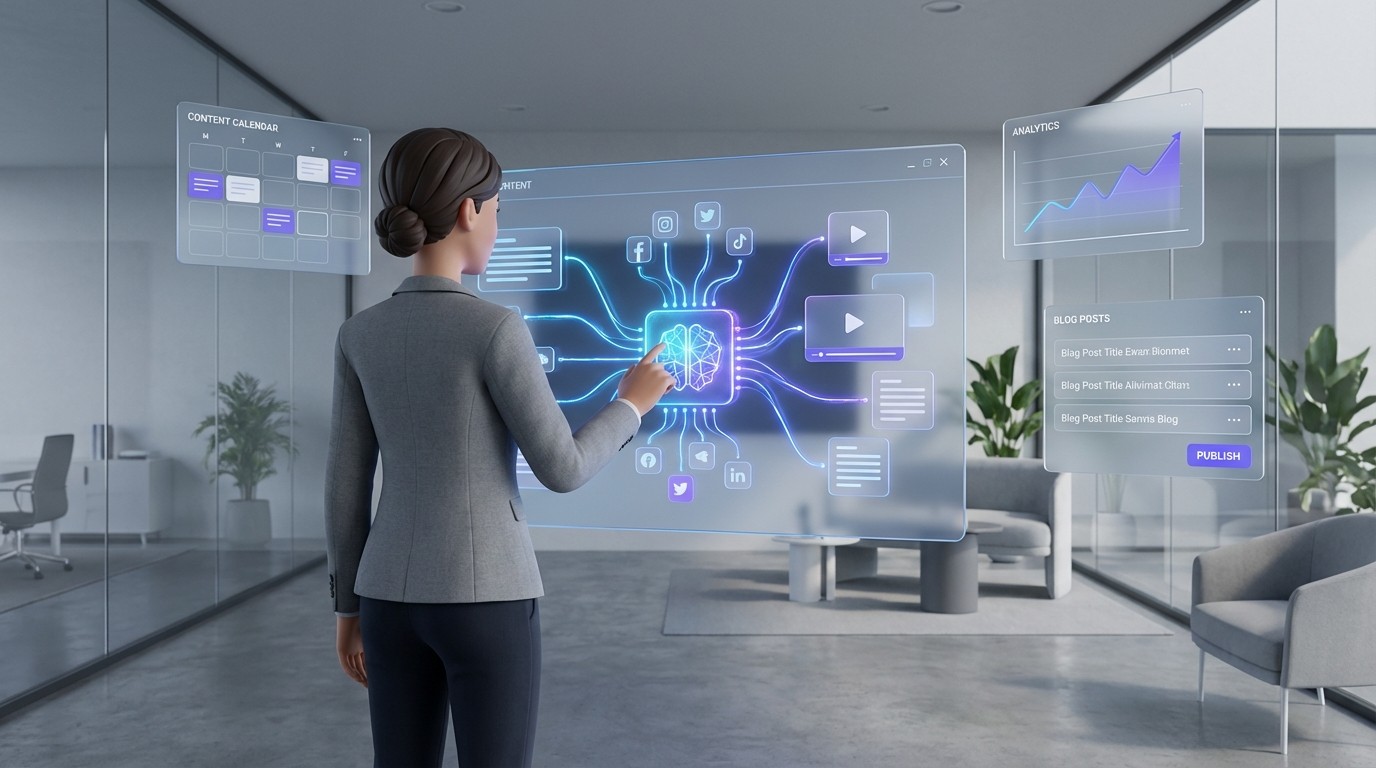
Auto-Publishing Workflows: Build Your AI Content Engine
The year 2026 will redefine how AI marketing agencies approach content creation. Projections show that nearly every successful agency will use generative AI content marketing. But a critical distinction is emerging. Most will treat AI as a simple assistant for isolated tasks. The true market leaders will rebuild their entire workflow around it, embracing a full AI-First Content Strategy. This isn't about using AI; it's about becoming an AI-first operation. That gap between superficial use and deep integration is where your competitive advantage lies.
This guide provides the blueprint for that transition. We'll move beyond basic prompts to map out a complete AI-First Content Strategy for your agency. You'll learn the core methodologies for driving efficiency and delivering the hyper-personalization AI makes possible. This guide shows you how to construct an automated content engine powered by Content Automation AI that handles research, writing, and optimization, freeing your team to focus on high-level strategy. Consider this your roadmap to building a more resilient and profitable agency for 2026 and beyond.

Embracing the future: Our AI-first workflow seamlessly integrates human creativity with intelligent automation for unparalleled agency innovation.
The AI-Powered Content Landscape: Key Trends for AI Marketing Agencies 2026
To build a durable AI-First Content Strategy, agencies must understand the market's direction. The shift isn't just about speed. It's about intelligence, personalization, and creating integrated systems that outperform manual efforts. Three core trends define this new landscape.
1. Hyper-Personalization AI Becomes Standard
Basic segmentation is no longer enough. Clients now expect content that adapts to individual user behavior and intent. Hyper-personalization AI makes this possible at a scale never seen before, driven by advanced generative AI content marketing. Instead of one blog post for everyone, you can generate multiple versions tailored to different industries or stages of the buyer's journey.
A recent McKinsey report shows that companies excelling at personalization generate 40% more revenue from those activities than average players. For agencies, this means delivering content that doesn't just attract traffic but actively converts it.
2. Full-Cycle Content Automation AI
The most successful AI marketing agencies in 2026 will move beyond simple writing assistants, embracing full-cycle Content Automation AI. They will adopt platforms that automate the entire content lifecycle. This includes:
Topic Research: Identifying trending keywords and audience pain points.
Content Generation: Drafting complete, SEO-optimized articles.
Visual Creation: Generating relevant images and infographics.
Performance Analytics: Tracking engagement and suggesting improvements.
This end-to-end automation frees up your creative teams. They can stop managing tedious workflows and focus on high-value strategic planning for clients.
3. Integrated Knowledge Systems: Powering Superior Generative AI Content Marketing
Relying on public AI models alone creates generic content. The leading agencies, those building a robust AI-First Content Strategy, will connect AI to their own proprietary data to power superior generative AI content marketing. Technologies like Retrieval-Augmented Generation (RAG) make this possible. AI can access an agency's unique knowledge base—case studies, client data, and brand voice guidelines—to produce truly original, authoritative content.
This creates a powerful competitive moat. Your agency's AI doesn't just write; it writes with your collective expertise.
FunctionTraditional AI Approach (2024)AI-First System (2026)ResearchManually searching for keywordsAI autonomously identifies topic clusters for an AI-First Content StrategyContentUsing a chatbot for first draftsAI generates complete posts from a knowledge base, a hallmark of generative AI content marketingPersonalizationWriting a few persona-based versionsAI generates dozens of hyper-personalization AI variantsOptimizationManually adding keywords and imagesAI embeds SEO elements and visuals automatically through Content Automation AI
Understanding these trends is the first step. The next is building the operational framework to capitalize on them.
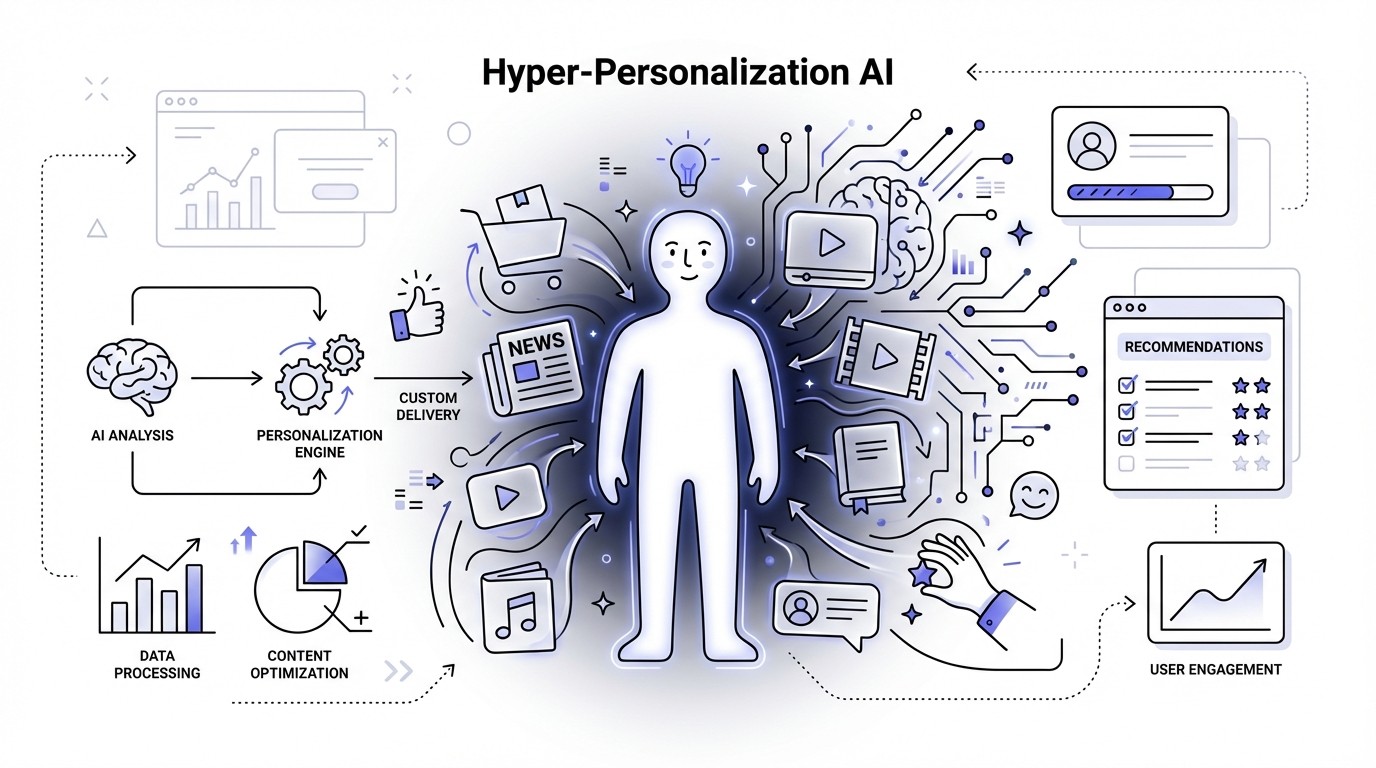
Hyper-Personalization AI: Dynamically tailored content and experiences, precisely shaped for each individual user through advanced intelligence.
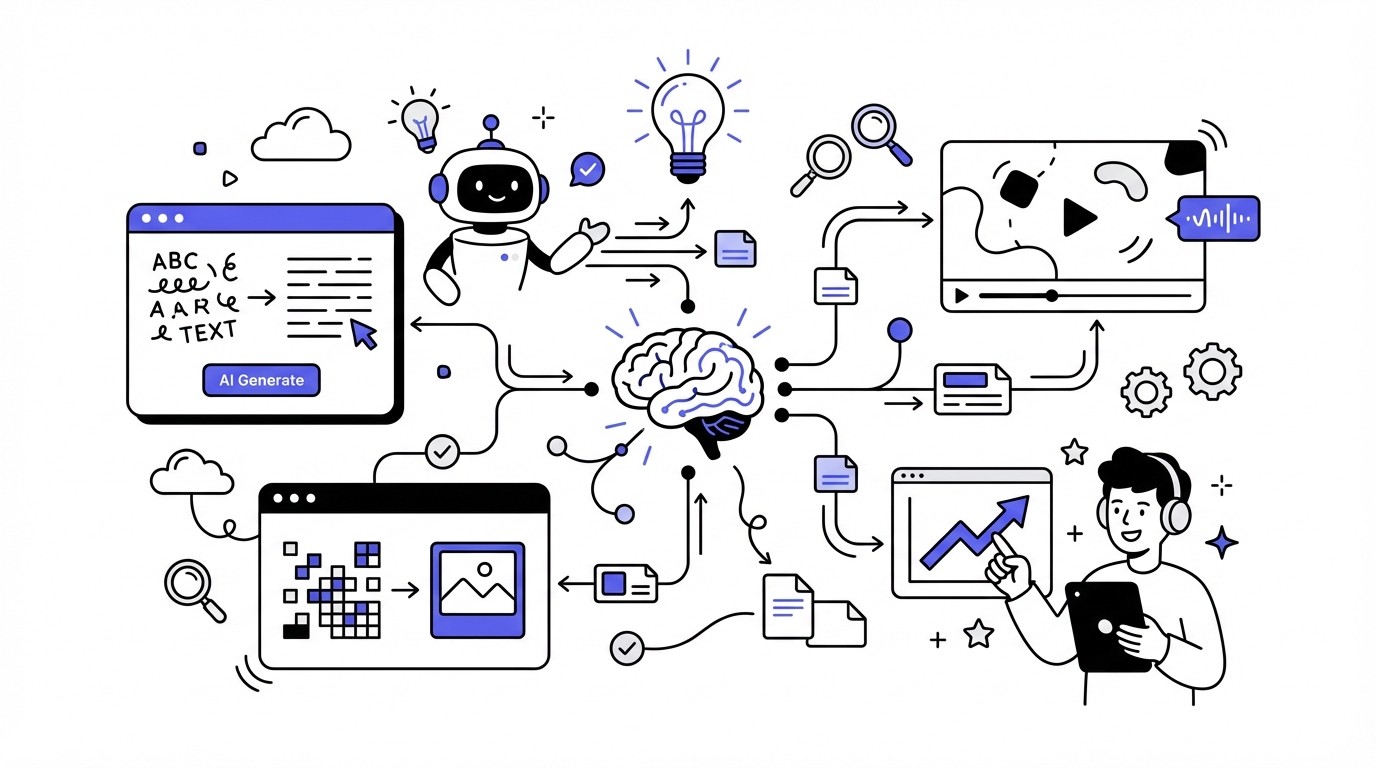
Navigating the intricate tapestry of the AI-Powered Content Landscape – where data, algorithms, and creativity converge to shape the future of information.
Pillars of an AI-First Content Strategy: Hyper-Personalization, Multimodal & Automation
Moving from trends to action requires a new framework. A successful AI-First Content Strategy rests on three core pillars. These are not separate tactics. They are interconnected systems that create a powerful, automated content engine for your agency.
1. Hyper-Personalization AI at Scale: Delivering Tailored Content
Your clients' customers expect tailored experiences. By 2026, generic content won't just underperform; it will be ignored. Hyper-personalization AI moves beyond basic audience segments. It allows you to create dozens of content variations from a single brief.
Imagine an e-commerce client. Instead of one article on "winter coats," your AI system can generate specific posts for different micro-audiences:
"Durable Winter Coats for Mountain Hiking"
"Stylish Urban Parkas for Commuters"
"Lightweight Winter Jackets for Southern Climates"
This level of specificity drives higher engagement and conversion. It’s a service most agencies cannot currently offer.
2. Multimodal Content Generation with Generative AI Content Marketing
Text is only one piece of the puzzle. An effective strategy must account for visuals, audio, and video. Modern generative AI content marketing platforms build this directly into the content workflow. Your team shouldn't have to switch between five different tools.
An AI-First Content Strategy system generates the blog post and the assets that support it. A platform like MarketDay can produce a complete article, a custom hero image, and three social media captions with unique visuals. This integration is key for AI marketing agencies in 2026 to maintain brand consistency and production speed.
3. End-to-End Content Automation AI for Efficiency
The final pillar connects the others. True Content Automation AI is not just about writing faster. It’s about building an intelligent system that handles the entire content lifecycle. This system connects research, writing, and optimization into a single, cohesive workflow.
Agencies that adopt this model see dramatic efficiency gains, making them leading AI marketing agencies in 2026. A 2025 Forrester study found that marketing teams using integrated AI content platforms reduced their time-to-publish by an average of 70%. This frees your strategists from tedious project management. They can focus on client relationships and high-level creative direction instead, a core benefit of an AI-First Content Strategy.
Building Your AI-First Content Workflow: Practical Steps for Agencies
Knowing the pillars of an AI-first approach is one thing. Building a practical workflow is another. A successful AI-First Content Strategy requires a new operational model. One that moves beyond theory and into daily execution. This process turns your agency into a predictable, scalable content engine.
1. Centralize Your Agency's Knowledge for an AI-First Content Strategy
Your greatest asset is your collective expertise, crucial for a robust AI-First Content Strategy. Start by gathering your client brand guides, top-performing articles, case studies, and market research. Put them into a single, accessible knowledge base. An advanced platform like MarketDay uses this proprietary data to inform its generative AI content marketing efforts. The AI learns your unique voice and perspective, ensuring every article it produces is original and authoritative.
2. Automate Research & Templatize Generation with Content Automation AI
The manual research phase is over. Modern Content Automation AI tools can analyze SERPs, identify audience questions, and suggest high-potential topic clusters in minutes. Once you have your topics, create repeatable templates for different content formats.
Your workflow should include templates for:
Top-of-Funnel Blog Posts: Optimized for discovery and broad keywords.
Technical How-To Guides: Structured to answer specific user problems.
Client Case Studies: Designed to pull specific metrics from your knowledge base.
This templated approach gives AI the structure it needs. You'll get consistent, high-quality results from your generative AI content marketing efforts.
3. Shift Humans to Strategic Oversight
The goal is not to replace your team, but to elevate their roles within an AI-First Content Strategy. Your best strategists should stop writing routine first drafts and start acting as editors-in-chief. Their time is better spent reviewing and enhancing AI-generated content. They can add unique insights and focus on high-level client strategy. This human-in-the-loop model ensures quality and creativity for leading AI marketing agencies in 2026.
This operational shift has a massive impact, dramatically increasing your team's capacity and accelerating content delivery.
The table below outlines the transformation from a traditional to an AI-first workflow.
StageTraditional Agency Workflow (Manual)AI-First Workflow (Automated)IdeationHours of manual keyword researchAI autonomously identifies topic clusters for an AI-First Content StrategyDraftingWriter creates V1 (takes 6-8 hours)AI generates complete draft in minutes, a core function of generative AI content marketingVisualsBrief a designer or search stock photosAI generates custom, relevant images, enhancing Content Automation AIReviewMultiple rounds of edits for tone/factsStrategist reviews for nuance and insight
Navigating the Future: Ethical AI & Quality Control for AI Marketing Agencies 2026
Adopting an AI-First Content Strategy brings immense power. It also brings new responsibilities. Agencies leading the way in 2026 will not just be the fastest; they will be the most trustworthy. This requires a clear framework for ethical AI use and rigorous quality control.
The Human-in-the-Loop Imperative
Automation does not mean abdication. The most successful AI marketing agencies in 2026 will operate on a human-in-the-loop model. AI handles the heavy lifting of drafting and research. Your expert strategists provide the critical final review.
This partnership is essential for maintaining brand trust in your AI-First Content Strategy. A 2024 Edelman report found that 61% of consumers would trust a brand less if they discovered it used AI without human oversight. Your team's role in generative AI content marketing is to verify facts, inject unique brand stories, and ensure the content has a human touch. AI produces the draft. Your team adds the soul.
Building an Ethical and Quality Framework
A proactive approach to quality control prevents common AI pitfalls. It ensures your generative AI content marketing efforts build client reputation rather than risk it. Your agency's framework should define clear standards for every piece of content.
This table shows how human oversight turns potential AI risks into strategic advantages.
Area of ConcernRisk with Unsupervised AISafeguard with Human OversightFactual AccuracyHallucinations or outdated information, a risk for generative AI content marketingStrategist fact-checks all data and claimsBrand VoiceGeneric, robotic-sounding toneEditor refines language for brand personality, crucial for an AI-First Content StrategyOriginalityPotential for unoriginal phrasingHuman review ensures unique insights and analysis, especially with hyper-personalization AIEthical UseUnintended bias or data privacy issuesTeam ensures content aligns with brand values, guided by responsible Content Automation AI
Content Automation AI is a tool to amplify your team's talent, not replace it. It frees your best minds from repetitive tasks. They can then focus on what truly matters: high-level strategy, creative direction, and building strong client relationships.
The road to 2026 is paved with intelligent automation. AI marketing agencies in 2026 that embed an AI-First Content Strategy into their core operations, rather than treating AI as an add-on, will capture the market. This means moving beyond basic prompts and building a workflow centered on hyper-personalization AI and multimodal generative AI content marketing, as we've outlined.
Success, however, isn't just about the technology. It’s about the partnership between human creativity and Content Automation AI-powered execution. Your team’s strategic oversight is the critical element that transforms automated output into a winning content engine. The future of agency work isn’t replacing your talent; it’s amplifying their expertise to deliver results at a scale that was once unimaginable.
Ready to put your 2026 AI-First Content Strategy into action? See how MarketDay automates your entire content workflow, from topic research to SEO-optimized posts, to scale your agency's results. Schedule a personalized demo to see how leading AI marketing agencies in 2026 are building their future-proof content engine.
Visuals
Frequently Asked Questions
What is an AI-First Content Strategy?
An AI-First Content Strategy involves rebuilding an agency's entire content workflow around artificial intelligence, rather than just using AI as a simple assistant. It signifies a deep integration of AI into research, creation, and optimization processes to drive efficiency, deliver hyper-personalization, and gain a significant competitive advantage in the market.
Why is adopting an AI-First Content Strategy essential for AI marketing agencies in 2026?
Adopting an AI-First Content Strategy is crucial for AI marketing agencies in 2026 to stay competitive and profitable. It allows agencies to move beyond superficial AI use, enabling hyper-personalization at scale and full-cycle content automation. This approach frees creative teams for high-level strategy, ensuring superior content delivery and market leadership.
How does Hyper-Personalization AI transform content delivery?
Hyper-Personalization AI transforms content delivery by enabling agencies to tailor content to individual user behavior and intent at an unprecedented scale. Instead of generic content, it generates multiple versions adapted for specific industries or buyer journey stages. This advanced generative AI content marketing approach significantly increases engagement and conversion rates, driving higher revenue for clients.
What capabilities does full-cycle Content Automation AI offer marketing agencies?
Full-cycle Content Automation AI offers marketing agencies comprehensive capabilities across the entire content lifecycle. This includes automating topic research, drafting complete SEO-optimized articles, generating relevant visuals, and providing performance analytics. This end-to-end Content Automation AI frees creative teams from tedious tasks, allowing them to focus on strategic planning and high-value client work.
How can agencies create superior Generative AI Content Marketing?
Agencies can create superior Generative AI Content Marketing by integrating AI with their proprietary data and unique knowledge bases. Moving beyond public AI models, technologies like Retrieval-Augmented Generation (RAG) allow AI to access case studies, client data, and brand voice guidelines. This ensures the AI-First Content Strategy produces truly original, authoritative content that reflects the agency's collective expertise.
What distinguishes an AI-First Content Strategy from traditional AI use in content creation?
An AI-First Content Strategy fundamentally differs from traditional AI use by integrating AI throughout the entire content workflow, rather than just for isolated tasks. It embraces full-cycle Content Automation AI and Hyper-Personalization AI to automate research, generation, and optimization. Traditional approaches often treat AI as a basic tool, missing the deep, systemic integration that defines an AI-First operation.
When will AI-First Content Strategy become the standard for successful marketing agencies?
Projections indicate that by 2026, an AI-First Content Strategy will become the standard for nearly every successful marketing agency. While many will use AI, true market leaders will have fully rebuilt their workflows around it. This deep integration is expected to be the critical distinction for competitive advantage and profitability in the evolving content landscape.


Hop on a call with us to see how our services can accelerate your growth.