Get Your Brand Cited: AI Overviews, ChatGPT & Perplexity SEO Guide

K R
Days AI
MarketDay
An AI-powered content and visibility platform that helps teams create authoritative content and get discovered across Google and modern AI platforms like ChatGPT, Claude, Perplexity, and more.

Get Your Brand Cited: AI Overviews, ChatGPT & Perplexity SEO Guide
You’ve spent years earning that top spot on Google. Now, an AI-generated summary sits above your link, answering user questions instantly. This shift is bigger than any algorithm update we've seen, fundamentally changing the landscape of brand citation AI search. When users get their answer without clicking, your hard-won organic traffic is at risk. Your brand could become invisible overnight.
Success in this new generative AI search strategy requires a new playbook. We've created it for you in this guide. We'll break down the actionable steps to improve your brand citation AI search visibility across platforms like Google AI Overviews, ChatGPT, and Perplexity. You'll learn the specific content formats and authority signals AI models look for, crucial for enhancing ChatGPT brand visibility and securing Perplexity AI citations. This turns the challenge into a powerful new channel for growth.
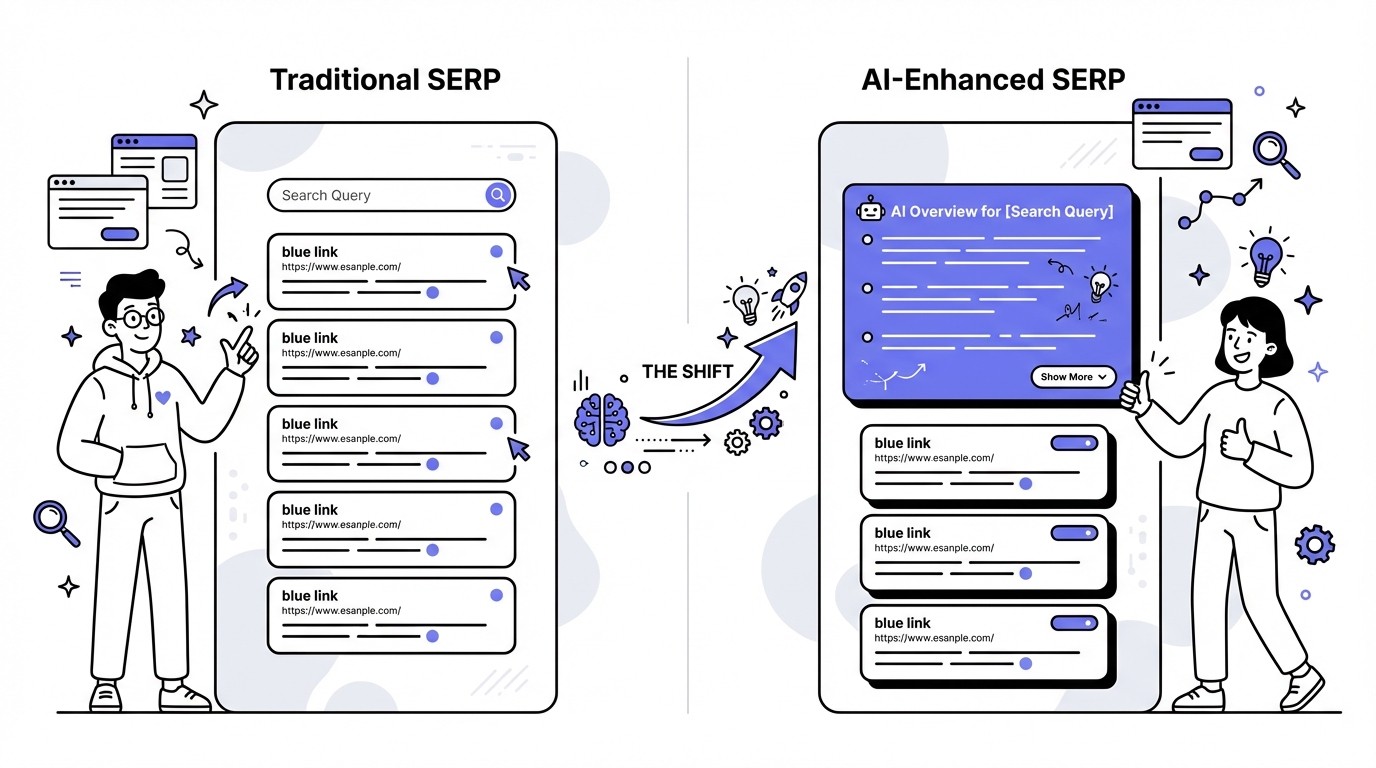
Visualizing the evolution: From traditional blue-link SERPs to AI-enhanced SERPs featuring prominent AI Overviews.
Decoding AI Citation Mechanics: Google AI Overviews vs. Perplexity's Approach
Getting your brand cited in the age of AI requires understanding the machine. Google AI Overviews and Perplexity AI don't use the same rules for sourcing information. A successful generative AI search strategy must account for their core differences, as optimizing for one doesn't guarantee brand citation AI search success on the other. You cannot treat them as the same.
Google AI Overviews: The Extension of SEO
Google AI Overviews builds directly on its traditional search index. It synthesizes answers from content that already ranks on the first page. If your content isn't in a top-five position, its chances of being included in an AI Overview are minimal.
Think of it as an exclusive club for Google AI Overviews SEO. A recent analysis from BrightEdge found that AI Overviews link to an average of just 4.3 unique domains per answer. The competition for a citation is fierce and depends heavily on classic Google AI Overviews SEO authority signals.
Perplexity AI: The Research Assistant Model
Perplexity works more like a research assistant. It scours a wide range of sources to construct a direct answer. It then presents its findings with clear, inline numbered citations. This model rewards content that is factually dense, well-structured, and easy to reference, making Perplexity AI citations a distinct goal. The platform values clear data and authoritative statements. Its goal is to provide a citable, research-backed answer, which creates a different opportunity for earning Perplexity AI citations.
Key Differences at a Glance
To secure a coveted brand citation AI search placement, you must tailor your approach. The right generative AI search strategy for Google won't work for Perplexity, highlighting the need for platform-specific optimization.
FeatureGoogle AI OverviewsPerplexity AISource PoolTop 5-10 organic search resultsBroad web crawl plus focused sourcesCitation StyleLinks in a drop-down carouselInline, numbered footnotesCore FunctionQuick answer synthesizerConversational research engineStrategic FocusAchieve top SERP rankingsCreate highly specific, citable facts
Your content plan needs a dual focus to succeed with a comprehensive generative AI search strategy. Build domain authority to win with Google AI Overviews SEO. Create structured, data-rich assets to earn Perplexity AI citations and enhance overall brand citation AI search visibility.
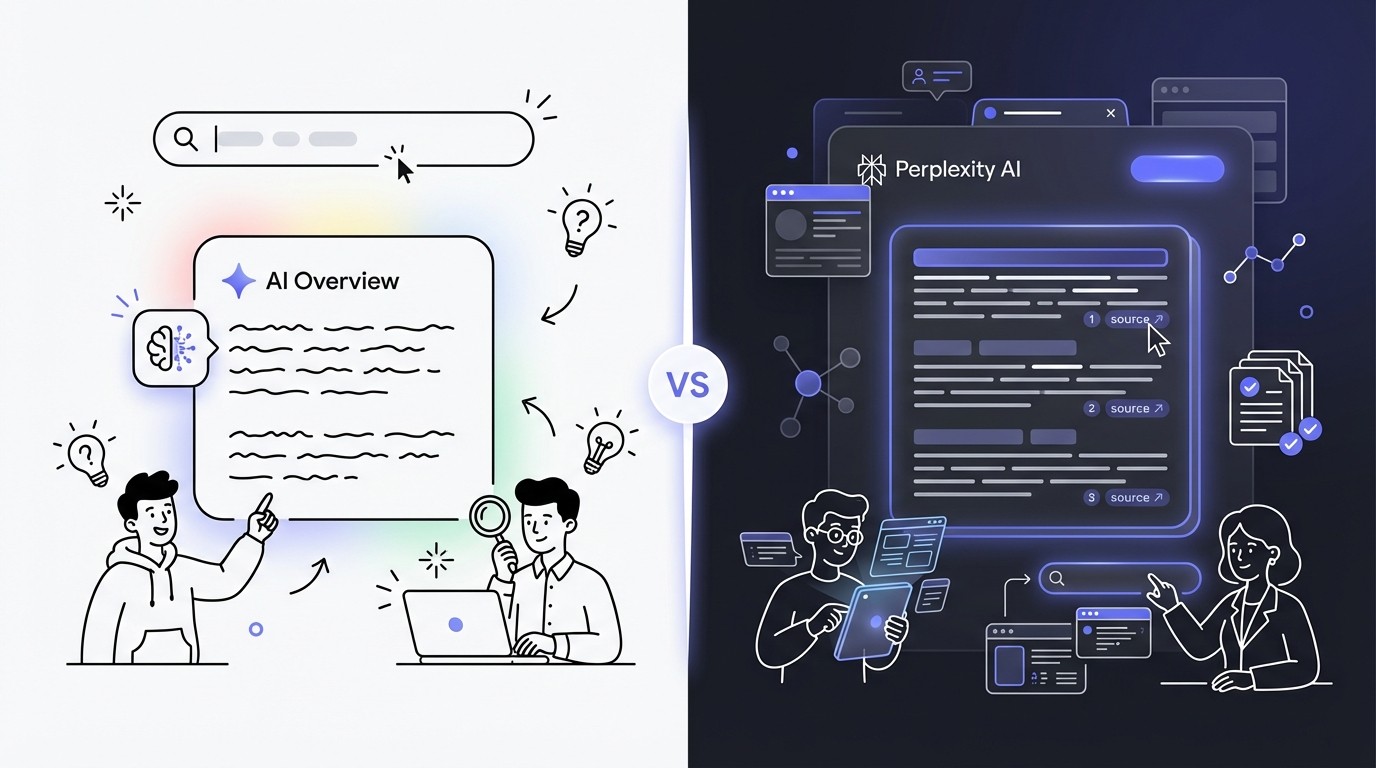
Google AI Overviews vs. Perplexity AI: A Comparative Look at Their Distinct Approaches to Information Retrieval.
Actionable Strategies: Optimizing Content for AI Search & Brand Citations
Understanding the mechanics is the first step in developing an effective generative AI search strategy. Now, you must adapt your content strategy to achieve meaningful brand citation AI search results. A single approach won't capture citations across every platform. Your content needs to be structured for machines and trusted by people.
Structure Content for Perplexity AI Citations & Factual Extraction
AI models are fact-finding machines. They hunt for clear, citable data points. You must make your content easy for them to parse and quote. Instead of writing long narratives, break down key information. Think like an encyclopedia entry. This tactic is especially effective for earning Perplexity AI citations, directly contributing to your overall brand citation AI search success.
Key actions include:
State statistics clearly. For example, write "Q3 revenue grew by 18% to $2.5M" instead of "we saw good growth."
Use Schema markup. This code explicitly tells search engines what your content is about. For a FAQ section, add JSON-LD script like this to your page's
<head>:json <script type="application/ld+json"> { "@context": "https://schema.org", "@type": "FAQPage", "mainEntity": [{ "@type": "Question", "name": "What is Google AI Overviews SEO?", "acceptedAnswer": { "@type": "Answer", "text": "Google AI Overviews SEO is the practice of optimizing content to be cited as a source within Google's AI-generated summaries. It focuses on top rankings, E-E-A-T signals, and structured data." } }] } </script>Create dedicated glossary pages. Define key industry terms to become the definitive source for your niche.
Amplify E-E-A-T Signals for Google AI Overviews SEO
Google AI Overviews SEO is built on classic authority signals. Google trusts content from proven experts. Your site must demonstrate Experience, Expertise, Authoritativeness, and Trustworthiness (E-E-A-T) to succeed in Google AI Overviews SEO. Since AI Overviews pull from top-ranking results, E-E-A-T is your ticket in. An analysis of 12 million search results showed a clear correlation between strong E-E-A-T signals and first-page rankings.
Focus on these areas:
Authoritative Authors: Feature detailed author bios with credentials and links to their social profiles.
Original Research: Publish proprietary data, surveys, or studies that others must cite.
Quality Backlinks: Earn links from respected industry publications and academic institutions.
Build a Public Knowledge Corpus for Enhanced ChatGPT Brand Visibility
Transform your website into a go-to resource. A public knowledge corpus is a collection of structured, factual content that AI models can use as a trusted source. This improves your ChatGPT brand visibility and positions you as an authority, a critical component of any effective generative AI search strategy.
Create a "Resources" or "Data" hub on your site. Fill it with citable assets like industry reports, statistical roundups, and historical timelines. This turns your domain into a primary source, making your brand an essential part of the AI-generated answer and significantly boosting your ChatGPT brand visibility and overall brand citation AI search potential.
Beyond Mentions: Advanced Generative AI Search Strategy for Authority
Earning a mention is good. Becoming the source is better. Many brands create content that ranks, but few build assets that AI models treat as foundational knowledge. Closing this gap is the key to a truly advanced generative AI search strategy, leading to consistent ChatGPT brand visibility and long-term authority.
Think Like a Database: Fueling Generative AI Search with Structured Data
Modern AI uses a process called Retrieval Augmented Generation (RAG). It actively searches for specific facts to answer user queries. Your content must be the best possible source for this retrieval, crucial for successful brand citation AI search. This requires a shift from writing narrative blog posts to creating structured data assets.
These assets act like a public database for your niche. For example, a financial services company could publish a "Live US Inflation Rate Tracker" page. An AI model is far more likely to cite this real-time data point than a general opinion piece on the economy. This is a core part of an effective generative AI search strategy.
Solidify Your Brand in the Knowledge Graph for ChatGPT Visibility
AI models rely on established knowledge graphs to understand the world. Google's Knowledge Graph connects entities (like your company) to facts and relationships. Your goal is to become a recognized entity, which is vital for ChatGPT brand visibility and overall brand citation AI search success. This tells AI systems that your brand is a legitimate, authoritative subject. A strong entity presence makes your content more citable. You can strengthen your entity presence by:
Creating and optimizing a Google Business Profile with consistent information.
Implementing
Organizationschema on your homepage to define your brand to machines, a key step for Google AI Overviews SEO.Securing a Wikipedia or Wikidata entry.
Ensuring your brand's Name, Address, and Phone number (NAP) are consistent across all web directories.
The table below shows how to shift your content focus from a traditional approach to one that builds AI authority.
Traditional Content ApproachAI-Authoritative Source ApproachNarrative-driven blog postsStructured, citable data hubsFocus on keywords aloneFocus on entities and factsAims for user engagementAims for machine readabilityUses persuasive, marketing languageUses factual, encyclopedic language
By adopting an AI-authoritative approach, you build a moat around your expertise. This proactive generative AI search strategy means you stop chasing mentions and start becoming the source AI models depend on for consistent brand citation AI search results.
Becoming a citable source isn't about gaming an algorithm; it's about executing a robust generative AI search strategy. It's about building a library of structured, factual content that earns Perplexity AI citations and enhances ChatGPT brand visibility. By creating a public knowledge corpus and solidifying your brand as a Knowledge Graph entity, you stop chasing mentions and improve your Google AI Overviews SEO. You become the foundation for the next generation of answers, ensuring consistent brand citation AI search success. The future of search belongs to brands that can produce this citation-worthy material at scale.
Stop writing content and start creating the source material AI models rely on. See how MarketDay automates the production of high-authority articles designed to get your brand cited in the new era of generative AI search strategy.
Visuals
Frequently Asked Questions
What is the main shift in search visibility due to AI?
The rise of AI-generated summaries, like Google AI Overviews, directly answers user questions above traditional organic links. This fundamentally alters brand citation AI search, risking a loss of hard-won organic traffic and demanding a new generative AI search strategy to maintain visibility and prevent brands from becoming invisible.
How can brands get cited in Google AI Overviews?
To achieve Google AI Overviews SEO success, brands must secure top-five organic search rankings. Google's AI Overviews synthesize answers primarily from content already ranking on the first page, linking to only a few authoritative domains. Therefore, strong domain authority and classic SEO signals are crucial for brand citation AI search in this context.
How can content earn Perplexity AI citations?
Earning Perplexity AI citations requires content that is factually dense, well-structured, and easy to reference. Perplexity functions like a research assistant, actively seeking clear data points and authoritative statements to construct direct answers with inline, numbered citations. This distinct approach creates a unique opportunity for brand citation AI search visibility.
What are the key differences between Google AI Overviews and Perplexity AI for brand citations?
Google AI Overviews primarily source from top organic results with carousel links, while Perplexity AI broadly crawls the web for citable facts, using inline numbered footnotes. A successful generative AI search strategy must recognize these distinctions, as optimizing for Google AI Overviews SEO differs significantly from earning Perplexity AI citations.
Why is a new generative AI search strategy essential for brand visibility?
A new generative AI search strategy is crucial because AI summaries answer user questions instantly, bypassing traditional organic links and threatening brand citation AI search visibility. Without adapting, brands risk becoming invisible and losing valuable organic traffic. A tailored approach for platforms like Google and Perplexity turns this challenge into a growth channel.
How should content be structured to improve Perplexity AI citations?
To improve Perplexity AI citations, content should be structured for factual extraction, breaking down key information into clear, citable data points. Think like an encyclopedia entry, making it easy for AI models to parse and quote specific facts. This direct approach significantly enhances brand citation AI search success on the platform.
How can brands enhance their ChatGPT brand visibility?
Enhancing ChatGPT brand visibility involves a comprehensive generative AI search strategy that prioritizes overall content authority and clear, citable information. While not detailed here, AI models like ChatGPT generally draw on a broad knowledge base. Therefore, producing well-structured, factually rich content that establishes expertise across the web is key for AI recognition.



Hop on a call with us to see how our services can accelerate your growth.