Dual Visibility: Rank on Google & Get Cited by AI

K R
Days AI
MarketDay
An AI-powered content and visibility platform that helps teams create authoritative content and get discovered across Google and modern AI platforms like ChatGPT, Claude, Perplexity, and more.

Dual Visibility: Rank on Google & Get Cited by AI
By 2026, your content must convince two different audiences: people and AI. For effective AI SEO 2026, ranking on the first page of Google is only half the battle. The other half is getting your work cited directly within AI-generated answers, a space where clicks aren't guaranteed.
Systems like Google's SGE drive this fundamental shift. These tools don't just link to pages. They synthesize information and present it as a definitive answer. If AI models don't see your content as a primary source, you risk becoming invisible, losing both traffic and authority. This directly impacts your Google SGE ranking potential.
You need a dual visibility plan to win. It’s about more than just keywords. You need an AI citation strategy built on expertise, authority, and trust. We'll show you how to structure your content with proven E-E-A-T for AI principles and structured data for AI, ensuring you're visible to customers and prioritized by AI.
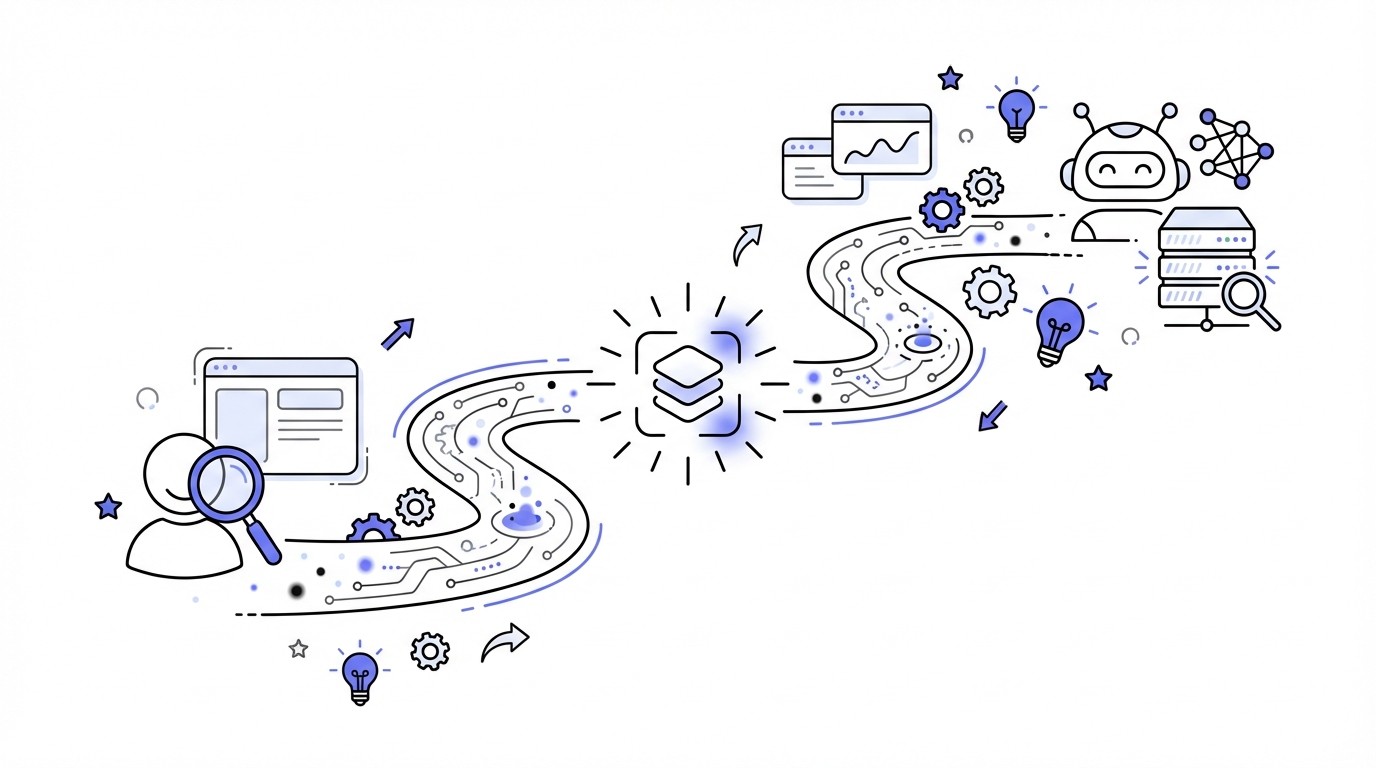
Visualize the 'Dual Visibility Strategy': crafting content that seamlessly connects with both human searchers and the intelligent algorithms of Google and AI for maximum reach and impact.
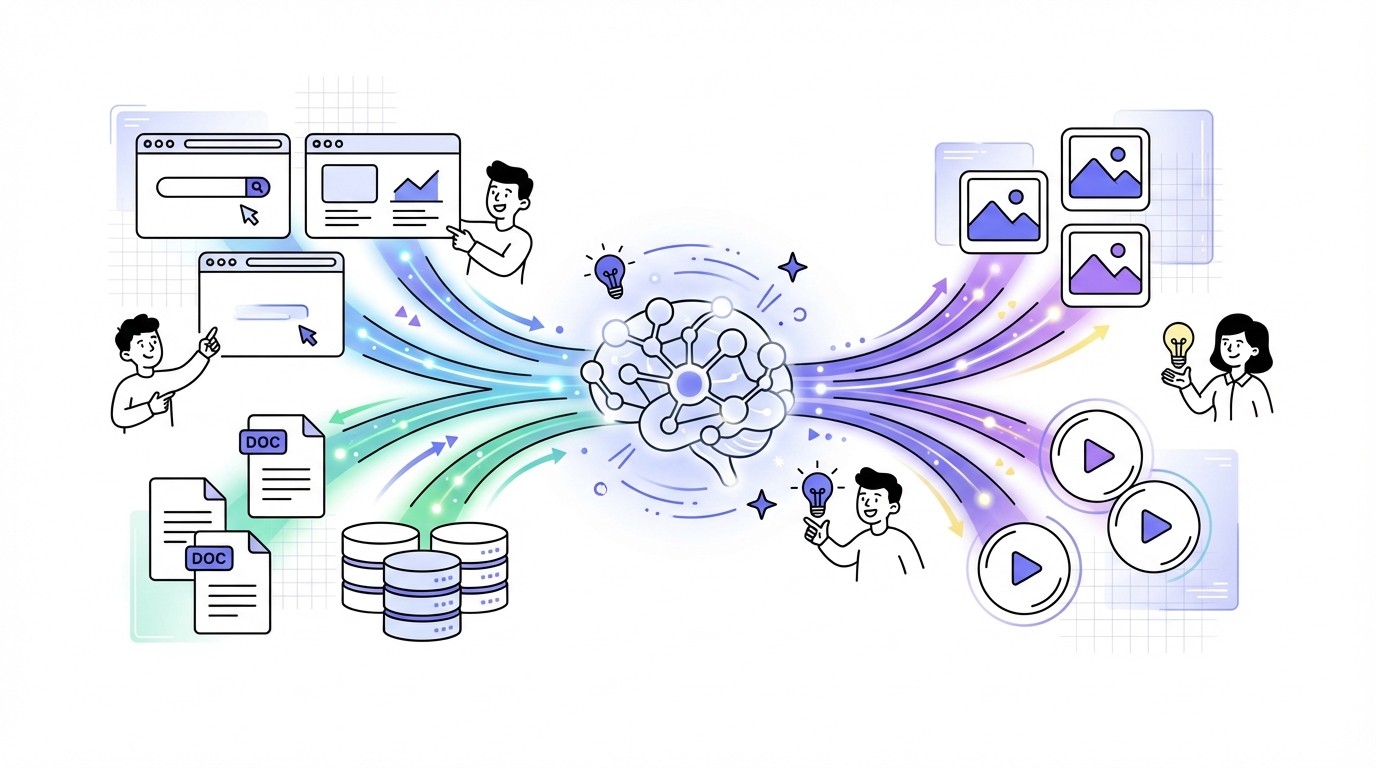
An AI model efficiently synthesizes vast amounts of information from diverse digital sources, transforming raw data into comprehensive and intelligent insights.
Mastering E-E-A-T for AI: The 'Experience' Imperative
Google’s E-A-T framework is now E-E-A-T. That second ‘E’ stands for Experience. It’s the critical signal for both human readers and AI systems in 2026. This is crucial for your AI SEO 2026 success. It asks a simple question: does the author have direct, firsthand involvement with the topic? Generic content no longer makes the cut.
AI models are trained to detect and prioritize authenticity. Systems like Google's SGE look for unique insights that can only come from real-world application. Your content must prove it was written by a human who has actually done the work. That's a core pillar of any effective AI citation strategy.
This isn't speculation. Google’s own Search Quality Rater Guidelines, updated in late 2022, now instruct raters to value content from authors with demonstrable "life experience." An AI analyzing top-ranked content will see experience as a key quality marker, making your work a prime candidate for citation and improving your Google SGE ranking.
From Generic to Authoritative: How Experience Changes Content
Showing experience transforms your content from a simple summary into a valuable primary source. AI models are built to identify this distinction.
Low-Experience Signal (Generic)High-Experience Signal (Specific)"Using AI for content can save time.""Our team used MarketDay to cut blog production time from 8 hours to 2.5 hours per post.""A good sales outreach tool is important.""With SalesDay, our SDRs increased their meeting booking rate by 22% in Q3.""You should optimize for keywords.""We targeted the keyword 'enterprise AI solutions' and achieved a top-3 ranking in 90 days."
To build this credibility, focus on tangible proof. You can elevate your content by:
Publishing original case studies with specific client names and performance metrics.
Including proprietary data from your own surveys or platform analytics.
Using screenshots and custom graphics instead of generic stock photos.
Detailing a personal failure and the specific lesson learned from it.
Embedding these signals makes your content a trusted source. AI models won't just link to your page; they will directly cite your data and insights as part of their answers, a key component of a robust AI citation strategy.
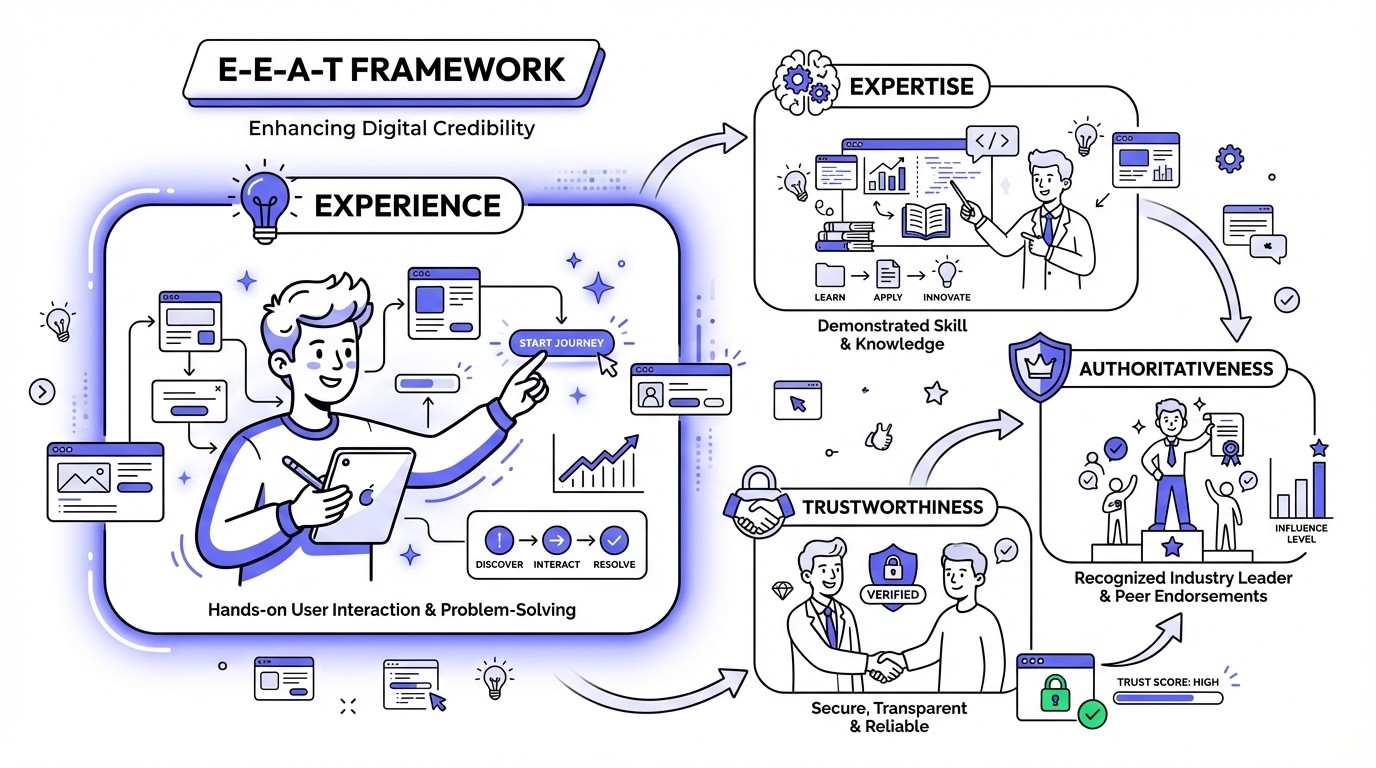
Unlocking Digital Authority: A Closer Look at the E-E-A-T Framework, with a Spotlight on the Crucial Role of 'Experience'.
Optimizing Your AI Citation Strategy: Structured Data for AI & Entity Recognition
Demonstrating experience is the first step. Next, you must translate that experience into a format AI can process. Your content needs clear, machine-readable signals. Structured data for AI is essential for your AI citation strategy.
Structured data acts as a translator between your content and search algorithms. It uses vocabularies like Schema.org to label your information. These labels tell AI models exactly what they are looking at, removing ambiguity and building algorithmic trust. This clarity directly impacts your ability to earn a Google SGE ranking.
From Words to Entities
AI systems don't just read words; they identify "entities." An entity is a distinct concept—a person, a product, a company, or a location. Without structured data, your product "MarketDay" is just a text string. With it, AI recognizes MarketDay as a specific software entity created by the Abex organization.
That distinction is the difference between being ignored and being cited. When an AI understands the relationships between your entities, it can confidently present your information as a factual answer. This is crucial for successful AI SEO 2026.
| Content Element | AI Interpretation (Without Structured Data) | AI Interpretation (With Structured Data) |
|---|---|
| "MarketDay" | A two-word phrase, potentially a brand. | A SoftwareApplication entity, made by Organization Abex. |
| "Generates blog posts" | A description of an action. | A feature of the MarketDay SoftwareApplication. |
| "Our CEO, John Smith" | A name and a job title. | A Person entity with the jobTitle of CEO at the Abex Organization. |
The right column gives AI models confidence. They can cite your product's features or your expert's opinion with certainty. Ambiguity forces AI to find a clearer source. According to a Milestone Research study, entities with complete profiles appeared in 70% of voice search answers, showing a direct link between data structure and AI-driven results, further emphasizing the importance of structured data for AI.
To begin implementing structured data for AI, you can:
Apply
Articleschema to all blog posts, clearly defining the author and publishing organization.Use
Productschema for your main service pages to detail features, pricing, and reviews.Implement
FAQPageschema to position your content as the direct answer to common industry questions.These steps are vital for optimizing your content for Google SGE ranking.
Crafting Content for Google SGE Ranking & Human Trust
Your expertise and structured data work together. They are the two signals required to earn a high-value Google SGE ranking. AI Overviews don't just find keywords. They synthesize answers from sources they find authoritative. Your content must be built to be one of those sources. This is the essence of effective AI SEO 2026.
This creates a new dynamic. The AI acts as a filter, presenting your information to the user. But the user still makes the final choice. They decide whether to trust the AI's summary or click through to your original article for more context. Winning requires satisfying both.
The AI Synthesis & The Human Click
AI models need verifiable facts and clear data structures. Humans need compelling stories and proof of experience. An effective AI citation strategy delivers both. You provide the machine with citable entities and give the human reader unique insights they can't get anywhere else.
This dual focus is critical. A Backlinko analysis of 98 million user interactions with Google’s AI Overviews found that users often scroll past the AI-generated answer. They still seek out trusted, human-vetted organic results. Your content must be strong enough to get cited by the AI and compelling enough to earn that human click. This is a core challenge for AI SEO 2026.
So, how we build content must change. The focus shifts from simply ranking to becoming an indispensable, citable source.
| Content Element | Traditional SEO Focus | Dual Visibility Focus (SGE + Human) |
|---|---|
| Key Claim | Supported by a generic outbound link. | Backed by proprietary data and Article schema, enhancing E-E-A-T for AI. |
| Author Bio | A brief, standard bio. | Detailed bio with Person schema linking to credentials, crucial for E-E-A-T for AI. |
| Data Points | Cites a third-party statistic. | Presents original research with a clear methodology, vital for AI citation strategy. |
| Product Mentions | Text-based mentions of features. | Product schema defining features, making them citable for structured data for AI. |
The most effective content in 2026 will be written for a human expert but structured for a logical machine. Think of your article as a research paper for AI and a practical guide for your audience. This approach ensures your insights are not just seen in AI Overviews but are also valued enough to drive traffic and build authority, ultimately boosting your Google SGE ranking.
Your AI SEO 2026 Dual Visibility Checklist
This new landscape requires a new framework. Instead of just writing, you must build content as a citable asset. Here’s a checklist to synthesize the article's advice and prepare your AI SEO 2026 plan.
Audit for 'Experience' Signals: Review your top 10 articles. Can you replace a generic claim with a specific client metric, a proprietary data point, or a screenshot from your platform? (Covered in Section 1, supporting E-E-A-T for AI)
Implement Foundational Schema: Ensure every article has
ArticleandAuthorschema. ApplyProductorServiceschema to your core commercial pages to define them as clear entities. (Covered in Section 2, crucial for structured data for AI)Structure for Citable Facts: Identify key statistics or claims in your content. Present them clearly in lists or tables, making them easy for AI to parse and cite as verifiable facts. (Covered in Section 3, enhancing your AI citation strategy)
Establish Author Authority: Connect your author bios to their professional profiles (like LinkedIn) using
sameAsschema. This proves to AI that a real expert with a verifiable history wrote your content. (Covered in Sections 1 & 2, reinforcing E-E-A-T for AI and Google SGE ranking)
The line between ranking in search and being cited by AI is gone. Your content's success now depends on embedding verifiable experience, just as we discussed with specific client metrics and proprietary data. This is the foundation of a modern E-E-A-T for AI strategy.
The businesses that treat their content as a machine-readable asset won't just adapt to the future of search. They will define it. MarketDay generates content that is authentic for human readers and authoritative for the algorithms that serve them, ensuring optimal AI SEO 2026 performance.
Ready to execute your dual visibility strategy? See how MarketDay generates content that ranks on Google and becomes a trusted source for AI citations, improving your Google SGE ranking and overall AI SEO 2026 presence.
Visuals
Frequently Asked Questions
What is AI SEO 2026 and why is it crucial for content visibility?
AI SEO 2026 focuses on optimizing content for both human searchers and AI systems like Google SGE. It's crucial because AI models now synthesize answers, and if your content isn't a primary source, you risk losing traffic and authority. This dual visibility approach ensures your content ranks on Google and gets cited directly within AI-generated responses.
How does Google's SGE impact content visibility and Google SGE ranking?
Google's Search Generative Experience (SGE) synthesizes information into definitive answers, rather than just linking pages. This means content must be seen as a primary, authoritative source to achieve a strong Google SGE ranking. If AI models don't prioritize your content, you risk becoming invisible in AI-generated responses, losing both traffic and authority.
What is an effective AI citation strategy for maximizing content reach in AI SEO 2026?
An effective AI citation strategy involves creating content that AI models deem authoritative and trustworthy enough to cite directly. This goes beyond traditional SEO, requiring a focus on demonstrable experience, clear entity recognition, and structured data. The goal is to be a primary source for AI-generated answers, enhancing your overall AI SEO 2026 performance.
How has E-E-A-T for AI evolved, particularly regarding the 'Experience' component for AI SEO 2026?
E-E-A-T for AI now emphasizes 'Experience,' meaning content must demonstrate the author's direct, firsthand involvement with the topic. AI models, like Google SGE, prioritize authenticity and unique insights that only come from real-world application. This makes content a more credible source for AI citations and improves your Google SGE ranking in the AI SEO 2026 landscape.
What are practical ways to demonstrate 'Experience' in content for better E-E-A-T for AI?
To demonstrate 'Experience' for E-E-A-T for AI, focus on tangible proof. This includes publishing original case studies with specific metrics, incorporating proprietary data, using custom graphics and screenshots, and detailing personal failures and lessons learned. These signals help AI models identify your content as an authoritative primary source, improving your AI citation strategy.
Why is structured data for AI crucial for an effective AI citation strategy in AI SEO 2026?
Structured data for AI acts as a translator, using vocabularies like Schema.org to label information for search algorithms. This clarity helps AI systems identify 'entities' and understand your content without ambiguity, building algorithmic trust. It's essential for your AI citation strategy to ensure your content is accurately processed and cited by AI models for optimal AI SEO 2026.
Can optimizing for AI SEO 2026 also improve traditional Google search rankings and Google SGE ranking?
Yes, optimizing for AI SEO 2026 inherently improves traditional Google rankings. Strategies like demonstrating E-E-A-T and using structured data enhance content quality, authority, and machine readability, which are all factors Google's core algorithm values. This dual approach ensures comprehensive visibility, strengthening both your traditional SEO and your Google SGE ranking simultaneously.



Hop on a call with us to see how our services can accelerate your growth.