Generative Engine Optimization (GEO): Complete SaaS Guide for AI

K R
Days AI
MarketDay
An AI-powered content and visibility platform that helps teams create authoritative content and get discovered across Google and modern AI platforms like ChatGPT, Claude, Perplexity, and more.

Generative Engine Optimization (GEO): Complete SaaS Guide for AI
The familiar blue links are no longer king. Google's AI Overviews now dominate the top of search results, providing direct answers to complex user questions. This single change is rewriting the rules of digital discovery, fundamentally altering the future of digital marketing and necessitating a focus on AI Overviews Optimization. Your traditional SEO tactics, built for a list of links, are rapidly losing their impact. For GEO SaaS companies, this means a new playbook is needed, one focused on Generative Engine Optimization.
A new strategy is now essential for visibility. It’s called Generative Engine Optimization (GEO). This isn't just another acronym for your marketing meetings. It's a fundamental shift in how you create and structure information to become a trusted source for AI models. We’ll not only explain what GEO is but also introduce our proprietary T.E.A. Framework—a clear methodology for building the Topical Authority, Entity-Based Structure, and Accurate Data required to win in the new era of AI Search Marketing. This framework is crucial for any GEO SaaS company aiming for sustained growth.
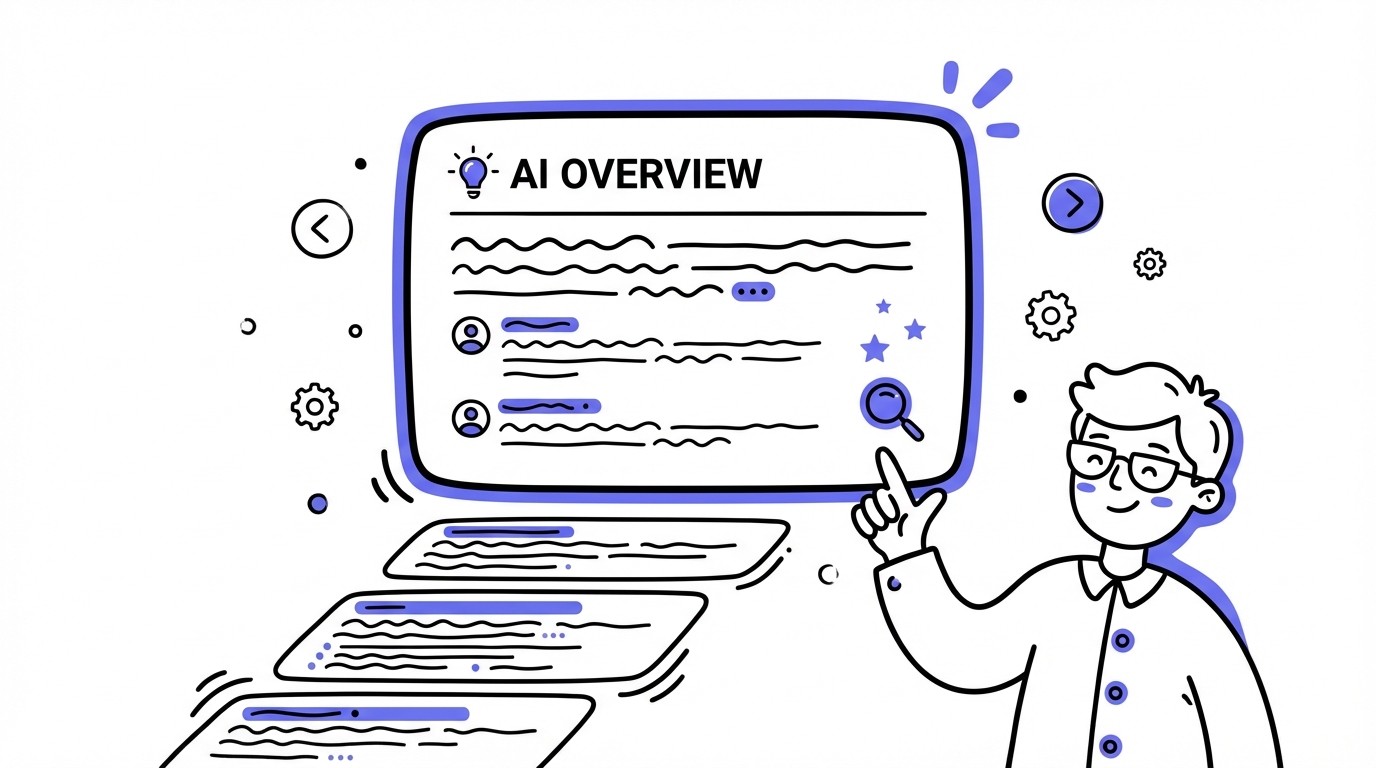
The New SERP: Visualizing the shift from traditional blue-link search results to AI Overviews dominating the search engine results page.
The Irreversible Shift: Why AI Dominates the Future of Digital Marketing
This change is not a temporary trend. It's a permanent evolution driven by user demand and rapid technological progress. Users now expect direct answers. They don’t want a list of websites to research; they want a solution delivered instantly. This is the undeniable future of digital marketing.
Search behavior reflects this new expectation. People ask longer, more conversational questions. Data from HubSpot shows that 64% of searchers now use four or more words in their queries. AI Overviews are built to answer these complex questions, making traditional results feel slow. This is the new standard for the future of digital marketing.
Advanced Large Language Models make this possible. These AI systems read and understand millions of data points across the web in seconds. They then synthesize the most relevant information into a single, cohesive answer. This is the engine driving modern AI Search Marketing, a critical component of the future of digital marketing.
From SEO to GEO: A New Operating Model for AI Search
This shift requires a new strategy for marketing teams. The old rules of SEO are being replaced by the principles of Generative Engine Optimization. The difference between these two approaches is critical for GEO SaaS brands to understand.
MetricTraditional SEO (Pre-2024)Generative Engine Optimization (2026)Primary GoalRank #1 on a results pageBecome the cited source in an AI answerContent FocusKeyword density and backlinksFactual accuracy and structured dataUser InteractionDrive a click-through to a siteProvide a zero-click, direct answerKey TechnologyPage-ranking algorithmsLarge Language Models (LLMs)
For GEO SaaS companies, this table highlights a serious risk. Your audience may get their answer without ever visiting your website. To remain visible, you must build content that directly informs these AI models. Adapting your content strategy is no longer a choice; it's a requirement for survival in the era of Generative Engine Optimization and successful AI Search Marketing.

Unlock the power of Generative Engine Optimization: transforming raw content into perfectly structured, high-performing assets for your SaaS brand.
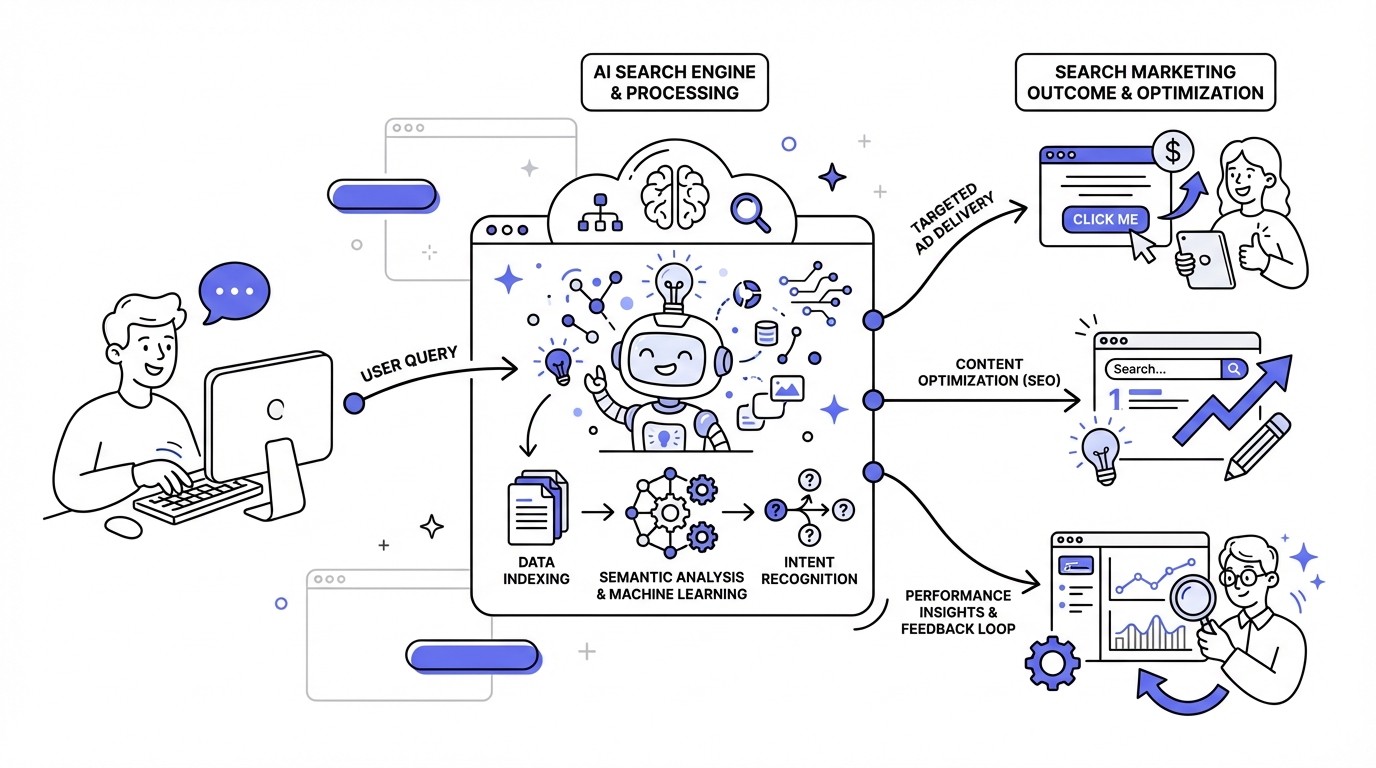
GEO vs. Traditional SEO: A Paradigm Shift for SaaS Visibility
Traditional SEO was a game of signals. You focused on backlinks and keyword placement to convince an algorithm your page was relevant. Generative Engine Optimization (GEO) is a game of substance. You must provide clear, factual, and well-structured information to convince an AI you are a trustworthy source of knowledge.
The old goal was to get a click. The new goal is to become the answer itself through effective Generative Engine Optimization, a key aspect of AI Search Marketing.
From Keywords to Comprehensive Concepts for AI Search
SEO strategists used to target specific keywords. A SaaS company might have targeted a phrase like "project management software." Your content would be built around that specific term. This model is now outdated for modern AI Search Marketing.
GEO requires you to cover entire concepts. A user now asks, "What's the best project management tool for a remote team that needs Gantt charts and time tracking?" The AI model synthesizes an answer from multiple sources. To be included in the answer, your content must evolve from targeting a single keyword to comprehensively solving the user's entire problem, a core tenet of Generative Engine Optimization and effective AI Overviews Optimization.
New Metrics for AI Overviews Optimization in a Zero-Click World
Your analytics are about to change dramatically. Click-through rate (CTR) is becoming a vanity metric. If the AI provides the answer directly, the user has no reason to click your link. A recent BrightEdge study found that AI Overviews already appear on 84% of search queries, making AI Overviews Optimization a critical focus for GEO SaaS brands.
For GEO SaaS brands navigating this new landscape, success will be measured by new KPIs:
Brand Mentions: Your company name appears in the AI-generated text.
Source Citations: Your website is listed as a primary source for the answer.
Query Resolution: Your content successfully answers the user's question within the AI Overview.
Ultimately, successful AI Overviews Optimization isn't about gaming a system. It's about establishing such undeniable authority that the AI has no choice but to cite you. Ignoring this shift means you are planning to become invisible in the future of digital marketing.
The T.E.A. Framework for GEO: A Proprietary Strategy for SaaS Brands
Adapting to this new landscape requires a foundational shift in content strategy, defining the future of digital marketing for many businesses. Success in Generative Engine Optimization is not about finding loopholes. It's about building an unimpeachable source of truth that AI models trust. Our T.E.A. Framework provides a clear methodology for effective Generative Engine Optimization. This is particularly vital for GEO SaaS companies seeking to lead their market.
Strategic FocusTraditional SEO (Keyword-Based)Generative Engine Optimization (T.E.A. Framework)Primary AssetIndividual blog postsInterconnected knowledge baseContent GoalRank for a specific termCover a topic comprehensivelyKey SignalBacklinks and keyword densityFactual accuracy and structured dataDesired OutcomeDrive a click from a results pageBecome the cited source in an AI answer
1. Topical Authority: Go Deeper for AI Search
AI models require a deep well of information. They don't just read one article; they synthesize data from your entire domain. Building Topical Authority means creating an interconnected library that covers every facet of a user's problem, a key component of Generative Engine Optimization.
This isn't a simple blog. It's a complete resource. A CRM provider needs content on implementation, data migration, user training, and ROI calculation—not just a post on "what is a CRM." This depth is how you demonstrate true authority and become a primary source for AI Search Marketing.
2. Entity-Based Structure: Connect the Dots for AI Overviews
AI models think in terms of "entities," or concepts, not just keywords. An entity-based structure organizes your content around these core concepts. This structure helps AI understand the relationships between different pieces of information on your site, crucial for effective AI Overviews Optimization.
For example, a project management tool's content on "Gantt charts" must connect to related entities like "project timelines," "resource allocation," and "critical path method." Strong internal linking and clear site architecture create a web of context that proves your expertise on the entire subject, supporting your Generative Engine Optimization efforts and enhancing your AI Search Marketing presence.
3. Accurate & Actionable Data: Become the Source of Truth for AI Search Marketing
LLMs are built to recognize and reward verifiable facts. Your content must be precise and supported by evidence. Vague claims are ignored. Clear statistics, dates, and definitions are amplified.
You must also use structured data (Schema markup) to directly label this information for search engines. This technical step helps AI models understand your content's context instantly. Research from the CXL Institute shows that pages with structured data can significantly improve visibility, making this a non-negotiable step for effective AI Overviews Optimization and overall AI Search Marketing success.
Practical Steps to Implement GEO for Your SaaS Brand
Knowing the T.E.A. Framework is one thing. Acting on it requires a new content workflow. You need a system that consistently feeds AI models the structured, factual information they crave for successful Generative Engine Optimization. This is particularly true for GEO SaaS companies aiming to maintain competitive advantage.
1. Audit and Map Your Core Entities for AI Search
Start by replacing your old keyword list with a map of core entities. These are the broad concepts you want to own. A SaaS brand might define entities like "B2B sales automation" or "employee onboarding software." Map every existing piece of content to an entity. This process reveals your true topical authority and immediately highlights content gaps, a foundational step for Generative Engine Optimization and effective AI Search Marketing.
2. Weave a Web of Interlinked Content for AI Overviews
Your website needs to function like a brain. Every article is a neuron, and internal links are the connections. A pillar page on a core entity should link out to dozens of specific articles. Those articles must link back to the pillar and to each other. This creates a dense web of context that helps AI understand relationships, solidifying your AI Search Marketing authority and supporting AI Overviews Optimization.
3. Implement Precision with Structured Data for AI Overviews Optimization
AI models don't guess. You have to tell them what your content is about. Structured data (Schema markup) is the language they understand best. Implement specific schema types like Article, FAQPage, and HowTo to explicitly define your content. A 2020 Milestone Research study found websites using this detail earned 20-30% more traffic from rich results. This precision is essential for AI Overviews Optimization.
| Old SEO Task | New GEO Equivalent |
|---|---|---|
| Compile a keyword list | Define and map core business entities |
| Write one-off blog posts | Build interconnected topic clusters |
| Add keywords to meta tags | Implement detailed Schema markup |
| Build external backlinks | Verify every fact with a source |
This disciplined approach for GEO SaaS focuses on building a trusted knowledge asset, a core principle of Generative Engine Optimization, not just chasing rankings.
The shift to Generative Engine Optimization is happening now. Your visibility in 2026 won't depend on keywords. It will hinge on your ability to build a trusted information source using a clear framework like T.E.A. Sticking to old SEO playbooks is a direct path to obscurity in AI-driven search, impacting your future of digital marketing.
This new ecosystem demands a different kind of content engine. You need one built to satisfy the AI models that now control discovery. Preparing your content strategy for this reality isn't just smart; it's a fundamental requirement for growth and securing your place in the future of digital marketing. The GEO SaaS brands that thrive will be those who adapt their creation process for a machine-led, human-centered future of digital marketing.
Ready to master Generative Engine Optimization? Use MarketDay to create future-proof content that builds authority in both traditional and AI-powered search marketing. Explore the platform and own the search landscape of 2026.
Visuals
Frequently Asked Questions
What is Generative Engine Optimization (GEO)?
Generative Engine Optimization (GEO) is a new strategy for creating and structuring information to become a trusted source for AI models. It focuses on optimizing content to be directly cited in AI Overviews, rather than just ranking for blue links. This fundamental shift is crucial for effective AI Search Marketing in the modern digital landscape.
Why is Generative Engine Optimization crucial for the future of digital marketing?
Generative Engine Optimization is crucial because Google's AI Overviews now dominate search results, providing direct answers and altering user behavior. Users expect instant solutions, making traditional SEO tactics less effective. Embracing GEO and AI Overviews Optimization is essential for maintaining visibility and relevance in the evolving future of digital marketing.
How does Generative Engine Optimization (GEO) differ from traditional SEO?
Generative Engine Optimization differs from traditional SEO by shifting the primary goal from ranking #1 to becoming the cited source in an AI answer. GEO focuses on factual accuracy and structured data, providing zero-click direct answers, while SEO emphasized keyword density and backlinks to drive click-throughs. This is a paradigm shift for AI Search Marketing.
What is AI Overviews Optimization and why is it important for SaaS companies?
AI Overviews Optimization is the process of structuring content to be directly synthesized and presented by AI models in search results. It's critical for GEO SaaS companies because AI Overviews provide direct answers, potentially bypassing website visits. Optimizing for these overviews ensures your brand remains visible and a trusted source in AI Search Marketing.
How can GEO SaaS companies adapt their content strategy for AI Search Marketing?
GEO SaaS companies must adapt by moving from targeting specific keywords to covering comprehensive concepts. Content needs to be factually accurate, well-structured, and directly solve user problems to be synthesized by AI models. This proactive approach ensures visibility and positions the company as a trusted source in the new era of Generative Engine Optimization.
What is the T.E.A. Framework mentioned in relation to Generative Engine Optimization?
The T.E.A. Framework is a proprietary methodology for building Topical Authority, Entity-Based Structure, and Accurate Data. It's introduced as a clear guide for companies to win in the new era of Generative Engine Optimization. This framework helps ensure content is robust and trustworthy enough to be leveraged by AI models for effective AI Search Marketing.
Are traditional SEO tactics still relevant in the era of AI Overviews?
Traditional SEO tactics, built for a list of links, are rapidly losing their impact in the era of AI Overviews. While foundational SEO remains important, the dominance of direct AI answers necessitates a shift. Companies must now prioritize Generative Engine Optimization to become a cited source, adapting to the undeniable future of digital marketing.



Hop on a call with us to see how our services can accelerate your growth.