Is Google's AI Overviews Killing Your CTR? Essential SEO for AI Businesses

K R
Days AI
MarketDay
An AI-powered content and visibility platform that helps teams create authoritative content and get discovered across Google and modern AI platforms like ChatGPT, Claude, Perplexity, and more.

Is Google's AI Overviews Killing Your CTR? Essential SEO for AI Businesses
Your website traffic just dropped, and you're concerned about your AI Overviews CTR. While your search rankings haven't changed, Google's AI Overviews are now answering user questions directly on the results page. This shift demands a new approach to SEO for AI businesses, as fewer people need to click on your links to find information.
This shift is more than a marketing headache; it's an existential threat to your content strategy. The top-of-funnel content you create to attract leads and build authority—from technical explainers to industry analysis—is getting bypassed. This new reality of the digital marketing AI era threatens to make your brand invisible to your target audience, making a proactive zero-click search strategy more vital than ever.
Fortunately, companies that build with AI have a unique advantage. You already understand the technology driving this change. Here are specific strategies you can use to adapt your content, implement an effective zero-click search strategy, and ensure your message reaches your audience.
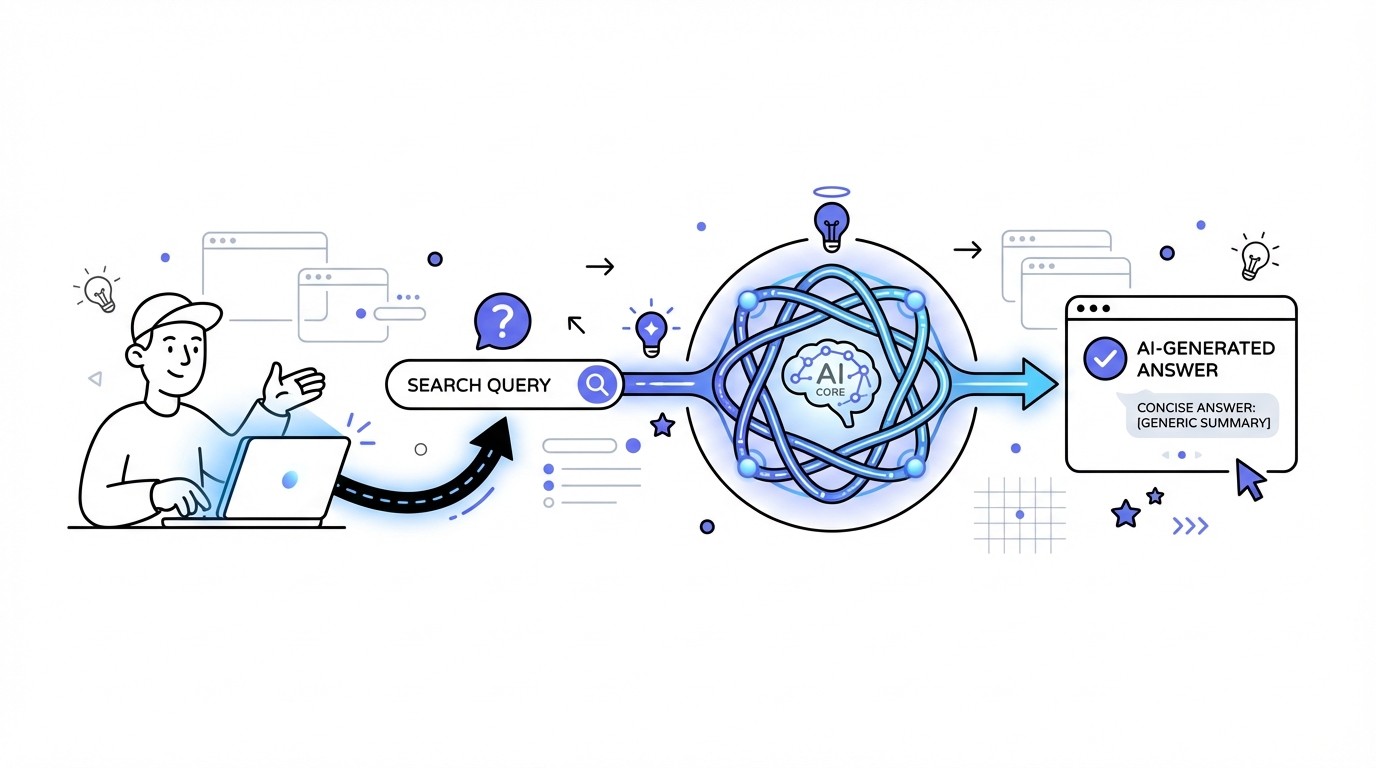
Direct AI Answers: Visualizing the streamlined path from user query to intelligent response.
Understanding Your Zero-Click Search Strategy
A robust zero-click search strategy becomes crucial when a user's question is answered directly on the search results page. They get the information they need without clicking a single link. While this isn't new, Google's AI Overviews have supercharged the trend.
The data confirms this shift. A recent Semrush analysis found that over 25% of all desktop searches end with zero clicks. AI Overviews will only increase this figure. They don't just show a small snippet; they provide a comprehensive, synthesized answer. This is the profound generative AI impact on SEO playing out in real time, demanding a refined approach to SEO for AI businesses.
This change alters the relationship between your content and the search engine. The goal is no longer just to rank on the first page. It's to become a primary source for the AI-generated answer itself.
FeatureTraditional Search ResultsAI Overview Search ResultsUser GoalFind the best link to clickGet an immediate, direct answerInformation SourceA ranked list of websitesAn AI-synthesized summaryPath to AnswerClick a link, then read the pageRead the overview on the SERPWebsite's RoleThe destination for the userA data source for the AI model
Look closely at that last row. Your website’s role has changed. You must now position your content as the most authoritative data source for Google's AI to cite. A successful zero-click search strategy depends on it for maintaining your AI Overviews CTR.
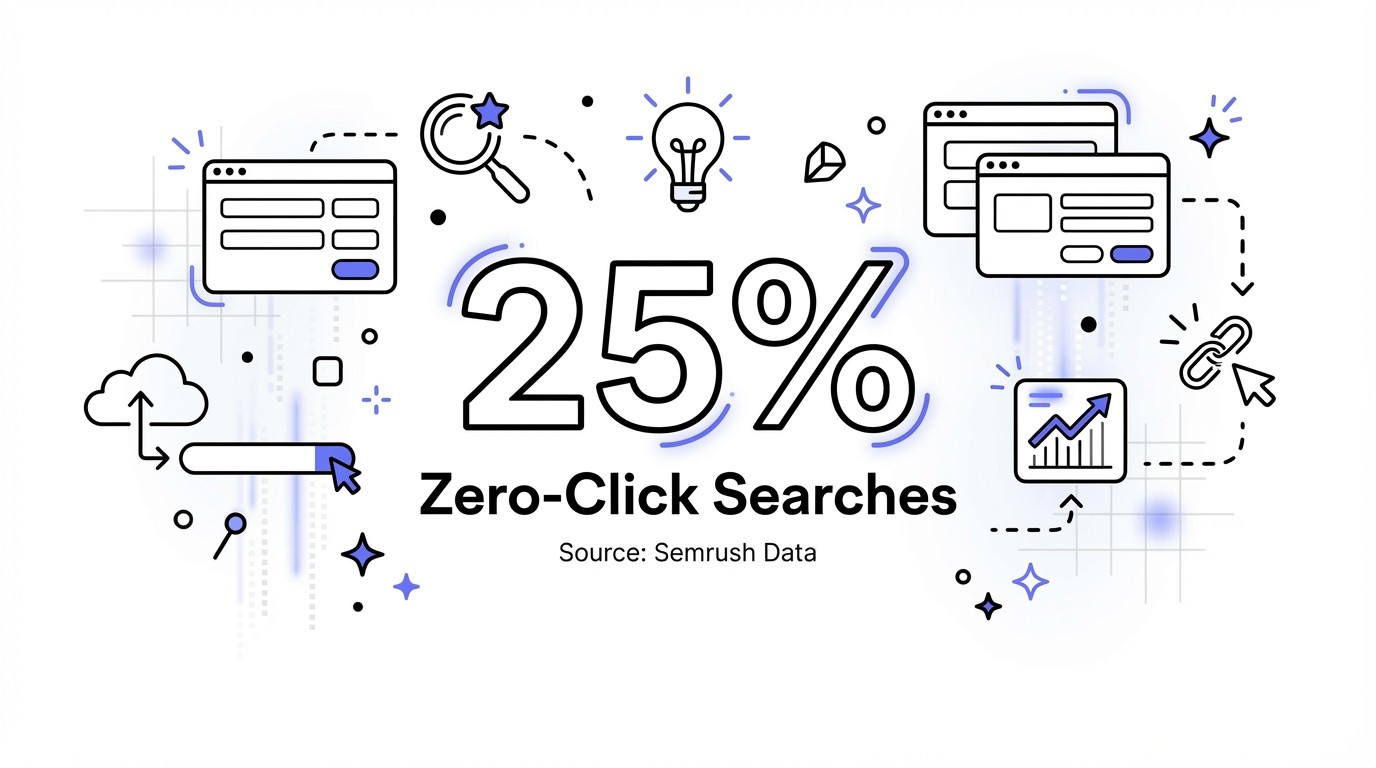
Understanding the prevalence of zero-click searches is crucial for modern SEO strategies. This infographic illustrates a key finding: 25% of all searches result in no clicks to external websites, as reported by Semrush.
A visual breakdown comparing the core principles and infrastructure of Traditional Security versus the dynamic, cloud-native, and AI-driven approach of Modern Security.
Maximizing AI Overviews CTR: Understanding Query Types for Effective SEO for AI Businesses
The drop in AI Overviews CTR is not uniform across all searches. The impact depends entirely on user intent. Understanding this distinction is the first step toward building a more resilient SEO for AI businesses.
Search queries generally fall into four categories. A recent analysis by Moz suggests that informational queries, which seek knowledge, account for up to 80% of all search volume. These are the most vulnerable to zero-click results.
The table below shows how AI Overviews impact each query type.
Query TypeUser IntentExampleImpact of AI OverviewsInformationalTo learn something"what is retrieval augmented generation"High. The AI can directly answer the question, often eliminating the need for a click.NavigationalTo go to a specific site"Abex MarketDay login"Low. The AI understands the user wants to go to a specific URL, not get a summary.CommercialTo research before a purchase"best AI content marketing tools"High. The AI can generate a comparison list, reducing clicks to review articles.TransactionalTo complete an action"buy MarketDay subscription"Low. The user intends to make a purchase, which requires clicking through to a product page.
Your content marketing likely targets informational and commercial queries. Think about your blog posts explaining NLP or whitepapers comparing different AI models. These are exactly the types of content Google's AI is now summarizing. This means your SEO for AI businesses strategy must evolve to counter the generative AI impact on SEO.
The AI-First SEO Playbook: Adapting to the Generative AI Impact on SEO
The old SEO playbook is obsolete. Ranking on the first page is no longer the final goal. You must now position your content as a citable, authoritative source for Google's AI models. Instead of trying to beat the AI, you need to feed it, understanding the profound generative AI impact on SEO.
Become an Authoritative Data Source
AI models prioritize clear, structured information. You can help them understand your content by using technical SEO tactics like Schema markup. Think of Schema as a vocabulary that adds context to your website's code, making it easier for search engines to interpret. This is crucial for maintaining your visibility in the digital marketing AI era and improving your AI Overviews CTR.
For example, using FAQPage schema on your product pages can directly feed answers into potential AI Overviews. This technique explicitly tells the AI, "Here is a common question and here is the definitive answer."
Target Niche, Long-Tail Queries
AI Overviews excel at answering broad questions. They often struggle with highly specific, nuanced queries. This is your opportunity. A successful generative AI impact on SEO strategy means shifting focus from high-volume head terms to specific long-tail keywords.
Broad Query: "what is natural language processing"
Niche Query: "how to fine-tune Gemini for B2B SaaS marketing"
The second query signals a user who needs detailed, expert guidance. They are far more likely to click through for an in-depth article than to accept a brief AI summary, thus improving your potential AI Overviews CTR.
Double Down on E-E-A-T and Original Data
Google's guidelines on Experience, Expertise, Authoritativeness, and Trustworthiness (E-E-A-T) are now critical. AI models must pull information from trusted sources. Publishing original research or proprietary data makes your content a unique source that the AI needs to cite. A study by SparkToro found that less than 10% of content earns links or shares, highlighting the value of creating truly unique assets for effective SEO for AI businesses.
Executing the Playbook with AI
At Abex, we use our own AI to build a resilient content strategy, perfectly suited for the digital marketing AI era. We built MarketDay to solve this exact problem. The platform connects directly to a company's internal knowledge base. It uses Retrieval Augmented Generation (RAG) to pull proprietary data, case studies, and unique insights into every article it creates.
This process ensures our content contains information that AI Overviews cannot find anywhere else. It transforms a blog post into an original, data-rich asset. This is the most direct way to build the E-E-A-T signals that Google’s algorithms reward, crucial for any robust zero-click search strategy in the current search landscape.
Our own blog saw a 15% increase in featured snippet appearances for long-tail queries after adopting this model, demonstrating a positive generative AI impact on SEO.
The arrival of AI Overviews signals a permanent change. Relying on high rankings for informational queries is no longer viable. Your new focus must be on creating expert-level content that answers complex problems—the exact analysis AI Overviews cannot replicate. We built MarketDay to produce this deep, authoritative content, establishing your brand as the definitive resource that compels users to click through for the full picture, ultimately improving your AI Overviews CTR.
Don't let AI Overviews make your content invisible, hindering your AI Overviews CTR. Use MarketDay to generate the high-authority articles that stand out, win the click, and reclaim your traffic, mastering SEO for AI businesses in this evolving digital marketing AI era.
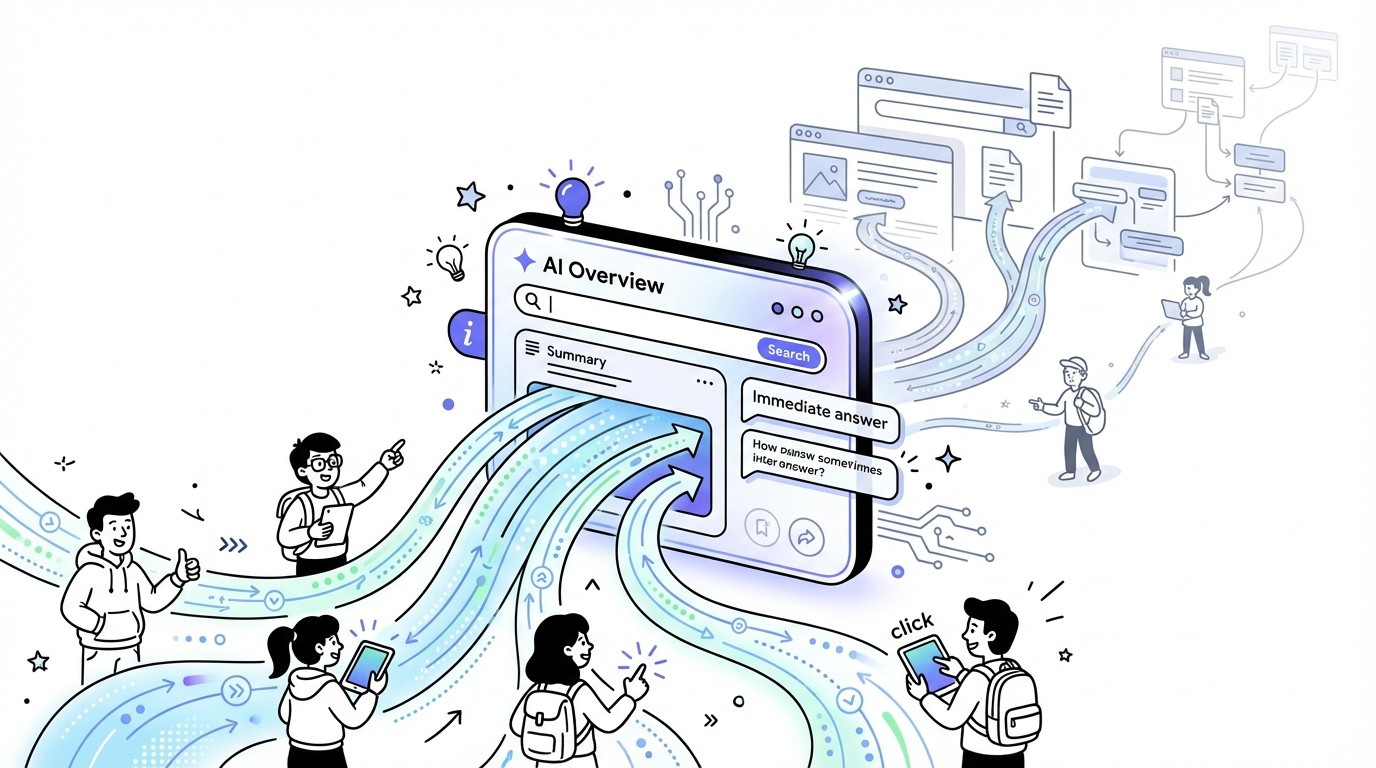
The new digital gatekeeper: AI Overviews reshape user interaction, intercepting clicks and overshadowing traditional search result visibility.
Visuals
Frequently Asked Questions
What is the impact of AI Overviews on website CTR for AI businesses?
Google's AI Overviews directly answer user questions on the search results page, significantly reducing the need for users to click on traditional links. For AI businesses, this often leads to a drop in AI Overviews CTR, as top-of-funnel content gets bypassed. This shift demands a new approach to SEO for AI businesses to maintain visibility and traffic.
Why is a zero-click search strategy essential for AI businesses in the digital marketing AI era?
A zero-click search strategy is crucial because AI Overviews provide comprehensive answers directly on the SERP, meaning users don't need to click through to websites. For AI businesses navigating the digital marketing AI era, this strategy helps ensure content is still discovered and cited by AI, preventing brand invisibility and maintaining authority despite reduced clicks.
How does generative AI impact SEO strategies for AI businesses?
The generative AI impact on SEO fundamentally changes how content interacts with search engines. Instead of just ranking for clicks, the goal for SEO for AI businesses now includes becoming an authoritative source for AI-generated answers. This requires optimizing content to be easily digestible and trustworthy for AI models, ensuring it's cited in AI Overviews.
What is a zero-click search strategy in the context of AI Overviews?
A zero-click search strategy is an SEO approach focused on optimizing content to provide direct, comprehensive answers that Google's AI Overviews can synthesize and display on the search results page. The goal is for users to find the information they need without clicking a link, positioning your content as the primary data source for the AI itself.
How has the role of a website changed with the introduction of AI Overviews?
With AI Overviews, a website's role has shifted from being the ultimate destination for user clicks to becoming a primary data source for AI models. While traditional SEO for AI businesses aimed for high rankings to drive traffic, the new reality requires content to be structured so AI can easily extract and summarize information, even if it means fewer direct clicks.
Which types of search queries are most affected by Google's AI Overviews?
Google's AI Overviews most significantly impact informational and commercial search queries. Informational queries, which seek knowledge, and commercial queries, which involve product research, are highly susceptible to zero-click results as the AI can directly provide summaries or comparison lists. Navigational and transactional queries are less affected.
How can AI businesses adapt their content strategy to maintain AI Overviews CTR?
To maintain AI Overviews CTR, AI businesses must adapt their content strategy by focusing on becoming an authoritative source for AI. This involves creating highly structured, clear, and concise content that directly answers common questions. Optimizing for featured snippets and ensuring content is easily digestible for AI models can help your information be cited in AI Overviews.



Hop on a call with us to see how our services can accelerate your growth.