Measuring Content ROI in 2026: The AI Visibility Shift

K R
Days AI
MarketDay
An AI-powered content and visibility platform that helps teams create authoritative content and get discovered across Google and modern AI platforms like ChatGPT, Claude, Perplexity, and more.

Measuring Content ROI in 2026: The AI Visibility Shift
Your website traffic is quickly becoming a vanity metric, fundamentally changing how we approach Content ROI in 2026. For years, marketers chased clicks and sessions as the ultimate sign of success. That era is ending.
Generative AI is fundamentally changing search. Analysts predict a 25% drop in traffic from traditional search engines by 2026 as users get answers directly from AI models. This shift makes old ROI models obsolete, fundamentally altering how we approach Content ROI in 2026. Your content could be massively influential without ever earning a single click.
So how do you measure what you can’t see? The new goal isn't just ranking on a search results page. It’s about becoming a trusted data source for the AI itself. This is the core of AI Visibility. Measuring this new influence requires a different playbook for your Content ROI in 2026.
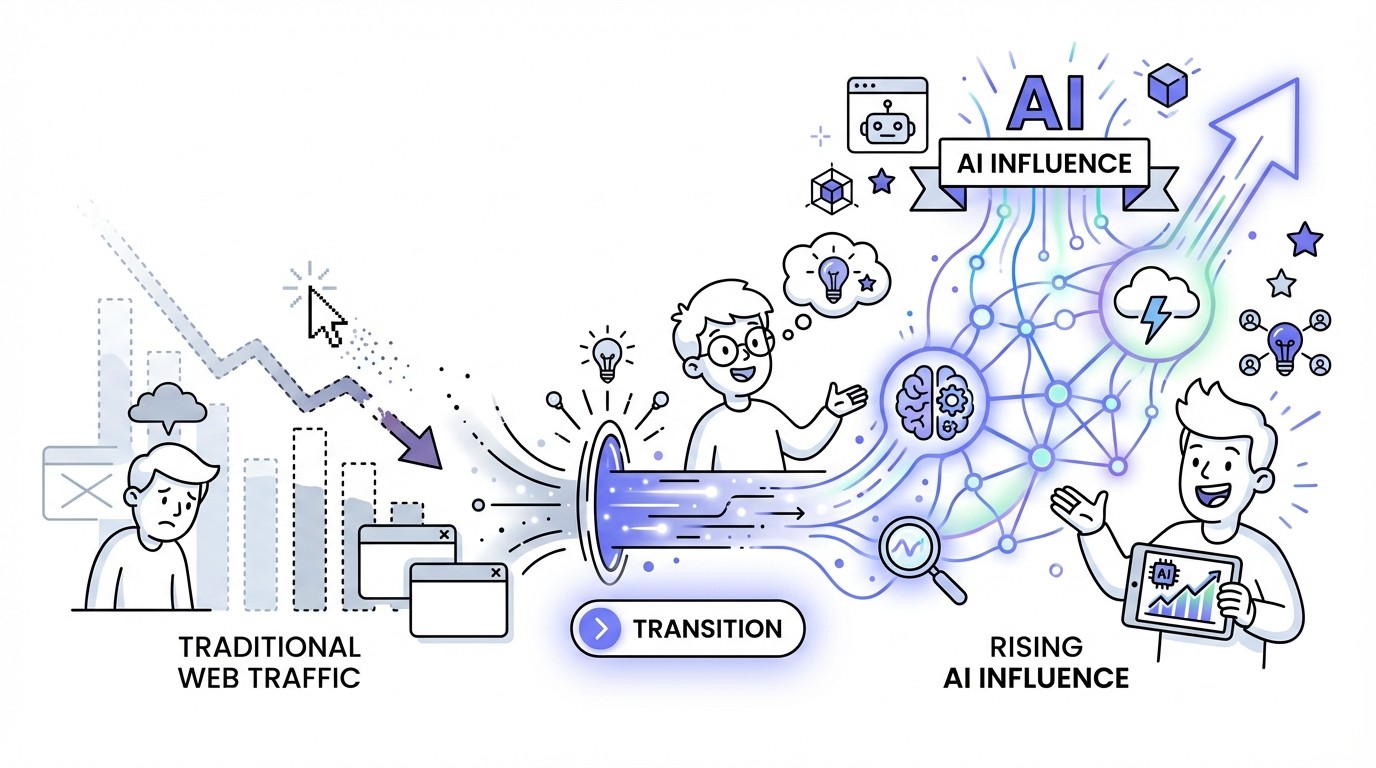
Visualizing the Digital Shift: From declining traditional web traffic to the rising influence of AI.
Decoding AI Visibility: The New Paradigm for Content Value
AI Visibility isn't about who clicks your links. Understanding AI Visibility is crucial for maximizing your Content ROI in 2026. It measures your content's influence inside AI models. Your articles become a source of truth for AI-generated answers. Success is no longer measured in sessions, but in citations. Your brand's authority grows every time an AI uses your data to inform a user.
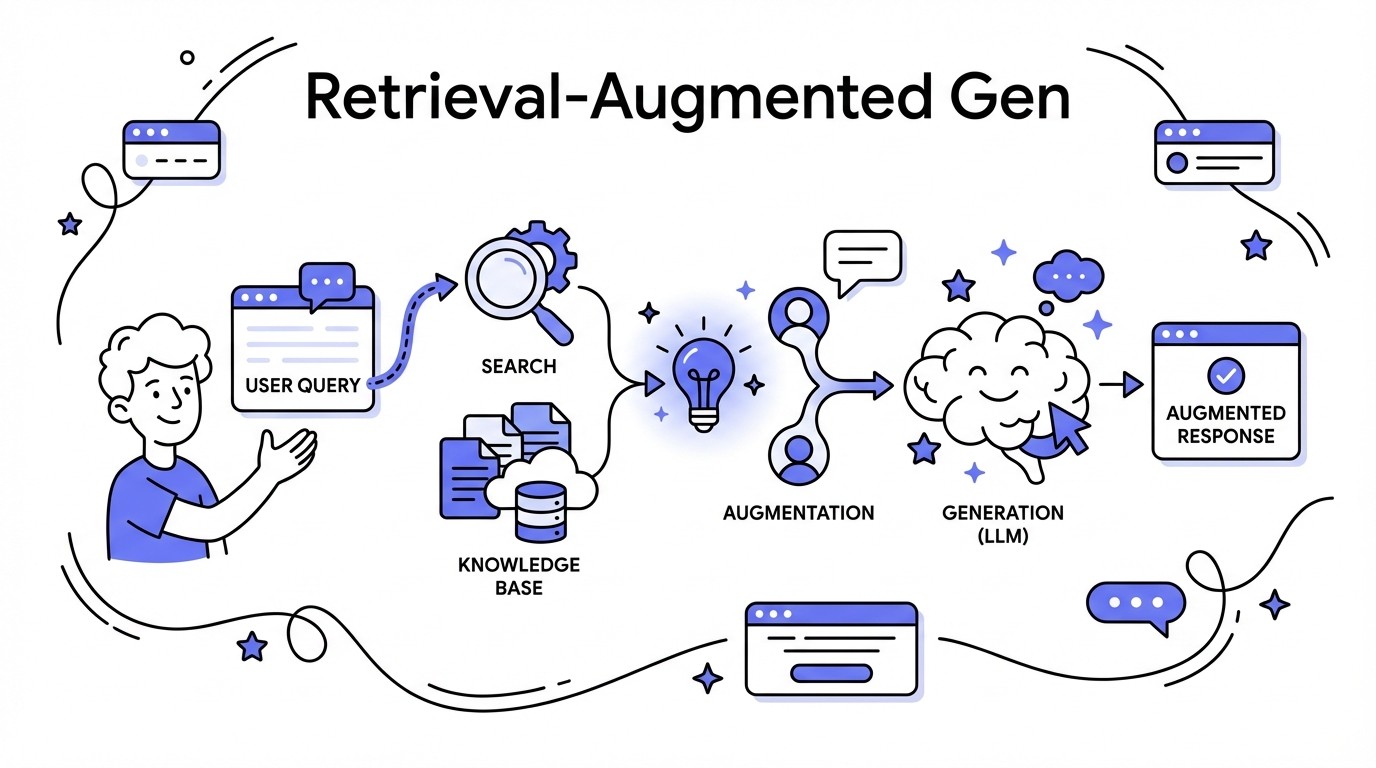
This happens through a process called Retrieval-Augmented Generation (RAG). AI models actively search for credible, well-structured information to build their responses. Generative Engine Optimization (GEO) is the practice of making your content that primary, trusted source. It’s SEO, but for machines.
From Clicks to Citations: New Metrics for AI-Driven Content
The metrics for content performance are changing completely, demanding a new approach to Content Measurement AI. What mattered in traditional SEO is now secondary to what AI models value.
MetricTraditional SEO (Then)AI Visibility (Now)Primary GoalDrive human clicks to a webpageInform AI models and get citedKey MetricOrganic Traffic & Keyword RankAI Mentions & Citation FrequencyContent FocusKeyword density and backlinksFactual accuracy & data structureSuccess SignalA top 10 Google resultInclusion in an AI-generated answer
With organic search traffic projected to drop 25% by 2026, relying on clicks is a failing strategy for your Content ROI in 2026. Effective Content Measurement AI requires a new set of KPIs.
You should start tracking:
AI Citations: The number of times your domain is directly referenced as a source in AI answers. These metrics are crucial for understanding your
AI Visibility.Branded Mentions: How often your brand appears as an authority in AI responses to non-branded queries.
Knowledge Graph Presence: Your entity's inclusion and accuracy within the core datasets AI uses.
Winning in this new landscape means producing content built for AI consumption. Platforms like Abex's MarketDay create the structured, fact-rich articles that AI models can easily parse, verify, and cite. This is the foundation for building durable Content ROI in 2026.
Mastering Generative Engine Optimization (GEO) & AI Search Optimization (AISO)
While Generative Engine Optimization (GEO) is the strategic framework for building AI Visibility, AI Search Optimization (AISO) represents the tactical execution. AI Search Optimization is the practice of making your content the most reliable and easily digestible source for an AI. It's how you directly influence the new metrics for Content ROI in 2026.
Core Practices for AI-Ready Content Optimization
Optimizing for AI, a key aspect of Generative Engine Optimization, requires a shift in how you create content. The goal is to produce machine-readable assets that are dense with factual information. These practices are central to effective AI Search Optimization and securing your Content ROI in 2026.
Prioritize Factual Density: AI models need verifiable data. A Stanford AI Lab study found that RAG model accuracy can improve by up to 40% when sourcing from well-structured, fact-checked documents. Remove fluff and focus on clear, citable statements.
Implement Structured Data: Use schema markup to define your content's context. Clearly label FAQs, how-to guides, and product data. This acts as a clear roadmap for AI crawlers, making your information easier to parse and trust.
Connect to a Knowledge Base: Your internal data is a goldmine. Platforms like MarketDay use your knowledge base to ensure content is not only original but also infused with your company's unique expertise and proprietary data.
Establish Clear Entities: Explicitly define your brand, products, and areas of expertise. Consistent information helps AI models understand who you are and why you're an authority, building your presence in their knowledge graphs.
Each of these steps makes your content a better source for AI. They directly contribute to earning more AI citations and branded mentions. This is the new foundation for Content Measurement AI, turning your content into a durable asset.
Content Measurement AI: Essential Metrics for Content ROI in 2026 in the AI Era
Traditional analytics dashboards are becoming obsolete. Effective Content Measurement AI, especially for tracking the impact of your Generative Engine Optimization, requires a new set of tools. You must track how AI models perceive and use your content, not just how many humans click a link.
From Pageviews to AI Pickups: Tracking New KPIs
Your focus must shift from pageviews to AI pickups. The primary KPIs that now define success are the AI Citations and Branded Mentions we introduced earlier. Each citation is a direct vote of confidence from an AI model. Branded mentions occur when an AI names your company as an authority—a powerful signal of trust.
Imagine a B2B SaaS firm specializing in logistics. After overhauling their top articles to be fact-dense and structured, they saw a 15% higher rate of citation in AI-powered search results in just 90 days. When users asked AI assistants about "optimizing supply chains," their content was directly sourced. This positioned them as an authority and influenced potential customers, demonstrating strong AI Visibility without relying on website traffic.
Auditing Your Knowledge Graph Footprint for AI Trust
Your brand’s accuracy within AI knowledge bases is critical. An incomplete or incorrect entity profile directly hurts your AI Visibility. Regularly auditing your digital footprint ensures AI models trust your information. A strong profile is consistent, authoritative, and complete.
FactorWeak Profile (Low Visibility)Strong Profile (High Visibility)Data SourceInconsistent public informationVerified internal knowledge baseExpertiseVague industry associationClearly defined topics and authorsProduct InfoOutdated or missing detailsAccurate, structured product dataConsistencyConflicting info across platformsUniform brand identity everywhere
Manually tracking these metrics is a challenge. Platforms like Abex's MarketDay are built for this new landscape. Its analytics dashboard reports on citations, mentions, and knowledge graph strength. It provides the data you need for effective Content Measurement AI and to prove your Content ROI in 2026.
Actionable Strategies to Boost Your AI Visibility
Knowing the new metrics is one thing. Actively improving them is another. These strategies are designed to increase your AI citations and strengthen your knowledge graph presence. This is how you build a durable advantage and secure your Content ROI in 2026.
Conduct a Factual Density Audit for AI Readiness
Start with your existing content. Review your top-performing articles and remove subjective language or unverified claims. Replace vague statements with hard data, specific dates, or attributed quotes. Every fact you add makes your content a more reliable source for AI models that use RAG technology.
Reframe Content as Direct Answers for AI Consumption
AI models are designed to find and deliver answers. Structure your content to make their job easier. Use subheadings that pose direct questions and provide concise, factual answers immediately below.
A 2024 Content Marketing Institute report found that articles using structured data, like FAQ schema, are 30% more likely to be sourced for AI-generated answers. This simple technical step directly improves your AI Search Optimization efforts. It signals to AI crawlers that your page contains clear, ready-to-use information.
Shift Your Tactical Focus: From Traditional SEO to AISO Principles
Improving AI Visibility requires a new playbook. Old SEO tactics are no longer enough. The focus must shift from pleasing crawlers with keywords to feeding AI models with verifiable knowledge, a core principle of AI Search Optimization.
Traditional TacticAI Visibility StrategyFocus on Keyword DensityPrioritize Factual AccuracyWrite for Read TimeStructure for Machine ReadabilityBroad Topic CoverageBuild Deep, Authoritative Topic ClustersManual Internal LinkingIntegrate with a Central Knowledge Base
Implementing these strategies, central to effective Generative Engine Optimization, is a continuous process of refining your content to be the most authoritative source in your niche. Platforms like Abex's MarketDay automate this by generating fact-dense, structured articles from your company's verified knowledge base.
Measuring content's value has fundamentally changed, impacting how we approach Content ROI in 2026 and Content Measurement AI. Traffic and keyword rankings are now secondary indicators of success. Your brand's influence depends on AI Visibility—how often your content is sourced to answer a user's query. The goal is no longer just to rank, but to become the source of truth for generative AI, a key outcome of successful AI Search Optimization. This shift demands a library of content built on structured data and verifiable facts, a core tenet of Generative Engine Optimization. As we saw with the logistics firm example, a fact-dense approach directly increases citations and establishes authority. The brands that thrive and achieve strong Content ROI in 2026 won't just attract readers. They will become the primary sources for the AI systems that guide them.
Ready to master AI Visibility and future-proof your Content ROI in 2026? See how the MarketDay platform generates high-performing, structured content built to be the trusted source for modern search engines.
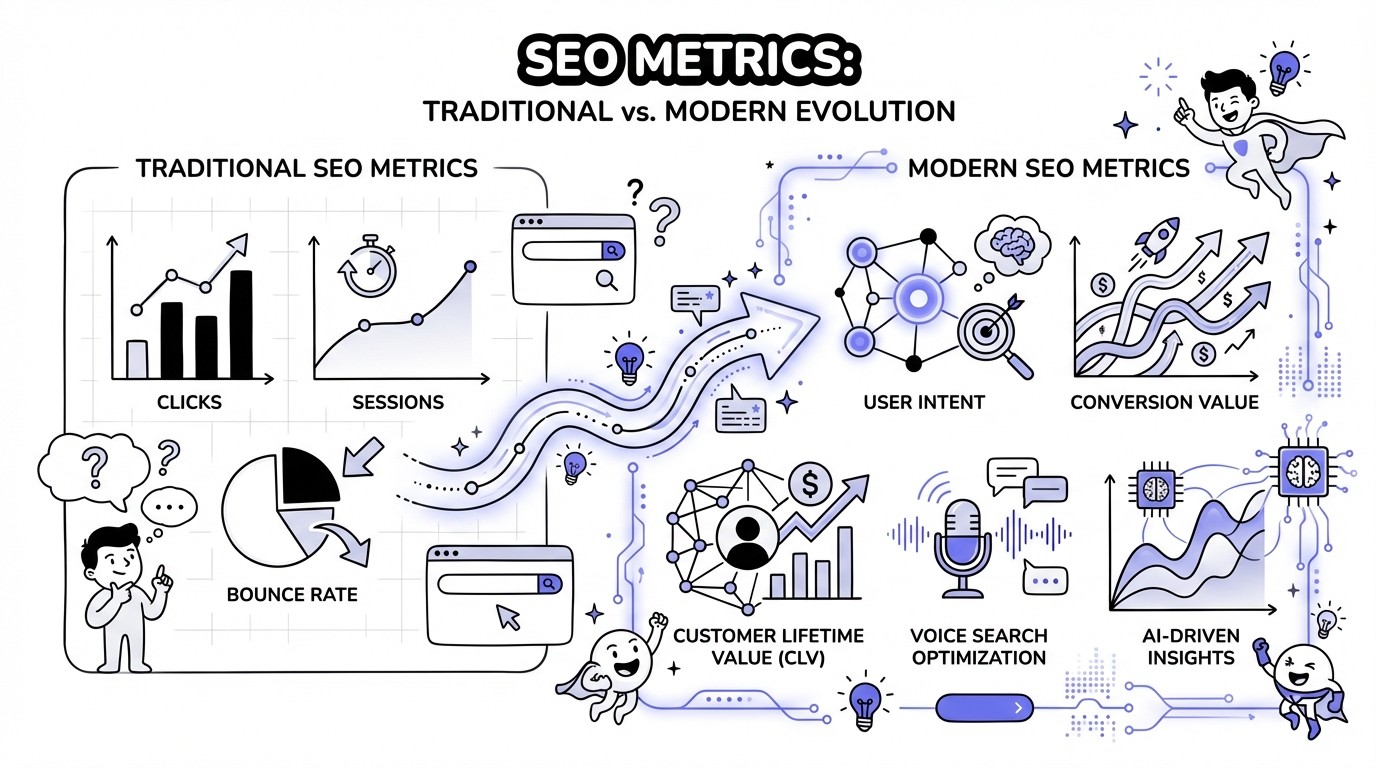
The Evolution of SEO Metrics: From Clicks to Conversion Value and AI Insights
Visuals
Frequently Asked Questions
What is the core shift in Content ROI in 2026?
The core shift in Content ROI in 2026 moves beyond traditional website traffic to focus on AI Visibility. As generative AI provides direct answers, content success is increasingly measured by its influence within AI models and the frequency of citations, rather than just clicks. This redefines how content value is assessed.
Why is traditional website traffic becoming a vanity metric for Content ROI in 2026?
Traditional website traffic is becoming a vanity metric because generative AI is fundamentally changing search behavior. Analysts predict a 25% drop in traffic from traditional search engines by 2026 as users get answers directly from AI models. This shift means content can be influential without generating clicks, making old Content ROI models obsolete.
What is AI Visibility and how does it impact Content ROI in 2026?
AI Visibility measures your content's influence inside AI models, where your articles become a trusted source for AI-generated answers. For Content ROI in 2026, success is no longer measured in sessions but in citations, as your brand's authority grows every time an AI uses your data to inform a user.
How does Generative Engine Optimization (GEO) help achieve AI Visibility for future Content ROI?
Generative Engine Optimization (GEO) is the strategic framework for building AI Visibility by making your content a primary, trusted data source for AI models. It involves optimizing content for machine consumption, ensuring factual accuracy and structured data, which directly contributes to earning AI citations and improving Content ROI.
What is AI Search Optimization (AISO) and what are its core practices for AI Visibility?
AI Search Optimization (AISO) represents the tactical execution of Generative Engine Optimization, focusing on making content the most reliable and digestible source for AI. Core practices include prioritizing factual density, implementing structured data, connecting to a robust knowledge base, and establishing clear entities to enhance AI Visibility.
What new metrics are essential for Content Measurement AI to track Content ROI in 2026?
For Content ROI in 2026, Content Measurement AI requires new metrics beyond traditional traffic. Essential KPIs include AI Citations (direct references in AI answers), Branded Mentions (brand as an authority in AI responses), and Knowledge Graph Presence (inclusion and accuracy in AI datasets). These reflect true AI influence.
How does optimizing content for AI differ from traditional SEO for maximizing Content ROI?
Optimizing content for AI, a key aspect of Generative Engine Optimization, differs significantly from traditional SEO. While SEO focused on driving human clicks through keyword density and backlinks, AI optimization prioritizes informing AI models through factual accuracy, structured data, and clear entities to earn citations and maximize Content ROI.



Hop on a call with us to see how our services can accelerate your growth.