SaaS Content Strategy: Zero to Organic Traffic with AI-First Approach

K R
Days AI
MarketDay
An AI-powered content and visibility platform that helps teams create authoritative content and get discovered across Google and modern AI platforms like ChatGPT, Claude, Perplexity, and more.

SaaS Content Strategy: Zero to Organic Traffic with AI-First Approach
The content playbooks that built today's SaaS unicorns are obsolete. By 2026, they'll be ancient history. Manually researching keywords and publishing a few blog posts a month is a path to invisibility. Search engines are evolving. Generative AI is changing how customers find solutions. The old methods can't keep pace.
This new reality demands a strategic rethink. Winning organic traffic SaaS requires an AI-first mindset. It's about building an intelligent system that creates high-value, optimized AI-first content at scale. This is the core of an effective SaaS content strategy 2026. This article provides that SaaS SEO blueprint. We'll walk through the AI-driven tactics needed to build authority, capture qualified traffic, and create a powerful engine for discoverability through advanced AI content marketing.
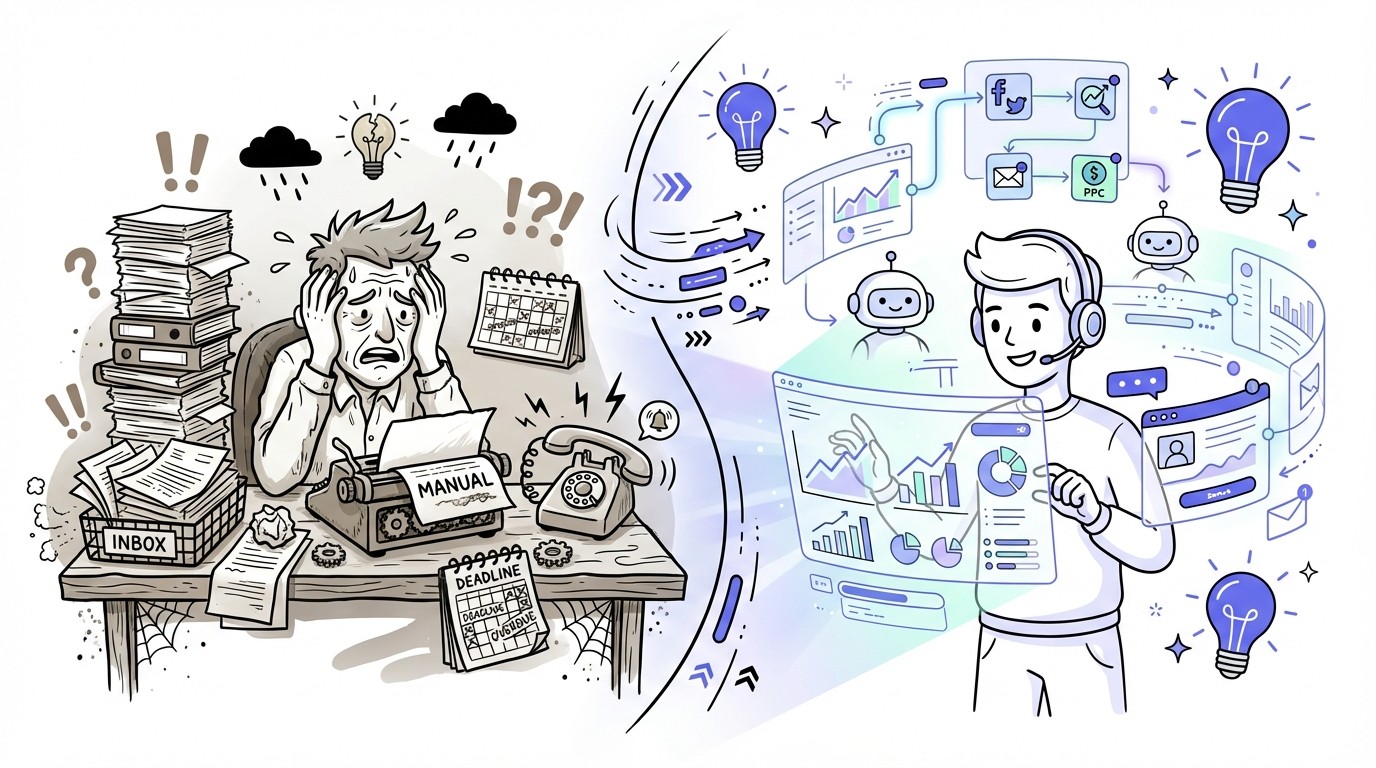
From manual mayhem to automated mastery: This illustration powerfully contrasts the inefficiencies of outdated, single-person content marketing efforts with the streamlined, data-driven power of modern, automated strategies.
The AI-First Discoverability Model: Your SaaS SEO Blueprint for 2026
The race for the #1 spot on Google is over. A new race has begun: the race to become a primary source for AI answer engines. Your audience is shifting from typing keywords to asking AI assistants conversational questions. This changes everything for your SaaS content strategy 2026.
Gartner projects that search engine volume will drop by 25% by 2026. AI chatbots and other virtual agents will replace it. If your content isn't optimized for this shift, you'll be invisible to a quarter of your market. The goal is no longer just ranking. It's becoming a citable, authoritative source that AI models trust, a key component of any modern SaaS SEO blueprint.
From Traditional SEO to AI-First Answer Engine Optimization (AEO)
This new model relies on technologies like Retrieval-Augmented Generation (RAG). AI systems use RAG to pull real-time, verified information from external sources—like your blog—to give accurate answers. You must structure your content as a clear, factual knowledge base that these systems can parse. This is the core of AI-first content.
The table below breaks down the fundamental shift in AI content marketing.
Strategy ComponentTraditional SEO Model (Obsolete)AI-First Discoverability Model (2026)Primary GoalRank on a search results pageBecome a cited source in AI answersContent FocusKeyword density and backlinksFactual accuracy and semantic depthKey TechnologyKeyword research tools (Ahrefs, Semrush)Generative AI & RAG systems (MarketDay)Success MetricHigh keyword rankingsBrand mentions in AI responses
Winning in this environment means producing high-quality, technically sound content at scale. This is where effective AI content marketing shines. When your platform, like Abex's MarketDay, consistently feeds AI models with expert answers, you build deep authority. You aren't just a result. You become the definitive answer.
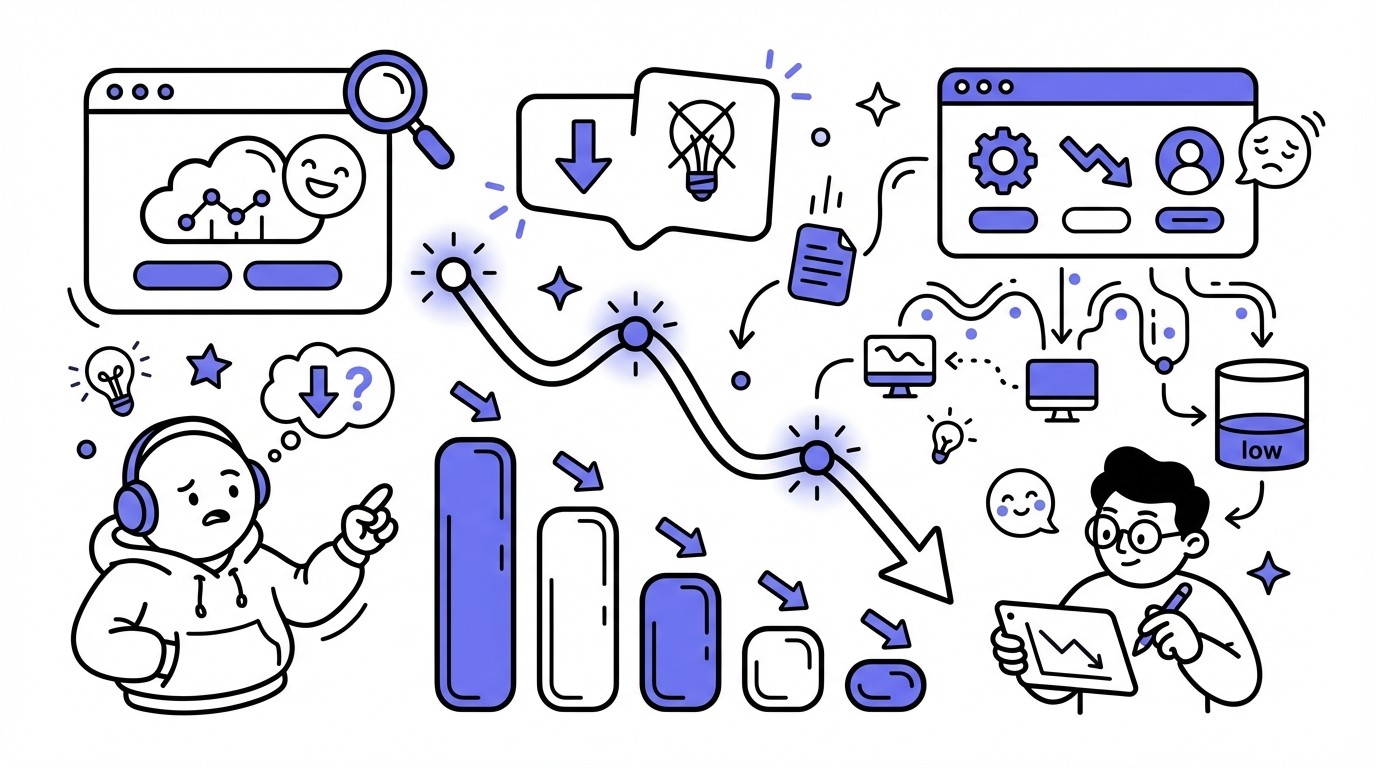
Gartner Projection: Visualizing a Projected Decline
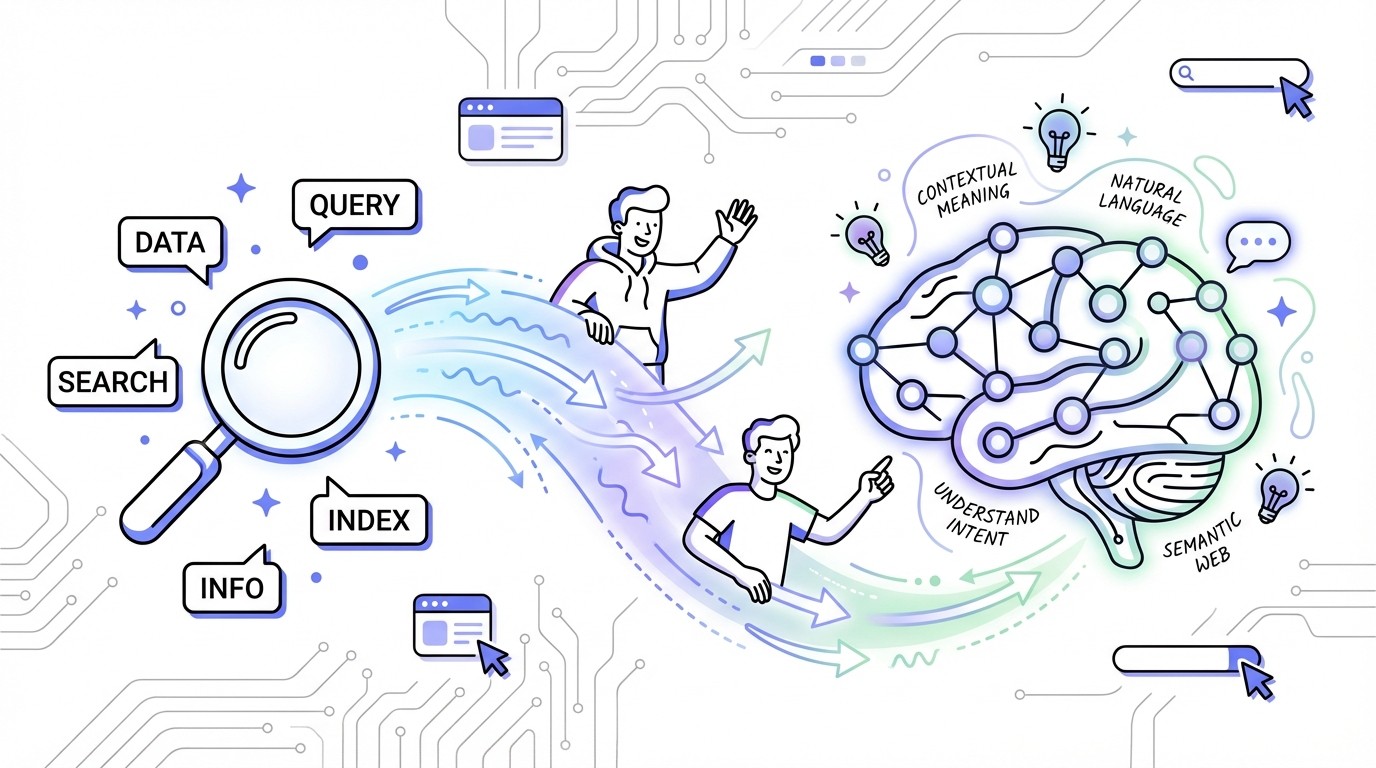
From Keywords to Context: Visualizing the Evolution of Search Technology.
Blueprint Pillar 1: AI-Powered Content Creation for Your SaaS Content Strategy 2026
Becoming a trusted source for AI requires a new production model. You can't just write faster; you must think smarter. This starts with moving beyond basic keyword lists to embrace AI-driven intent mapping. Your AI-first content must answer not just the stated query, but the underlying problem.
Mapping Problem Ecosystems: Beyond Basic SaaS Keyword Research
Traditional keyword research is reactive. It focuses on what people already search for. An effective SaaS content strategy 2026 must be predictive. It needs to map the entire customer problem space.
AI platforms analyze millions of data points. They identify conversations and pain points before they become high-volume keywords. This allows you to build comprehensive topic clusters that establish authority. Instead of just targeting "project management software," the AI identifies a problem ecosystem. This includes "team collaboration tools," "agile workflow automation," and "resource allocation challenges." You create content for the entire problem.
You can start sketching your problem ecosystem today. Take your core topic (e.g., "project management software") and ask:
The 'Before' Problem: What pain point leads a customer here? (e.g., "missed deadlines," "unorganized team tasks").
The 'After' Problem: What new challenge emerges after they adopt a solution? (e.g., "reporting on project ROI," "integrating with other tools").
The 'Adjacent' Problems: What other related challenges exist? (e.g., "remote team communication," "budget allocation").
This exercise shifts your focus from a single keyword to the entire customer journey. It also delivers results. A Semrush study found that 43% of companies report AI has already improved their AI content marketing outcomes.
AspectManual Intent Mapping (Legacy)AI-Powered Intent Mapping (2026 Model)Topic ResearchManual analysis of high-volume keywordsPredictive analysis of entire problem ecosystemsContent Velocity2-4 high-effort articles per month20-40 targeted articles per monthFunnel CoverageFocus on top-of-funnel informational queriesMaps content to every stage, from awareness to decisionAdaptabilitySlow to react to market shiftsReal-time adjustments based on new data trends
This strategic process builds a deep, interconnected knowledge base. Each piece of content serves as a factual, machine-readable answer. It’s the raw material that trains AI models to see your brand as the source. This foundation is critical for high-velocity organic traffic SaaS growth.
Blueprint Pillar 2: Optimizing AI-First Content for AI Overviews & Organic Traffic SaaS
You've created content that answers the right questions, but will an AI even understand it? If your content isn't structured for machine consumption, it's like writing a brilliant book in a language your audience can't read. This technical precision is no longer just a best practice; it's a non-negotiable part of any effective SaaS SEO blueprint.
The battle for visibility is happening inside AI-generated answers. Google’s AI Overviews are just the start. Early data shows these answer boxes capture nearly 13% of all user clicks on a results page. If your AI-first content isn't formatted to appear there, you’re invisible to a growing segment of your audience.
Crafting Factual Propositions: The Core of AI-First Content
AI models, especially those using RAG, don't interpret flowery marketing copy well. They search for declarative statements and verifiable facts. Your content must be built on these clear propositions to become a trusted source.
This means shifting your writing style.
Instead of: "Our platform empowers your team to achieve synergy."
Write: "Our platform integrates with Slack, Jira, and Asana via API."
The second statement is a fact an AI can parse, verify, and cite. Building your AI-first content this way makes each article a machine-readable entry in your company's knowledge base.
This chart breaks down the required optimization shift for your AI content marketing.
Optimization TacticLegacy SEO Focus (Human-First)AEO Focus (Machine-First)HeadingsKeyword-focused H2sQuestion-based, factual H2s (What is...)Body TextEngaging, narrative-driven copyShort, declarative sentences with data pointsTechnical LayerBasic meta descriptionsGranular Schema markup (FAQ, HowTo, Software)Internal LinksAnchor text for ranking signalsLinks as citations to support factual claims
This technical rigor ensures AI models don't just find your content—they understand and trust it. This is how you position your brand as a primary source, driving high-intent organic traffic SaaS directly from AI-powered answers.
Blueprint Pillar 3: Authority Building & SME Integration for AI Content Marketing
Strategic content and technical optimization build the foundation. Real authority requires a human touch. AI models generate text, but they can't replicate genuine experience. An effective SaaS content strategy 2026 must blend machine efficiency with human expertise.
Google’s guidelines now prioritize content demonstrating experience and expertise (E-E-A-T). AI-generated content alone lacks the unique insights that build trust. According to the 2024 Edelman Trust Barometer, 78% of employees trust what their company's technical experts say. Ignoring this signal is a critical mistake for your AI content marketing.
The AI-Augmented SME Workflow: Scaling Expert-Driven AI Content Marketing
The goal isn't to replace your subject matter experts (SMEs). It's to make them 10x more effective. Use AI tools like MarketDay to handle the initial 80% of the workload. The AI can conduct research, structure the article, and generate a factual draft.
Your SME then steps in for the final 20%. To guide your SME's "final 20%" contribution, give them a simple review checklist:
Add a Personal Anecdote: Insert one real-world story from your experience that an AI couldn't know.
Challenge an Assumption: Add a sentence that questions a common industry belief.
Inject Proprietary Insight: Include a unique data point or learning from your own company.
Refine the Key Takeaway: Rewrite the final paragraph to offer a specific, forward-looking recommendation.
This hybrid approach transforms your AI content marketing from a content mill into an authority-building engine.
Workflow StageTraditional SME ProcessAI-Augmented SME ProcessBriefing & Outline2-3 hours of manual research15 minutes of AI-generated outline reviewFirst Draft4-8 hours of writing from scratch1 hour of refining an AI-generated draftData & ExamplesManual search for supporting statsAI suggests relevant data points for verificationFinal PolishSME handles all copyeditingSME focuses only on adding expert insights
This integrated workflow respects your expert's time. It also ensures your AI-first content is both scalable and credible. You produce content that satisfies algorithms and builds trust with your audience, accelerating your path to high-value organic traffic SaaS.
Success in 2026 isn't about ranking on a search page. It's about being the definitive answer an AI cites. That starts by mapping your customer's entire problem ecosystem, not just their keywords. Then, you must amplify your expert's voice—not replace it.
The blueprint we've outlined provides a clear path forward for your SaaS SEO blueprint. It pairs the scale of AI-first content with the authority of genuine human expertise. This dual approach is the core of a successful SaaS content strategy 2026. The companies that re-architect their content engines around this model are building the category-defining brands of tomorrow.
Ready to automate this blueprint? See how MarketDay's AI can execute your content strategy, generating optimized posts that build a steady stream of organic traffic SaaS through intelligent AI content marketing.
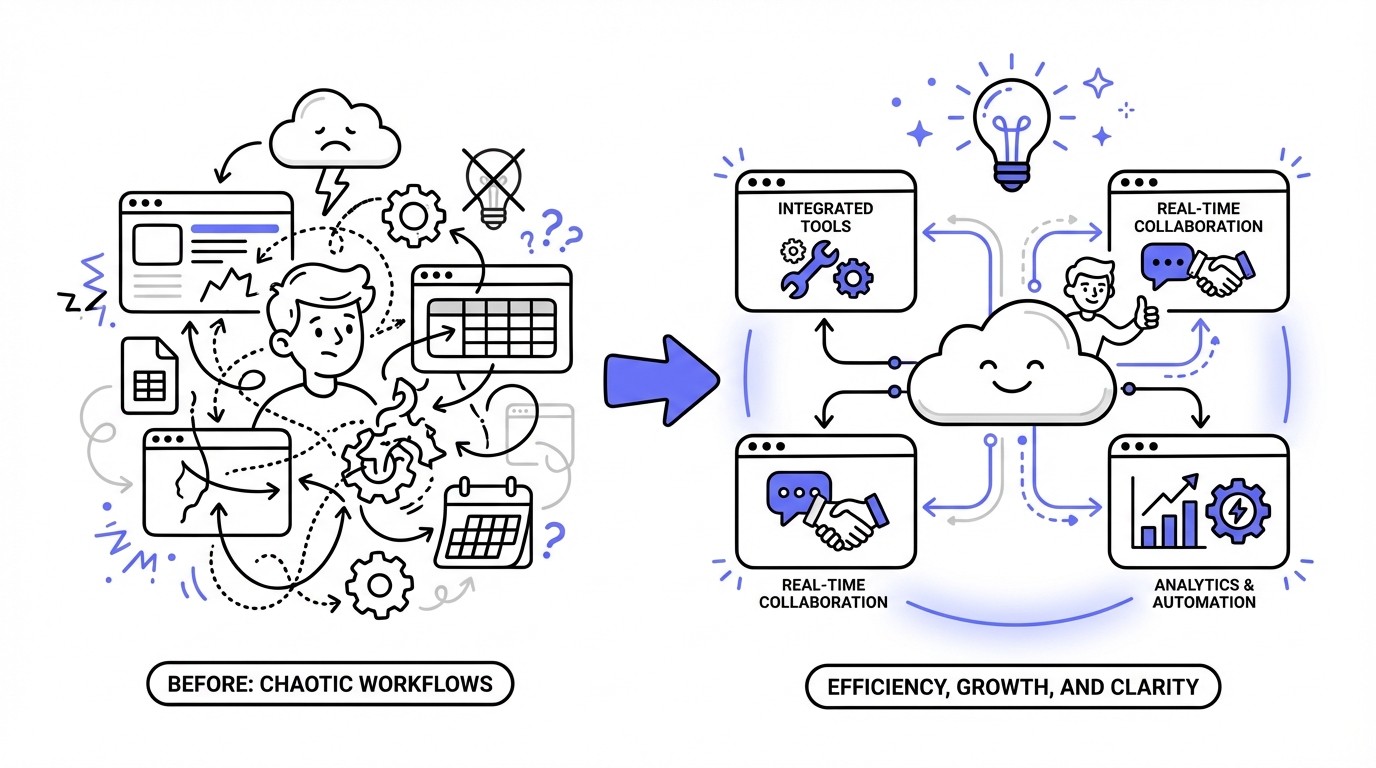
Visuals




Hop on a call with us to see how our services can accelerate your growth.