AI Cold Email: Master Deliverability & Protect Domain Health

K R
Days AI
SalesDay
An AI sales acceleration system that identifies high-intent prospects, automates outreach, and optimizes follow-ups to increase conversions.

AI Cold Email: Master Deliverability & Protect Domain Health
Your sales team just sent an AI-generated email campaign. Did it land in the inbox or the spam folder? When deploying AI cold email, with Google and Yahoo's latest sender requirements, that question is more critical than ever. In the evolving landscape of AI in marketing, a single mistake can damage your sender reputation and compromise your domain health. You could lose access to your audience for months.
This new environment creates a real challenge. You want the power of AI, but you can't risk your domain health. The solution isn't to stop using AI. It's to use it more intelligently. This guide provides a clear path for responsible AI cold email. We'll cover the technical steps and strategic shifts you need to protect your domain, maintain high email deliverability, and get your messages opened. You'll learn how to make AI a powerful asset, not a liability in your overall AI in marketing strategy.
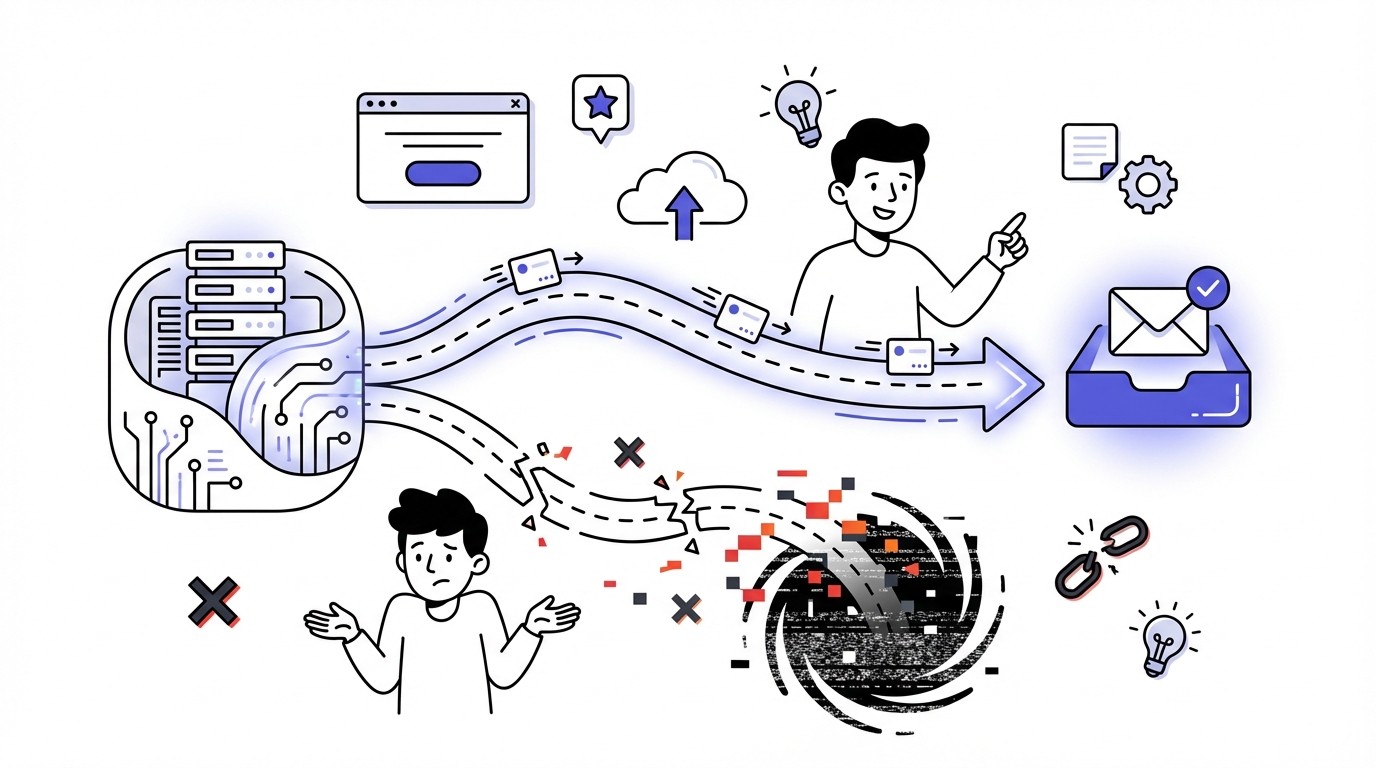
The digital journey of an email: a clear path to the inbox, or lost in the digital ether.
Why Domain Health is the Foundation of AI Outreach Success
Your domain health is its credit score. It tells email providers like Google and Yahoo if you're a trustworthy sender. A high score means your messages land in the inbox, directly impacting your email deliverability. A low score sends them directly to spam.
Several technical and engagement factors build your sender reputation. ISPs constantly monitor these signals to protect their users. They track spam complaint rates and check if your domain is properly authenticated with SPF, DKIM, and DMARC. Your AI cold email outreach strategy must account for these rules to maintain good domain health.
The stakes are high. Recent data from EmailToolTester shows an average email deliverability rate of just 85.7%. That means over 14 out of every 100 emails never get a chance to be read. Poor domain health pushes that failure rate even higher. When using AI to scale outreach, especially with AI cold email campaigns, this risk multiplies quickly.
The difference between a healthy and unhealthy domain is stark.
MetricHigh Reputation DomainLow Reputation DomainInbox Placement95%+< 50% (mostly spam)Spam Complaint RateBelow 0.1%Above 0.3%Hard Bounce RateBelow 2%Above 5%Engagement SignalsHigh opens & clicksLow opens, high deletes
A low-reputation domain is effectively blacklisted. Your team's efforts are wasted and your messages go unheard. This makes managing email deliverability a primary business function, not a technical afterthought. Before you scale any AI cold email program, you must protect this foundation and your sender reputation.
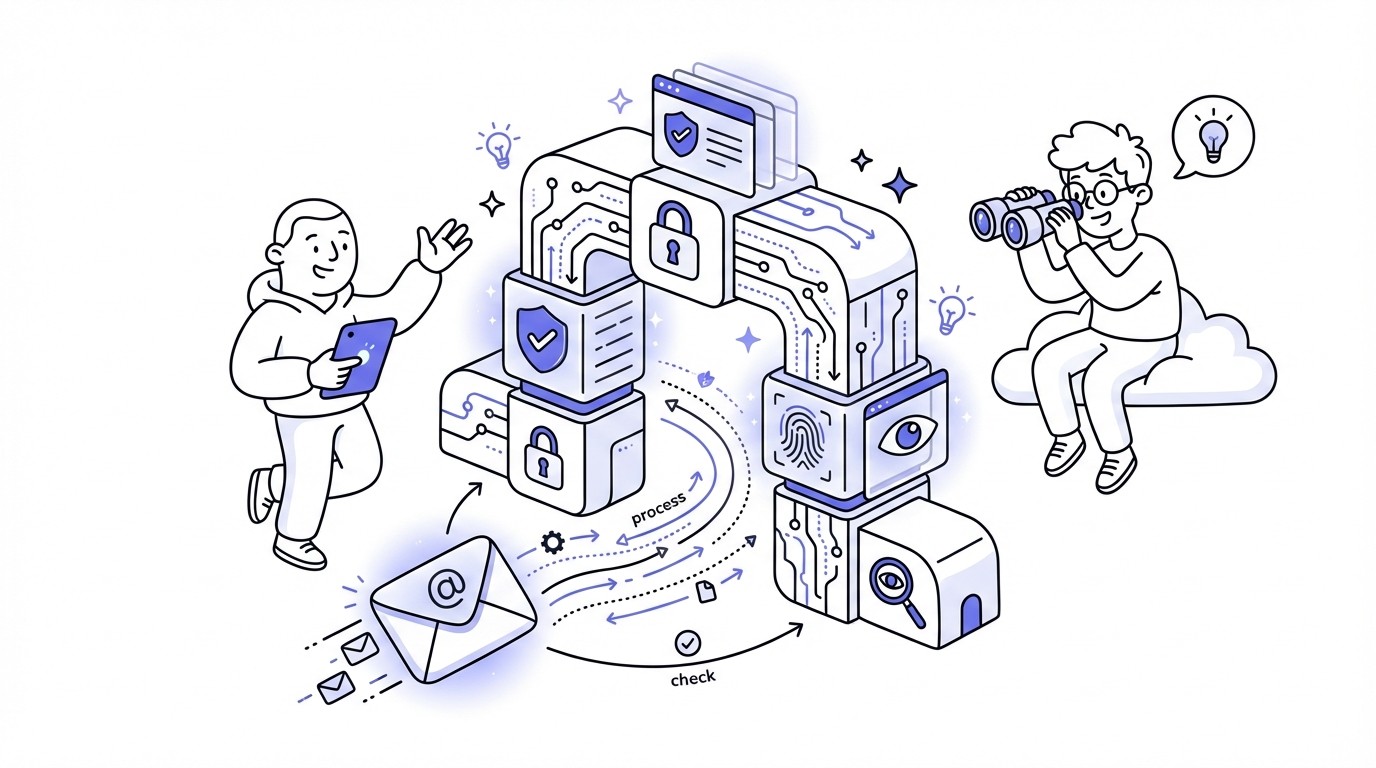
Navigating the new digital frontier: This illustration visualizes the advanced and stricter security gates email senders must now pass through to ensure deliverability and compliance.
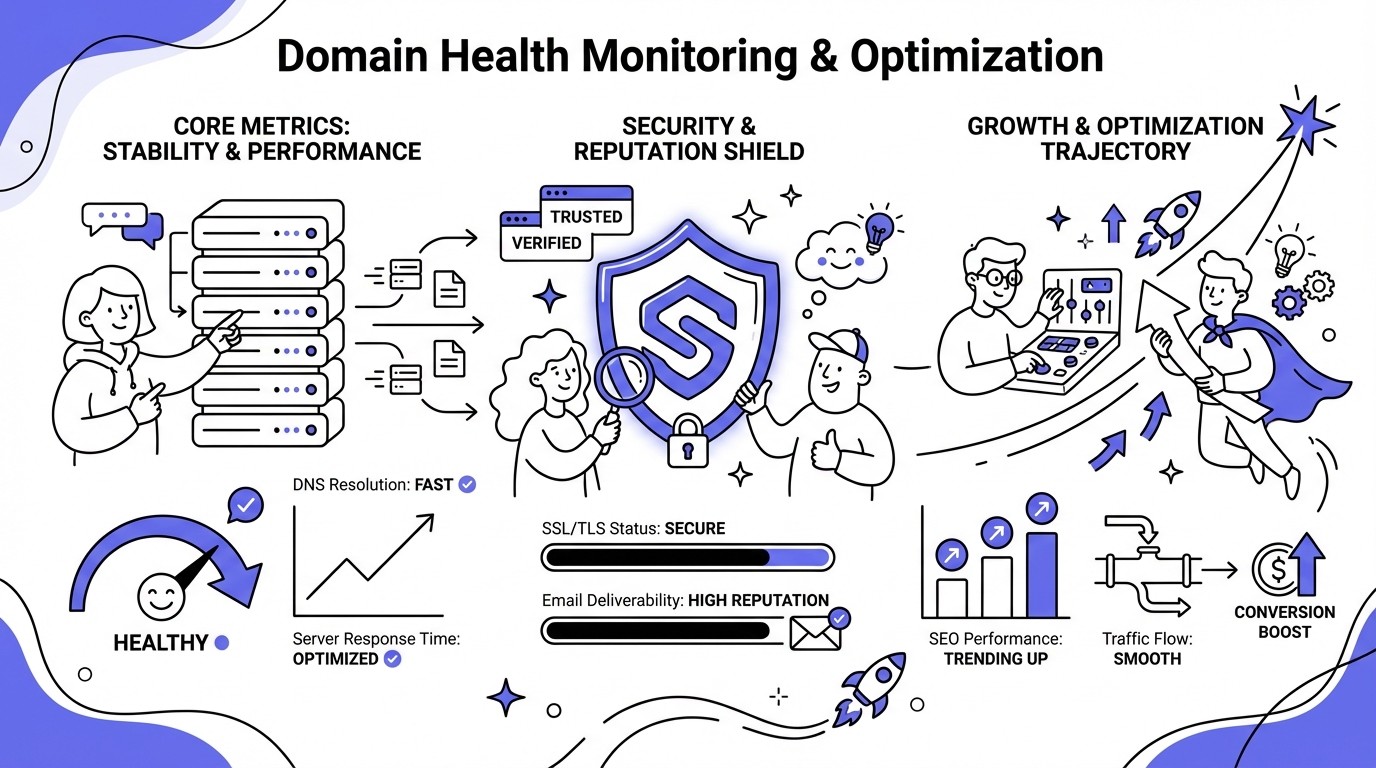
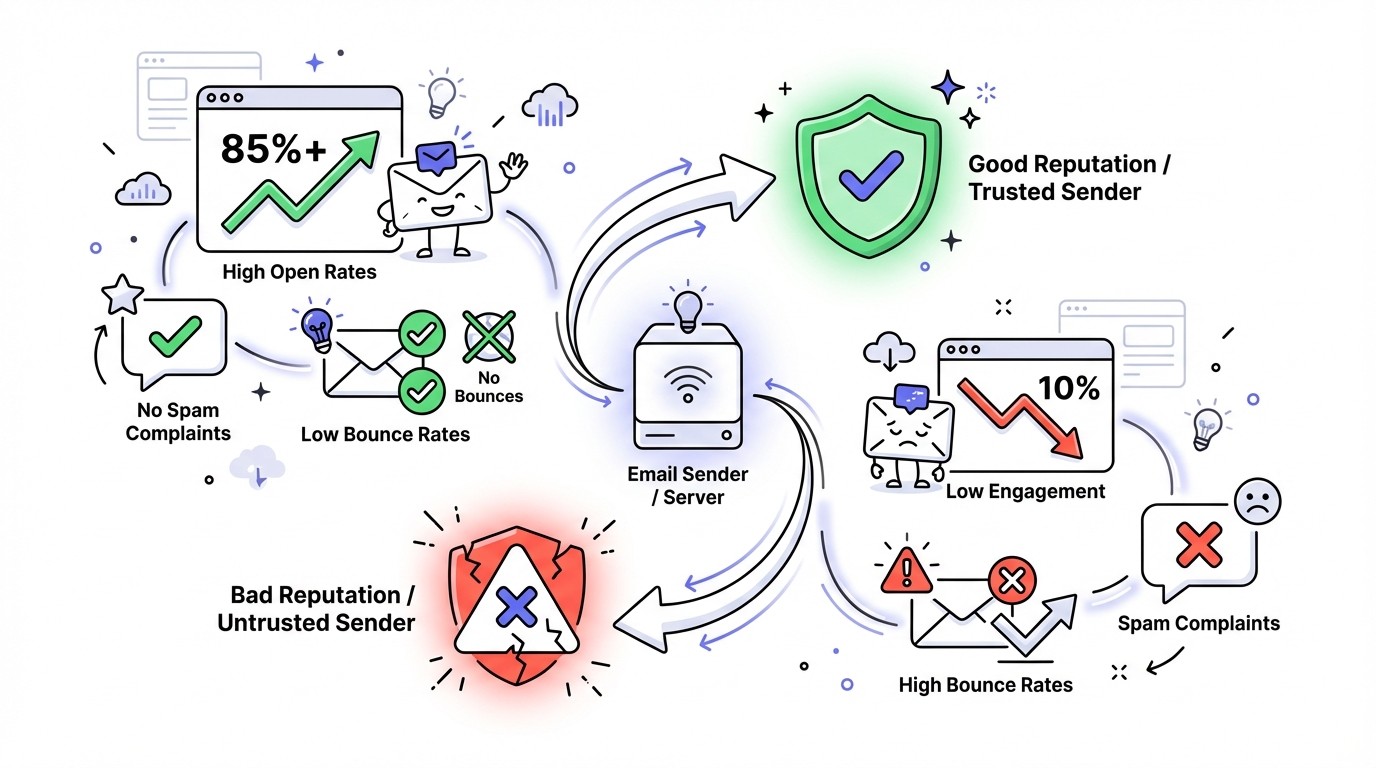
Understanding Sender Reputation: A visual guide to how positive and negative email signals impact your deliverability and trustworthiness.
Navigating New Rules: How AI Filters Impact Email Deliverability & Sender Reputation
The rules for email outreach have changed. Google and Yahoo's new sender policies are not suggestions; they are strict requirements. Failing to comply directly impacts your email deliverability. Your messages will simply stop reaching their destination, hindering your AI in marketing efforts.
Internet Service Providers (ISPs) now use their own AI to police their inboxes. These sophisticated filters analyze emails for signs of low-quality, automated outreach. Their AI judges your AI cold email campaigns. This scrutiny applies directly to your AI cold email campaigns, and it’s a new level of scrutiny that directly impacts your sender reputation.
What AI Filters Look For to Protect Inboxes
These systems spot patterns that signal lazy automation. They quickly flag accounts that exhibit behaviors common to spammers, damaging your sender reputation. Key red flags for AI cold email campaigns include:
Identical or highly similar email bodies sent in bulk.
Lack of personalization beyond a
{{first_name}}tag.Low positive engagement (replies, forwards, marking as important).
High negative signals like immediate deletes or spam reports.
The new threshold for spam complaints is particularly tight. Google requires bulk senders to keep spam complaint rates under 0.3%. Crossing this line, even slightly, can get your domain flagged. This can severely damage its sending ability for weeks, impacting overall email deliverability.
This reality demands a shift in strategy for AI in marketing. Scaling outreach is no longer about volume. Success depends on using AI to generate high-quality, relevant messages that bypass these intelligent filters. Your domain health and sender reputation depend on it.
Technical Pillars: Essential Authentication for AI Cold Email & Sender Reputation (SPF, DKIM, DMARC)
Think of email authentication as your domain's digital passport. It proves to ISPs that your emails are genuinely from you, not a spoofer. For Google and Yahoo, these technical records are no longer optional. They are mandatory for maintaining your email deliverability and safeguarding your domain health.
Failing to implement these three core protocols is the fastest way to damage your sender reputation. It tells inbox providers you haven't done the basic work to secure your domain. This makes you look like a risk, and your AI cold email campaigns will go straight to spam, undermining your entire AI in marketing strategy.
The Authentication Trio: SPF, DKIM, and DMARC Explained
Proper setup requires three distinct DNS records. Each plays a specific role in verifying your identity and contributing to your domain health.
SPF (Sender Policy Framework): This record lists all authorized IP addresses and servers allowed to send email for your domain. It’s a whitelist that prevents others from impersonating you, directly supporting your sender reputation.
DKIM (DomainKeys Identified Mail): DKIM adds a unique digital signature to every email you send. The receiving server checks this signature to confirm the message hasn't been altered, which is crucial for email deliverability.
DMARC (Domain-based Message Authentication, Reporting & Conformance): DMARC acts as the enforcer. It tells servers what to do if an email fails SPF or DKIM checks. You can instruct them to quarantine the message, reject it, or do nothing, further protecting your domain health.
These protocols work together to build a powerful layer of trust. According to Valimail, domains with a DMARC enforcement policy see a 10% higher delivery rate on average. That's a significant boost for your email deliverability before your AI crafts the first sentence.
ProtocolWhat It VerifiesImpact on Domain HealthSPFWho can send from your domain.Prevents basic domain spoofing and enhances domain health.DKIMThat the email content is authentic.Confirms message integrity and builds trust, improving sender reputation.DMARCWhat to do with unverified emails.Protects against phishing and improves email deliverability.
Setting up SPF, DKIM, and DMARC is the foundational step for any outreach. It’s the technical price of admission for reaching the inbox. Before you scale your outreach with AI, you must get this right to protect your sender reputation and ensure high email deliverability for your AI cold email efforts.
Responsible AI in Marketing: Content, Personalization, and Boosting Email Deliverability
Technical authentication gets your email to the door. Your content has to get it inside. AI can create relevant messages that recipients value. It can also produce generic spam that destroys your sender reputation and harms your domain health. The difference is in the strategy for effective AI in marketing.
Using AI for mass, impersonal outreach is a guaranteed way to land in the spam folder. The real power of AI in marketing for AI cold email is creating genuine relevance at scale, which is paramount for email deliverability.
Moving Past {{first_name}} Tags
Generic personalization is no longer enough for successful AI cold email. AI-powered inbox filters easily spot emails where only a name and company are swapped out. Your outreach must go deeper. Modern AI can analyze a prospect's recent articles or company news to craft a unique opening line. This shows you've done your research, significantly improving your sender reputation.
This level of detail dramatically improves engagement. According to McKinsey, 71% of consumers now expect personalized interactions. Meeting that expectation is critical for boosting your email deliverability and starting real conversations.
Content Variation: Essential for Email Deliverability & Avoiding Spam
Sending thousands of identical emails is the clearest signal of spam. ISPs track content similarity across their networks. If your messages look the same, they get flagged, negatively impacting your domain health. A responsible AI cold email strategy generates unique variations for each recipient. This means different subject lines, opening hooks, and calls to action, all contributing to better email deliverability.
The goal is to make each email appear as a one-to-one communication. This approach respects the recipient and satisfies the algorithms that guard the inbox, thereby protecting your sender reputation.
FactorTraditional Bulk EmailResponsible AI OutreachPersonalizationUses only {{first_name}}, {{company}}.References recent articles, job roles, or company news, enhancing AI cold email effectiveness.Content Body99% identical across all sends.Every email has a unique structure and phrasing, crucial for email deliverability.Spam Filter SignalHigh similarity, easily flagged as automated.Low similarity, mimics human behavior, protecting sender reputation.Domain Health ImpactNegative. High risk of being blacklisted.Positive. Builds a strong sender reputation and preserves domain health.
AI gives you the tools to either damage your reputation or build it. Focusing on genuine personalization and content variation protects your domain health. It ensures your messages are not just delivered, but also welcomed, making your AI in marketing efforts truly successful.
Success with AI cold email hinges on a dual focus: perfecting your technical foundation with SPF, DKIM, and DMARC to secure your domain health, and executing a smart content strategy built on genuine personalization. This comprehensive approach satisfies the new standards set by inbox providers and protects your sender reputation for the long term, making your AI in marketing efforts truly impactful. The right tools can automate this process, ensuring compliance and maximizing email deliverability so your team can focus on what matters—starting conversations.
Stop guessing if your AI cold email campaigns are landing in the spam folder. LiBingo's Outreach Intelligence platform monitors your domain health, validates your authentication records, and scores your email content against AI-powered spam filters before you send. Protect your sender reputation and ensure your message gets delivered, boosting your overall email deliverability. See how LiBingo can secure your AI in marketing outreach.
Visuals
Frequently Asked Questions
What is AI cold email and why is deliverability crucial?
AI cold email involves using artificial intelligence to generate, personalize, and scale outreach campaigns to prospects. Email deliverability is crucial because it determines whether these AI-generated messages actually reach the recipient's inbox or end up in the spam folder. Without high deliverability, even the most sophisticated AI in marketing efforts are wasted, directly impacting sales and engagement.
Why is domain health essential for successful AI cold email campaigns?
Domain health is vital because it acts as your sender's credit score, signaling trustworthiness to email providers. A strong domain health ensures your AI cold email campaigns land in the inbox, directly impacting email deliverability. Poor domain health, conversely, leads to messages being flagged as spam, severely damaging your sender reputation and outreach effectiveness.
How do new Google and Yahoo requirements impact AI cold email deliverability?
Google and Yahoo's updated sender policies are strict requirements that directly affect AI cold email deliverability. They mandate proper domain authentication (SPF, DKIM, DMARC) and low spam complaint rates (under 0.3%). Non-compliance means emails will simply not reach their intended recipients, severely hindering AI in marketing efforts and potentially blacklisting your domain.
What is sender reputation and how does it affect email deliverability?
Sender reputation is a score assigned by Internet Service Providers (ISPs) that reflects your trustworthiness as an email sender. It's built on factors like spam complaint rates, bounce rates, and engagement. A high sender reputation ensures good email deliverability, meaning your messages reach the inbox. A low reputation, however, causes emails to be diverted to spam or blocked entirely.
What factors do AI filters look for when evaluating AI cold email campaigns?
AI filters used by ISPs scrutinize AI cold email campaigns for signs of low-quality automation. They look for identical email bodies, minimal personalization beyond basic tags, and low positive engagement signals like replies or forwards. High negative signals, such as immediate deletes or spam reports, are also red flags that can damage your sender reputation.
How can businesses protect their domain health when using AI in marketing?
To protect domain health while leveraging AI in marketing, businesses must prioritize proper email authentication (SPF, DKIM, DMARC) and maintain low spam complaint rates. It's crucial to use AI intelligently for personalization, avoid bulk sending identical messages, and monitor engagement to ensure positive sender signals. This proactive approach safeguards your sender reputation and ensures high email deliverability.
What is the acceptable spam complaint rate for bulk senders according to new policies?
According to Google's new sender policies, bulk senders must maintain a spam complaint rate below 0.3%. Exceeding this threshold, even slightly, can significantly damage your sender reputation and negatively impact email deliverability. This strict requirement emphasizes the need for highly targeted and valuable AI cold email content to avoid being flagged.


Hop on a call with us to see how our services can accelerate your growth.