AI Sales Prospecting Automation: Your Complete Setup Guide for Sales Workflow Automation

K R
Days AI
SalesDay
An AI sales acceleration system that identifies high-intent prospects, automates outreach, and optimizes follow-ups to increase conversions.

AI Sales Prospecting Automation: Your Complete Setup Guide for Sales Workflow Automation
Your sales team spends only about a third of its time actually selling. The rest is lost to manual research, data entry, and prospecting tasks that drain both morale and your pipeline. This is a persistent problem that older automation tools only partially solve, often resulting in generic outreach that fails to connect with modern buyers, highlighting the need for advanced AI sales prospecting. It’s time for a more intelligent approach.
This guide provides a complete blueprint for sales workflow automation. We’re moving beyond simple email sequences to build a smarter system. You’ll learn the specific steps to implement an AI-powered process that identifies high-intent leads and personalizes outreach at scale, a cornerstone of effective lead generation automation. This system frees your team to focus on what they do best: closing deals, thanks to advanced AI sales prospecting techniques and robust sales productivity tools. This guide covers the entire setup, from choosing the right platforms to integrating them into your daily operations.
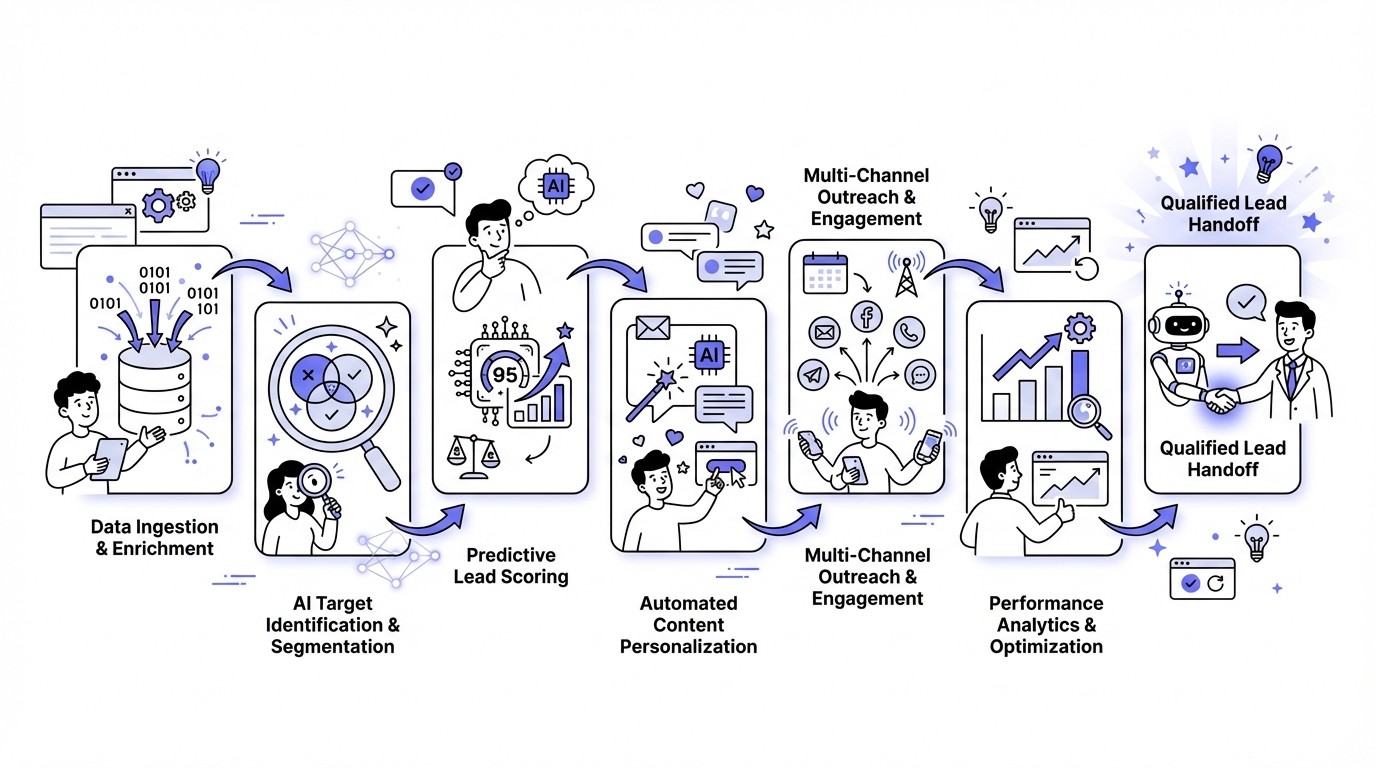
A visual blueprint illustrating the end-to-end process of an AI-powered sales prospecting workflow, from initial data collection to qualified lead handoff.
Mapping Your AI Sales Workflow: Key Stages & Automation Opportunities
An effective sales workflow automation system isn't a single tool. It’s a sequence of distinct stages. Pinpointing these stages reveals the precise opportunities where AI can deliver the most value, transforming manual tasks into efficient, intelligent actions that boost overall sales productivity and refine AI sales prospecting.
The process begins with identifying and enriching leads. This is where AI sales prospecting elevates lead generation automation beyond simple list-building. AI-powered platforms analyze thousands of data points to find companies matching your ideal customer profile with high precision. They scan everything from funding announcements and new job postings to technology stacks and social media activity, making your AI sales prospecting efforts highly targeted.
Once you have a target list, generative AI for sales transforms your outreach. Instead of relying on static templates, the AI drafts hyper-personalized opening lines for each prospect. It can reference a recent article they wrote or a specific company initiative, creating a relevant hook that boosts reply rates. According to McKinsey, this type of generative AI for sales personalization can increase revenue by up to 15%.
This table breaks down the shift from manual work to intelligent automation.
StageTraditional Manual TaskAI-Powered AutomationLead Identification & ProspectingManually searching social media and company sites.AI sales prospecting continuously scans market signals for high-intent buyers, driving lead generation automation.OutreachWriting every email from scratch or using rigid templates.Generative AI for sales drafts unique, personalized messages at scale, improving sales workflow automation.QualificationGuessing lead interest based on opens and clicks.AI scores leads based on comprehensive engagement patterns, enhancing sales productivity tools.
Finally, the system manages engagement and CRM updates. The right sales productivity tools are essential for comprehensive sales workflow automation, automatically logging every touchpoint. They can nurture cooler leads with relevant content and flag hot prospects for immediate follow-up from a sales rep. This ensures your team focuses only on deals that are ready to close, maximizing sales productivity.
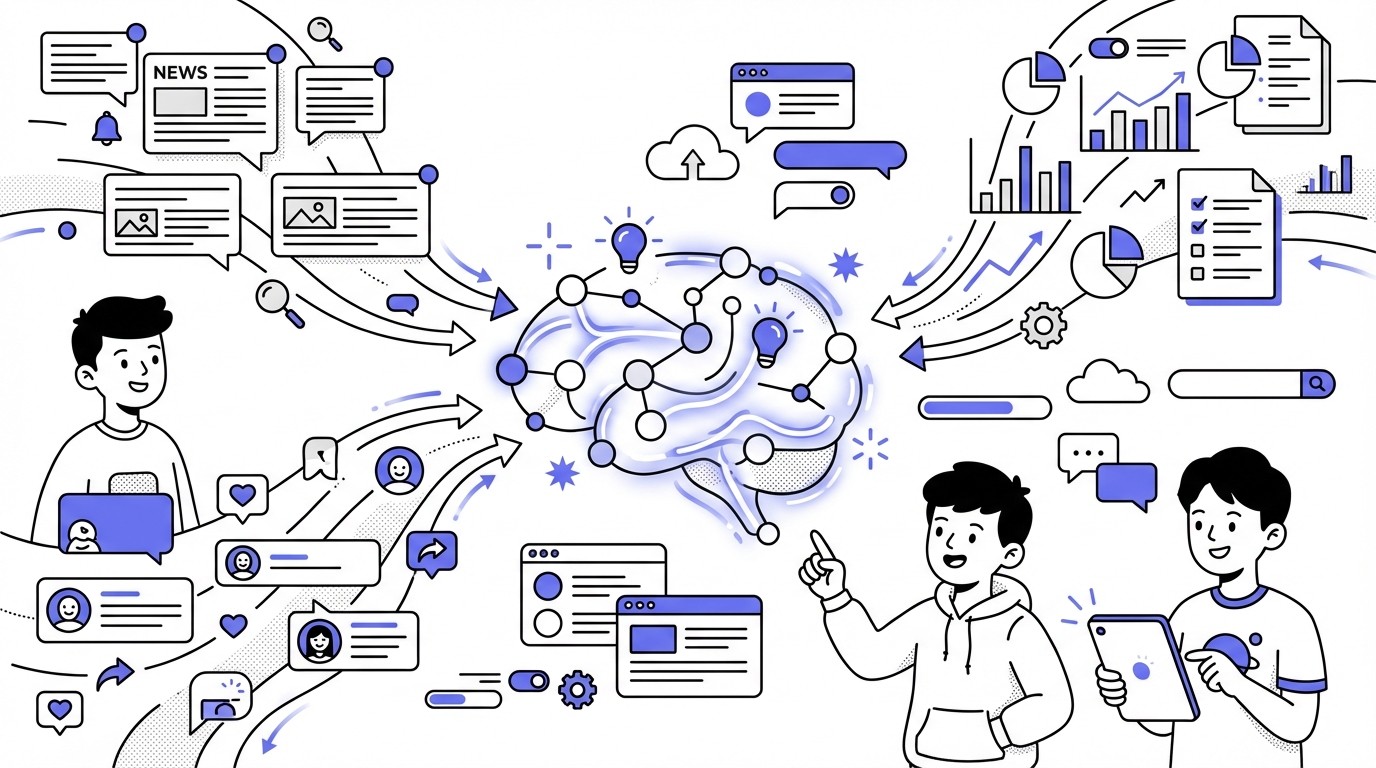
The AI Advantage: Sifting through the digital noise from news, social media, and internal data to uncover critical insights.
Building Your AI Sales Stack: Essential Tools for Sales Workflow Automation
Building a powerful automation engine requires more than one platform. An effective AI sales stack combines specialized tools that work together. Each component should address a specific stage of your workflow, from finding leads to personalizing messages. The goal is to create a connected system, not a collection of separate apps, to achieve true sales workflow automation.
Your tech stack is the foundation for successful sales workflow automation. It needs three core components to function correctly, acting as powerful sales productivity tools.
The Three Pillars of an AI Sales Stack for Sales Productivity
AI Prospecting Platforms: These are your primary tools for lead generation automation and advanced AI sales prospecting. They go far beyond simple database filters. Modern platforms use Natural Language Processing (NLP) to scan news articles, financial reports, and social media for trigger events. This helps you find companies that are actively looking for a solution like yours right now, making them indispensable sales productivity tools. Popular examples include Clay, ZoomInfo, and Apollo.io.
Generative AI for Outreach: This is where you personalize communication at scale. These sales productivity tools connect to your prospect list and use Large Language Models (LLMs) to draft unique email openers or connection requests. This approach works. Personalized emails can achieve a 17% reply rate, more than double the 7% average for generic templates, showcasing the power of generative AI for sales. Well-known tools in this space include Lavender and Regie.ai.
An Intelligent CRM: Your Customer Relationship Management (CRM) platform is the central hub for complete sales workflow automation. It must integrate with your other tools to log every activity automatically. The best CRMs now include their own AI features, helping to score leads and forecast deal closures based on real-time engagement data, making them crucial sales productivity tools. Leading platforms like Salesforce Einstein and HubSpot AI offer these capabilities.
This table breaks down how each tool category contributes to the overall system.
Tool CategoryCore FunctionKey Technology UsedAI Sales Prospecting PlatformIdentifies high-intent leads from market signals, driving lead generation automation.NLP, Data MiningGenerative AI for Sales Outreach ToolCreates hyper-personalized messaging at scale, a key aspect of sales workflow automation.LLMs, Generative AIIntelligent CRMCentralizes data and automates activity logging, enhancing overall sales productivity.Machine Learning, Analytics
Selecting the right sales productivity tools for these roles is the first practical step. Once your arsenal is chosen, you can begin connecting them to build a truly intelligent and automated sales process, achieving comprehensive sales workflow automation.
Step-by-Step Implementation: Building Your Automated Lead Generation Machine for Sales Workflow Automation
Connecting your tools is where the theory of automation becomes reality. A proper setup creates a system that finds and engages leads for you. This practical, four-step process integrates your platforms into a cohesive workflow for robust sales workflow automation.
Step 1: Define Your Ideal Customer Profile (ICP) for AI Sales Prospecting
Your first move isn’t technical. It’s strategic. Define your Ideal Customer Profile (ICP) with specific, machine-readable rules. This turns your AI sales prospecting tool from a simple database into a precision instrument, essential for effective lead generation automation.
Your AI needs clear parameters to work effectively. This includes data points like:
Company size (e.g., 50-500 employees)
Industry (e.g., SaaS, FinTech)
Recent trigger events (e.g., >$10M funding round)
Technology used (e.g., HubSpot, AWS)
Step 2: Integrate Data Sources for Seamless Lead Generation Automation
Now you can link your platforms. Use APIs or native integrations to connect your AI sales prospecting tool directly to your CRM. The goal is a seamless flow of data, ensuring qualified leads appear in your pipeline automatically.
This is the core of lead generation automation. You set up rules, or "triggers," that initiate action. For instance, a trigger could be: "If a company in our ICP hires a new VP of Sales, create a new contact and assign a task to the account executive," further streamlining your sales workflow automation.
Step 3: Configure Generative AI for Personalized Sales Outreach
Now, scale your personalization by connecting your generative AI for sales tool with context from your triggers. The AI uses this data to craft relevant opening lines that move far beyond a simple [First Name] mail merge. According to Salesforce, sales reps spend nearly two-thirds of their time on non-selling activities. This step helps reclaim that time, significantly boosting sales productivity.
This table shows how it works in practice.
Input TriggerProspect ContextAI-Generated Opening Line (Generative AI for Sales)Company raised $20M Series BProspect is the new CFO"Congratulations on the new $20M funding round! Scaling the finance function must be a top priority."Prospect published a blog postTopic was about SEO"I enjoyed your recent article on SEO. Your point about keyword intent was especially sharp."
Step 4: Automate CRM Logging with Sales Productivity Tools
The final piece is closing the loop. Your system must automatically log every touchpoint in the CRM without any manual data entry. Effective sales productivity tools are crucial for complete sales workflow automation, handling this for you and ensuring accurate lead generation automation tracking.
Create simple workflow rules to manage engagement:
If a prospect replies: Create a task for a sales rep to respond personally.
If a link is clicked: Add the prospect to a "warm lead" list.
If no reply after three emails: Move them to a low-touch, long-term nurture sequence.
This structure ensures your sales team focuses its energy only on engaged, high-intent prospects.
Optimizing Your AI Sales Workflow: Advanced Personalization & Performance Tracking for Sales Workflow Automation
An automated system is not a static one. Your initial setup is just the starting point. True efficiency comes from refining your process based on real-world results. This means pushing personalization further and tracking the right performance indicators to improve your sales workflow automation and overall sales productivity.
Beyond Basic: Dynamic Personalization with Generative AI for Sales
Generic personalization is no longer enough. Modern generative AI for sales can pull real-time data to create messages that are uniquely relevant to each prospect. This is where you connect your system to a knowledge base of case studies, product features, and recent company news, further enhancing your sales workflow automation.
Think beyond simple triggers. Instead of just mentioning a funding round, your AI can reference specific details. For example, if a prospect's company acquires a smaller firm, the AI can generate an opening line like: "Following your acquisition of XYZ Corp, integrating their tech stack must be a key project. We helped [Similar Client] reduce integration time by 40%." This level of detail boosts credibility instantly.
Measuring Success: Key Metrics for AI Sales Prospecting
Effective AI sales prospecting changes how you measure success. Volume metrics like "emails sent" become less important. Instead, you should focus on metrics that measure the quality and efficiency of your automated outreach. Your dashboard should track outcomes, not just activity, to truly gauge the impact of your sales productivity tools.
These are the numbers that truly define performance:
Positive Reply Rate: The percentage of prospects who respond with interest, not just any reply.
Meeting Booked Rate: The direct conversion from an automated sequence to a scheduled call.
ICP Compliance Score: The percentage of generated leads that perfectly match your defined Ideal Customer Profile.
This is more than a time-saving trick. It's a strategic shift. By connecting your AI sales prospecting triggers directly to your generative AI for sales engine, you move your team from manual research to high-value conversations, driving significant sales workflow automation. The blueprint here gives you a model to build a prospecting engine that not only saves hours but actively grows your pipeline through advanced lead generation automation. Your next step is to audit your current tech stack and identify the first manual stage you can automate using powerful sales productivity tools.
You've just automated your sales workflow; now, automate the content that fuels it. See how MarketDay's AI generates high-quality blog posts that fill your pipeline, so you can focus on closing deals.
Visuals

Frequently Asked Questions
What is AI sales prospecting?
AI sales prospecting leverages artificial intelligence to automate and enhance the process of identifying and engaging potential customers. It moves beyond traditional methods by analyzing vast data sets to pinpoint high-intent leads and personalize outreach at scale. This intelligent approach significantly boosts lead generation automation and overall sales productivity.
Why is AI sales prospecting important for sales teams?
AI sales prospecting is crucial because it addresses the problem of sales teams spending too much time on manual, non-selling tasks. By automating research, data entry, and initial outreach, it frees up sales professionals to focus on closing deals. This increased efficiency and targeted approach directly translates to higher sales productivity and improved pipeline health.
How does generative AI enhance sales outreach?
Generative AI for sales transforms outreach by drafting hyper-personalized messages for each prospect, moving beyond generic templates. It can reference specific company initiatives or recent articles, creating highly relevant hooks that significantly boost reply rates. This advanced personalization is a key component of effective sales workflow automation.
What are the key stages of an AI sales workflow automation system?
An effective AI sales workflow automation system typically involves several key stages. These include AI-powered lead identification and enrichment, where platforms pinpoint ideal prospects. Next, generative AI personalizes outreach, followed by automated engagement management and CRM updates using robust sales productivity tools.
How do AI sales prospecting platforms improve lead generation automation?
AI sales prospecting platforms revolutionize lead generation automation by continuously scanning market signals and analyzing thousands of data points. They use advanced algorithms to identify companies matching an ideal customer profile with high precision. This ensures that sales teams are targeting high-intent buyers, making lead generation far more effective and efficient.
What sales productivity tools are essential for an AI sales stack?
An effective AI sales stack requires a combination of specialized sales productivity tools. The core components include AI prospecting platforms for advanced lead generation automation, generative AI tools for personalized outreach, and integrated CRM systems for managing engagement and automating updates. These tools work together to streamline the entire sales workflow automation.
Can AI sales prospecting truly free up a sales team's time?
Yes, AI sales prospecting significantly frees up a sales team's time by automating labor-intensive tasks. It handles manual research, data entry, lead qualification, and initial personalized outreach. This allows sales representatives to dedicate more time to high-value activities like engaging qualified leads and closing deals, thereby maximizing their sales productivity.


Hop on a call with us to see how our services can accelerate your growth.