Scale Your AI Startup: Smart AI Startup Growth with Limited Resources

K R
Days AI
SalesDay
An AI sales acceleration system that identifies high-intent prospects, automates outreach, and optimizes follow-ups to increase conversions.

Scale Your AI Startup: Smart AI Startup Growth with Limited Resources
Rapid growth is the goal. For an AI startup, it can also be a breaking point. Customer demand soars while your team and budget stay grounded. Many promising companies stumble under this intense pressure to scale with limited resources startup challenges. But for AI-native startups, the solution is already part of your DNA. The very technology you build can become your most powerful scaling engine for sustainable AI startup growth.
Instead of working harder, you'll learn to build a smarter, leaner operation. We're diving into the specific frameworks and AI tools for efficiency that turn your constraints into a competitive advantage. Get ready to discover how practical AI can automate core functions, giving you a clear framework to manage your AI startup growth and thrive without breaking the bank. This is the essence of smart bootstrapping AI for success.
Harnessing the power of AI: Intelligent design for exponential growth and efficient resource utilization.
Bootstrapping AI: Turning Constraints into Innovation
Limited resources force an AI startup to be resourceful. Every dollar and every hour must deliver maximum impact. For an AI-native company, this constraint is not a weakness; it’s a catalyst for building smarter systems from day one, especially when focused on bootstrapping AI solutions. You can use your own expertise in AI to create powerful internal efficiencies, a strategy we call the Lean AI Flywheel.
The concept is simple. You identify a core, repeatable business function and apply AI to automate it. This frees up your small team to focus on high-value strategic work. The time saved is reinvested into improving your product or acquiring customers, which fuels growth. A company with a limited resources startup mindset builds a foundation for sustainable, intelligent operations and exemplifies effective lean scaling strategies.
The Lean AI Approach: Smarter Lean Scaling Strategies for Startups
Consider how this applies to essential startup functions. A traditional team hires people to solve problems. A lean AI team builds systems. The difference in operational load is significant. McKinsey reports that up to 45% of activities individuals are paid to perform can be automated. For an AI startup, that percentage represents a massive opportunity for accelerated AI startup growth.
Core FunctionTraditional Startup ApproachLean AI ApproachContent MarketingManual topic research, hiring freelance writers, slow SEO feedback loop.AI generates SEO-optimized articles, researches trends, and creates images.Sales OutreachFounders manually build lists and write personalized emails one by one.AI identifies ideal customer profiles and automates personalized outreach sequences.RecruitmentManually screening hundreds of resumes and scheduling interviews.AI filters candidates, automates initial communication, and schedules calls.
Take content marketing. Your team could spend 20 hours a week researching keywords and writing a single blog post. Or, you could use a platform like MarketDay to generate five high-quality, optimized posts in a fraction of that time, leveraging powerful AI tools for efficiency. This shift from manual labor to system management is central to effective AI startup growth. It turns a resource-draining necessity into a powerful, scalable growth engine, embodying true lean scaling strategies.
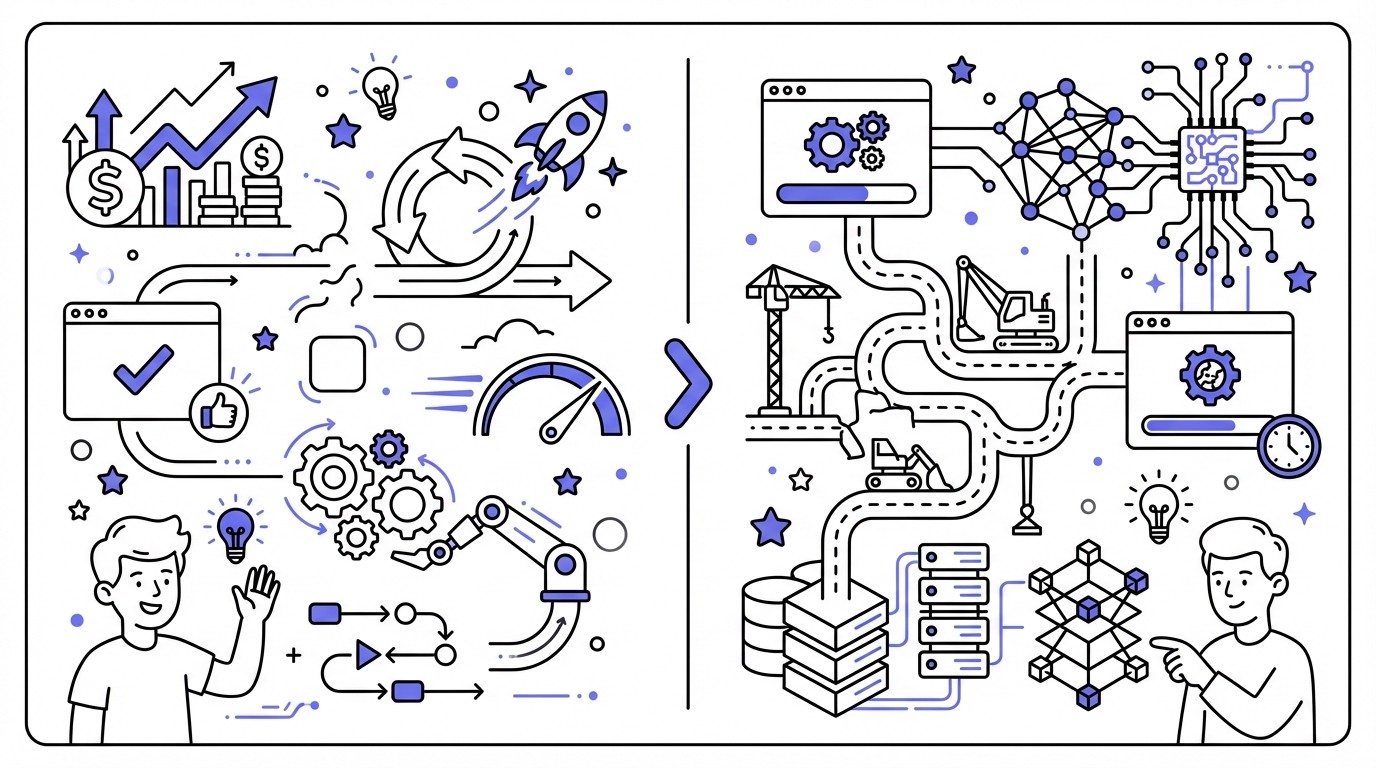
Comparing Methodologies: The Lean AI Approach vs. Traditional AI Development
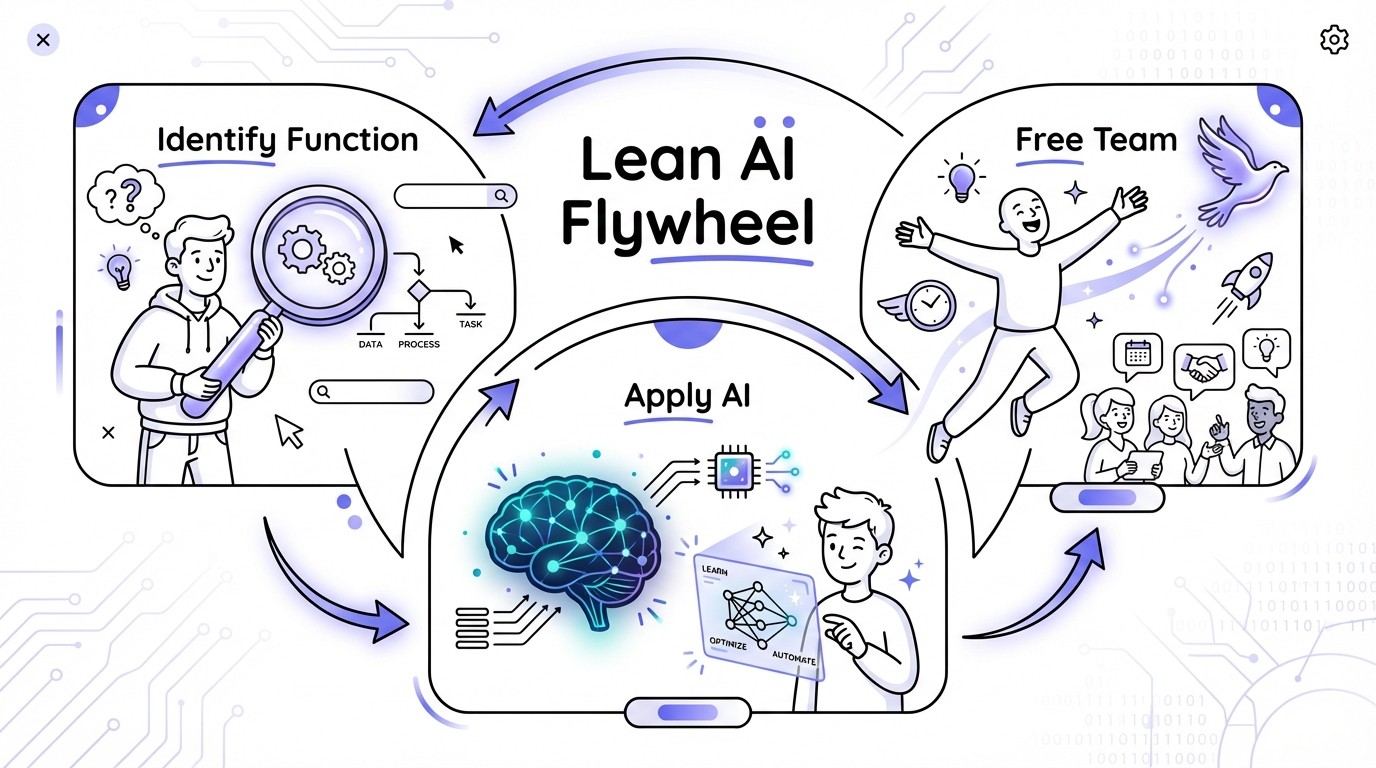
The Lean AI Flywheel illustrates a continuous cycle for leveraging AI to enhance efficiency and empower teams: identifying functions for automation, applying AI solutions, and freeing teams to focus on higher-value work.
AI as Your Ultimate Growth Partner for AI Startup Growth
Your expertise in AI should not be confined to the product you sell. It's your single greatest internal asset for AI startup growth. While competitors hire more staff to handle increased workloads, you can deploy intelligent systems. This operational advantage is what separates fast-growing AI startups from those that burn out, especially when navigating limited resources startup environments. You build efficiency directly into your company’s culture.
Adopting this mindset completely transforms how your team spends its time. Instead of drowning in repetitive tasks, your people become managers of the AI systems doing the work. Why is this one of the most effective lean scaling strategies? Because it empowers a small, core team to achieve an outsized impact. You're not just building an AI product; you're building an AI-powered company, a testament to smart bootstrapping AI.
Automating Core Operations with AI Tools for Efficiency
Applying this mindset means identifying your most time-intensive internal processes. For most AI startups, the biggest resource sinks are marketing, sales, and hiring. These are perfect candidates for an internal AI toolkit, crucial for AI startup growth with limited resources startup challenges.
Content Marketing: A platform like MarketDay can generate a week's worth of SEO-optimized articles in the time it takes a human to write one. Your marketing lead shifts from writer to editor and strategist, thanks to these AI tools for efficiency.
Sales Development: Instead of manually building prospect lists, an AI tool like SalesDay can identify and contact thousands of ideal customers with personalized messaging. Your founder focuses on closing deals, not cold outreach.
Recruitment: An AI-powered system like HiringDay can screen resumes and handle initial candidate communication. This frees your team to focus only on interviewing the most qualified applicants.
Each automated function compounds your efficiency. By strategically using these AI tools for efficiency, you create a business that can scale its operations without scaling its headcount at the same rate. You're no longer just managing growth; you're mastering it, even with limited resources.
Essential Tools & Frameworks for Lean AI Scaling Strategies
Adopting an AI-first mindset is the first step, but how do you execute that vision? Forget searching for a magic bullet for AI startup growth. The real key is building a disciplined process for every operational challenge you face. To do that, you need one of the most effective lean scaling strategies available: the "Build, Buy, or Automate" framework.
This framework forces a critical decision for every new task. Should your team build a custom solution, buy an off-the-shelf tool, or automate the process with an intelligent platform? For a bootstrapping AI company, the answer is rarely "build" unless it's a core product feature. Your engineering time is your most precious and expensive resource, especially for a limited resources startup.
Applying this logic helps you make smart, fast decisions. It clarifies where to invest your team's limited hours and capital.
Operational NeedBuild (Your Team's Focus)Buy (SaaS Tools)Automate (AI-Powered Platforms)Core Product AIThe unique algorithm that creates your competitive advantage.N/A - This is your core intellectual property.Use internal scripts to automate testing and deployment.Content CreationNever. Building a content AI is not your core business.Basic writing aids like grammar checkers.Use a platform like MarketDay to generate complete, SEO-ready articles, a prime example of AI tools for efficiency.Sales OutreachNo. Your sales team should be closing, not coding.A standard CRM to manage contacts.Use a tool like SalesDay to identify leads and run personalized campaigns.Financial TrackingAbsolutely not. This is a solved problem.Accounting software like QuickBooks or Stripe.Connect tools with Zapier to automate invoicing and reporting.
Choosing to buy or automate is fundamental to managing AI startup growth with limited resources. The cost of developing a single custom internal tool can easily exceed $50,000. In contrast, specialized AI tools for efficiency provide immediate value for a low monthly cost. These platforms aren't just expenses; they are investments in speed and focus, embodying smart lean scaling strategies. They let your team concentrate on what truly drives AI startup growth: improving your product and serving your customers, a core principle of bootstrapping AI.
Strategic Resource Allocation for Bootstrapping AI Startups
The "Build, Buy, or Automate" framework helps you manage today's tasks. Strategic resource allocation ensures your company has a future. For a bootstrapping AI company, your most valuable—and finite—resource is your engineering team's focus. Where you point that focus determines your trajectory for AI startup growth.
A disciplined approach is essential. Apply the 80/20 rule to your technical roadmap. At least 80% of your engineering resources should be dedicated to enhancing your core, proprietary AI. The remaining 20% can go toward customer-requested features, integrations, or improving internal tools. This simple rule prevents your top talent from getting distracted by non-essential projects.
Protecting Your Core IP for Sustainable AI Startup Growth
Your core IP is what makes your business defensible. It's the unique algorithm, the custom-trained model, or the proprietary data pipeline that solves a problem better than anyone else. For GrowthEagle, our core IP isn't the MarketDay dashboard; it's the advanced RAG and NLP systems that generate human-like, SEO-optimized content. This focus is key for AI startup growth.
Every decision should protect this core. Anything that is not your unique advantage should be bought or automated. This preserves your team’s energy for the one thing that drives AI startup growth: making your core technology smarter and more effective, a critical aspect of lean scaling strategies for a limited resources startup.
Investing in Data: A Key for Limited Resources Startups
Smart resource allocation in AI also means investing in data. Code can be replicated, but a unique, high-quality dataset is a powerful competitive moat. A 2022 Anaconda report found data scientists spend 45% of their time just on data preparation. You can't afford that waste when dealing with limited resources startup constraints, especially when bootstrapping AI solutions.
Your strategy must include a plan to acquire, clean, and use proprietary data. This data is the fuel for your models. Prioritizing its development is as important as writing the code itself. The choices you make today on data and core tech will define your market leadership tomorrow and ensure sustained AI startup growth.
The next wave of successful companies won't just sell AI; they'll be built on it. They will embed intelligent automation into every process, turning lean operations into a powerful, sustainable competitive edge, a hallmark of effective lean scaling strategies for AI startup growth.
AI evolves from being your product to being your core operational advantage. Think about your content marketing. Instead of hiring a full team, an AI engine like MarketDay can generate your entire SEO-optimized blog, showcasing the power of AI tools for efficiency. This approach frees up capital and talent for product development, proving that your most significant constraints can become your greatest drivers of innovation, especially for a limited resources startup focused on bootstrapping AI for rapid AI startup growth.
Ready to put this framework into action? See how MarketDay automates your content creation, generating a month of SEO-optimized posts in minutes. Free your team to focus on what matters most: accelerating your AI startup growth.
Visuals

Frequently Asked Questions
What are lean scaling strategies for AI startup growth with limited resources startup?
Lean scaling strategies involve leveraging AI itself to automate core business functions, allowing an AI startup to grow rapidly without a large budget or team. This approach transforms limited resources into a competitive advantage by building smarter, more efficient operations from day one. It focuses on maximizing impact per dollar and hour, enabling sustainable AI startup growth.
Why is bootstrapping AI essential for limited resources startup success?
Bootstrapping AI is crucial because it forces startups to be incredibly resourceful, using their own AI expertise to create internal efficiencies. This approach ensures every dollar and hour delivers maximum impact, building a foundation for sustainable, intelligent operations. It allows a limited resources startup to scale by reinvesting time saved into product improvement or customer acquisition.
How do AI tools for efficiency enable lean scaling strategies in AI startups?
AI tools for efficiency automate repetitive tasks across various business functions like content marketing, sales outreach, and recruitment. By deploying intelligent systems, AI startups can free up their small teams from manual labor to focus on high-value strategic work. This operational advantage is central to lean scaling strategies, allowing rapid growth without proportional increases in staff.
What is the Lean AI Flywheel, and how does it drive AI startup growth?
The Lean AI Flywheel is a continuous process where an AI startup identifies a repeatable business function, applies AI to automate it, and frees up the team. The time saved is then reinvested into improving the product or acquiring customers, fueling further growth. This cycle creates powerful internal efficiencies, accelerating AI startup growth by turning constraints into innovation.
Which business functions can AI automate to achieve efficient AI startup growth?
AI can automate various core business functions, including content marketing (generating SEO-optimized articles), sales outreach (identifying ideal customers and automating personalized emails), and recruitment (screening resumes and scheduling interviews). This automation frees up human teams to focus on strategic tasks, significantly accelerating efficient AI startup growth.
What are the main benefits of adopting lean scaling strategies for an AI startup?
Adopting lean scaling strategies allows AI startups to achieve rapid growth with limited resources by leveraging AI for internal efficiency. Benefits include reduced operational load, freeing teams for high-value work, and turning resource constraints into a competitive advantage. This approach fosters a culture of intelligent operations, ensuring sustainable AI startup growth without burning out.
How do lean scaling strategies for AI startups compare to traditional methods for scaling a limited resources startup?
Lean scaling strategies for AI startups differ significantly from traditional methods by building systems to automate problems rather than hiring more people. While traditional startups increase staff for growth, lean AI startups deploy intelligent systems to manage increased workloads. This approach provides an operational advantage, allowing a limited resources startup to scale efficiently and sustainably.


Hop on a call with us to see how our services can accelerate your growth.